
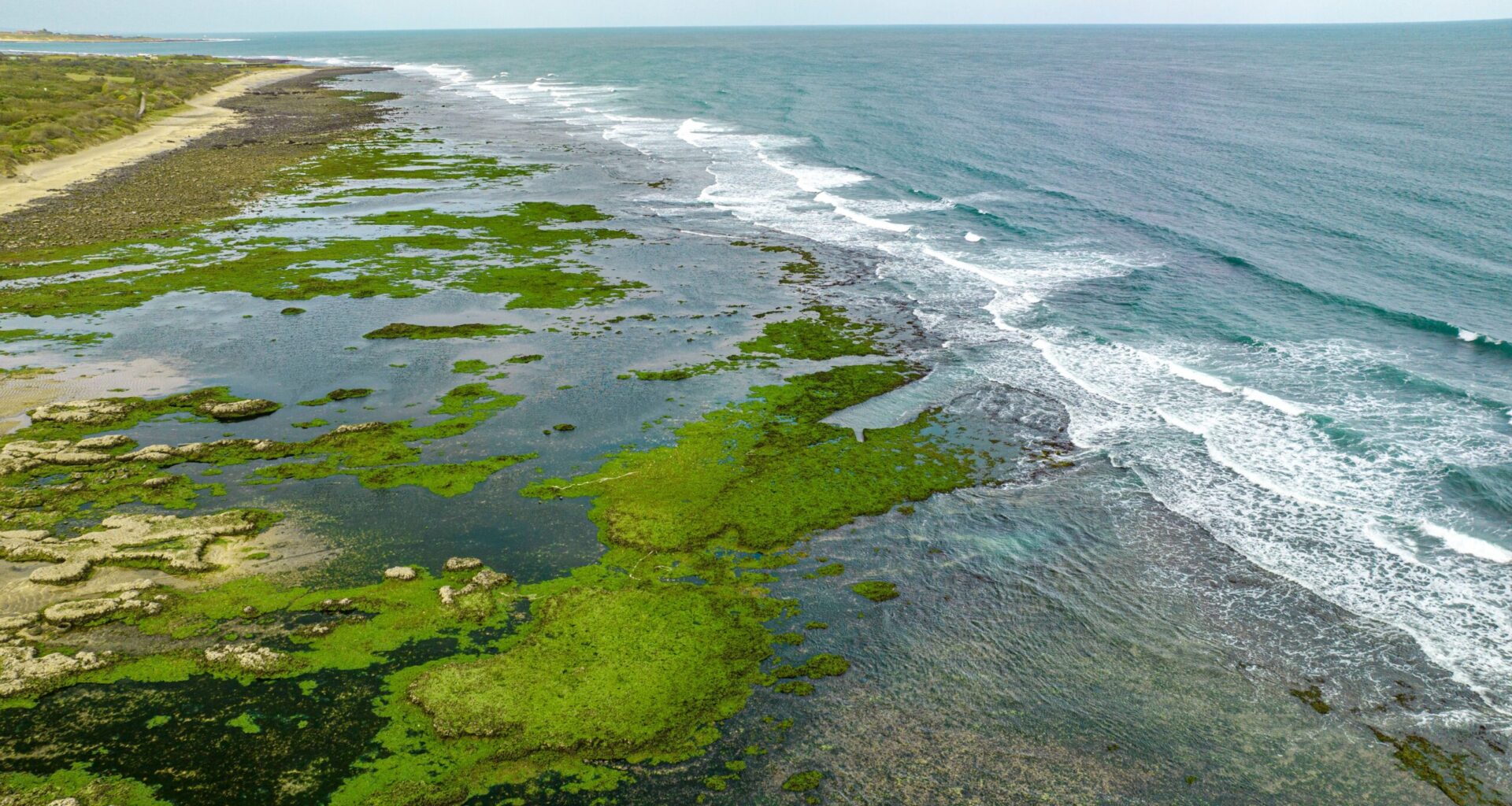
An analysis of 1.2 million satellite images powered by artificial intelligence has uncovered a massive expansion of floating seaweed across the world’s oceans, which scientists say could damage and reshape marine habitats and coastal ecosystems.
The study, led by researchers at the University of South Florida (USF) and the US National Oceanic and Atmospheric Administration (NOAA), provides the first comprehensive global assessment of floating algae.
Professor Chuanmin Hu, senior author from the USF College of Marine Science and his colleagues used artificial intelligence to examine 1.2 million satellite images covering the global ocean. Their analysis included 13 geographic zones and five categories of algae.
The team trained a deep learning model to recognise subtle visual signals associated with algae floating at the surface. These algae features often extend across many pixels, yet they usually account for less than one per cent of an individual pixel.
The findings, published in Nature Communications, reveal that while surface microalgae expanded at a steady rate of one per cent annually, large floating seaweed – known as macroalgae – has surged dramatically.
In the tropical Atlantic and western Pacific, macroalgal mats expanded by an average of 13.4 per cent each year, with cumulative bloom coverage reaching 43.8 million square kilometres.
Researchers identified 2008 as a pivotal turning point for global waters. Before then, extensive macroalgae blooms were largely restricted to Sargassum in the Sargasso Sea. However, a huge bloom of green Ulva seaweed emerged in the Yellow Sea in 2008, followed by unprecedented Sargassum surges across the tropical Atlantic in 2011 and the East China Sea in 2012.