
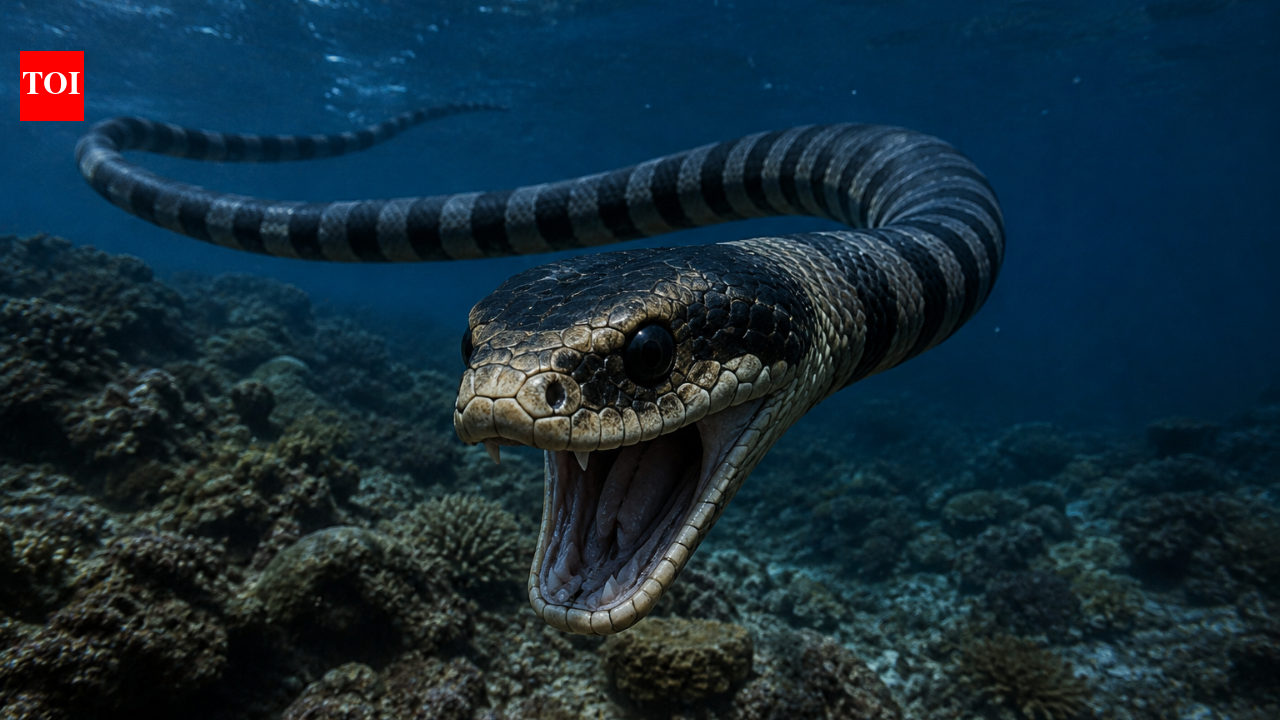
 A sea snake gliding through warm coastal water hardly looks like the sort of animal that should be compared with a rattlesnake. One lives almost entirely in the ocean; the other is associated with dry landscapes across the Americas. Yet when venom potency enters the picture, the comparison becomes less straightforward. Some sea snakes possess exceptionally powerful venom, particularly toxins that interfere with the nervous system and the muscles. In certain measures of toxicity, they can outstrip rattlesnakes. That does not mean sea snakes are more likely to kill a person. The apparent contradiction becomes clearer when researchers separate laboratory measurements of venom from the circumstances surrounding an encounter with humans.The difference comes down to a detail that is often lost in lists of the world’s most venomous snakes: venom potency and the real-world danger of a bite are not the same thing.
Why sea snake venom can be so powerful
Sea snakes belong to the cobra family, Elapidae, and their venom has evolved primarily to subdue marine prey such as fish and eels. Many species produce venom rich in neurotoxins, which interfere with the communication between nerves and muscles.For a small fish, that can be a remarkably effective weapon. The prey becomes unable to swim or escape soon after being bitten.In humans, the same toxins can cause a very different set of problems. According to the study published in National Library of Medicine, titled ‘Sea Snake Toxicity’ reveals that severe envenomation may lead to muscle weakness, drooping eyelids, difficulty swallowing and progressive paralysis. If the muscles needed for breathing become paralysed, the situation can become life-threatening.Some sea snake venoms also contain myotoxins, which damage skeletal muscle. This can cause rhabdomyolysis, in which large amounts of muscle tissue break down and release substances into the bloodstream. The kidneys can then be affected, with acute kidney injury among the possible complications.
What ‘more venomous’ really means
Rattlesnakes belong to the viper family rather than the cobra family. Their venom varies considerably between species, but many rattlesnake venoms contain toxins that cause tissue damage and interfere with blood clotting and other physiological processes.That makes a direct comparison difficult. There is no single substance called “snake venom” whose strength can be measured once and used to rank every species.Sea snake venom tends to be particularly associated with powerful neurotoxins, while rattlesnake venom can produce substantial local tissue injury and disturbances affecting the blood and circulation. Both can be medically serious, but they do not attack the body in exactly the same way.The phrase ‘more venomous’ therefore needs some qualification. If it refers to the amount of venom required to produce a toxic effect, certain sea snakes rank exceptionally highly. If it means which snake is more likely to cause a serious or fatal bite in a person, the answer is much harder to establish.
Potent venom does not mean more human deaths
This is where the sea snake’s reputation can become misleading. A snake can possess highly toxic venom without being a major cause of human fatalities. The opportunity for a bite matters enormously. Sea snakes spend their lives in marine environments, and most people have little contact with them.When bites do happen, they are often connected with fishing, handling or accidentally trapping a snake. A sea snake caught in a net, for example, may bite when someone attempts to free or move it.There is another important factor. Not every bite results in venom being injected. Some snakes can strike without releasing venom, a phenomenon commonly described as a dry bite.That does not make an encounter safe. It simply means that the presence of a bite does not, by itself, establish how much venom has entered the body.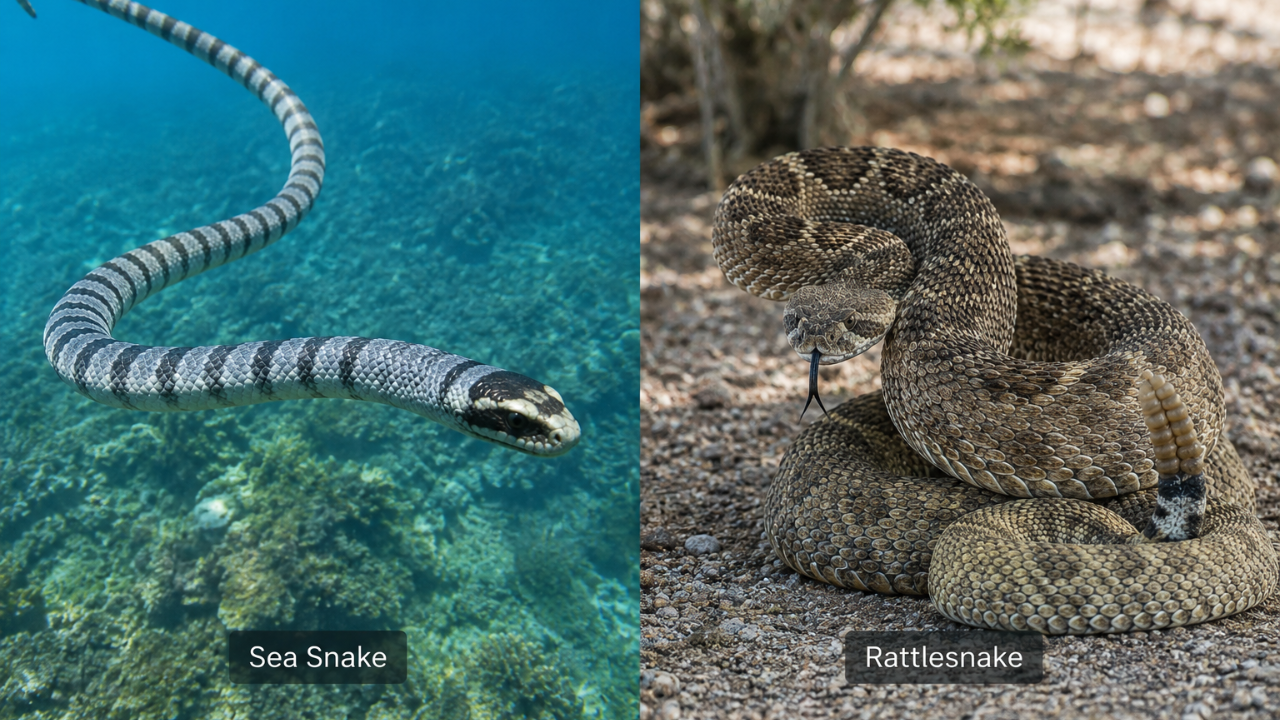
Rattlesnakes may be the greater practical threat
It sounds contradictory, but a snake with less potent venom can pose a greater threat to people. Rattlesnakes live in places where humans regularly walk, work and travel. A person can encounter one on a trail, around farmland or in other areas of suitable habitat. Even a snake that would rather retreat can bite if it is surprised, cornered or stepped on.Sea snakes have far fewer opportunities to interact with people. Their environment itself acts as a barrier.That difference is important when judging danger. The toxicity of venom tells us something about what happens after it enters the body. It does not tell us how frequently people are bitten in the first place.
Are sea snakes more venomous than rattlesnakes
Some are, if venom potency is what is being measured. Sea snakes include species with extremely powerful neurotoxic venom, and their toxins can cause paralysis and severe muscle damage in humans. But that should not be confused with saying sea snakes are more dangerous than rattlesnakes.A rattlesnake may have a different venom profile and, in some circumstances, can deliver a substantial amount of venom. More importantly, rattlesnakes and humans share the same terrestrial environments far more often. That creates many more opportunities for accidental encounters.The more accurate conclusion is therefore a narrower one: some sea snakes have venom that is more potent than rattlesnake venom, but venom potency alone does not determine how dangerous a snake is to humans.In the water, a sea snake’s venom is an efficient tool for immobilising prey. To a person, it can be devastating. But the rarity of serious encounters is precisely why an animal can possess extraordinarily potent venom without becoming one of the world’s leading causes of snakebite deaths.