
EDITOR’S NOTE: Call to Earth is a CNN editorial series committed to reporting on the environmental challenges facing our planet, together with the solutions. Rolex’s Perpetual Planet Initiative has partnered with CNN to drive awareness and education around key sustainability issues and to inspire positive action.
The ocean holds many secrets. For the few humans who have lived at its depths, one of those secrets is where all the poop goes.
In years past, crew aboard the Aquarius Reef Base, off Florida, reported leaving the habitat to conduct their business, swimming to an underwater outhouse for privacy. The locals didn’t always get the memo. “Fish, unfortunately, would know why you were out there and they would swarm,” recalled Dawn Kernagis, who lived aboard Aquarius as part of a NASA mission in 2016. Another former resident, Garrett Reisman, described it as “like the dinner bell going off.”
All this, despite the base having a toilet on board.
Aquarius now boasts two toilets and no outhouse restroom, said a spokesperson for Florida International University, which operates the station (who took a lengthy fact check in good humor). But after decades without a contender to the throne, there’s a new underwater base in town.
DEEP, the company behind Vanguard station, is keen to show off its plumbing, though restroom facilities are hardly the main talking point. According to UK-based DEEP, the Florida-based station is the first subsea human habitat deployed in US waters in 40 years. That makes it a big deal, especially among scientists who have relied on Aquarius as the only operational underwater research laboratory and habitat in the world.
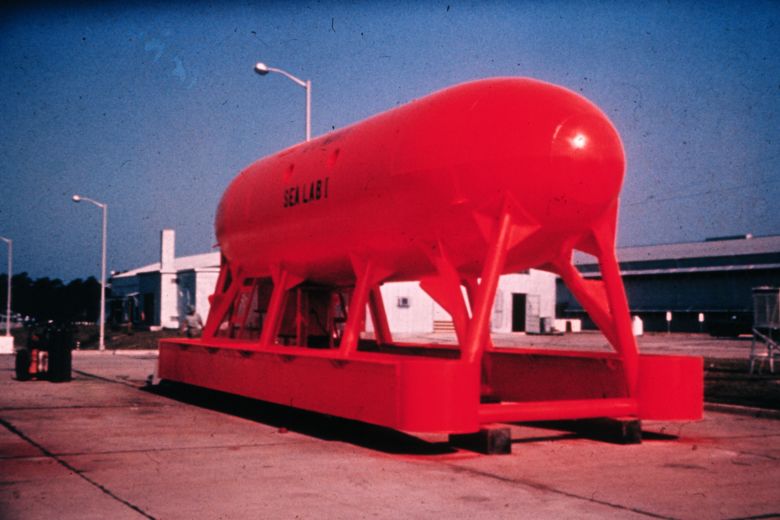
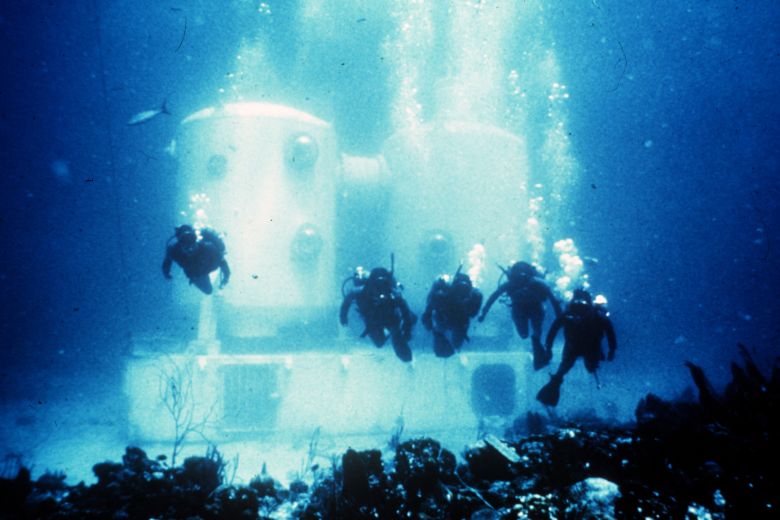
Underwater human habitats have existed since the 1960s, when Jacques-Yves Cousteau’s pioneering Conshelf ushered in an era of subsea research. Other stations followed in the US, Europe, Russia and Japan, buoyed by the same ambition propelling the space race up above. Cramped, spartan — costly — most habitats only had short operational lives, and the movement lost momentum. Until June, Aquarius, built in 1986 and deployed to its current location in 1993, was the most recent in US waters.
To put that in context, the International Space Station was announced, assembled and continuously inhabited for over 25 years in the time since.
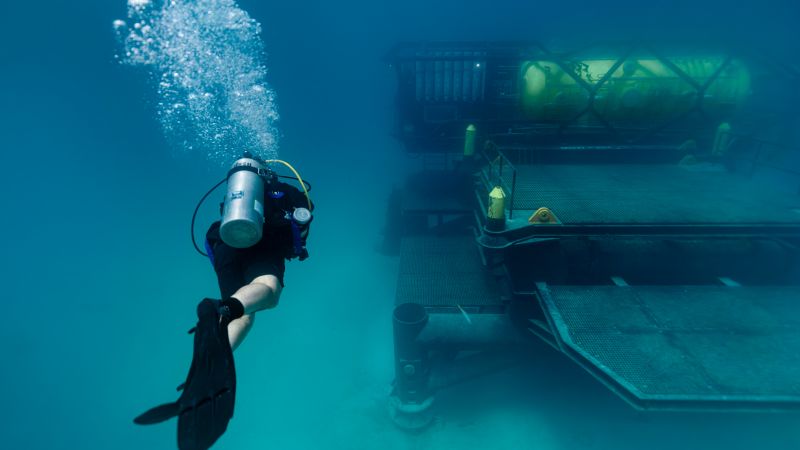
Vanguard was deployed in June on the seafloor of Tennessee Reef, 56 feet below the surface in the Florida Keys National Marine Sanctuary. The station is designed to house four aquanauts on missions of five or seven days, says DEEP, in a livable space 35 feet long and 8 feet wide. Aquarius, in comparison, is slightly larger and can accommodate a crew of six for more than 30 days.
The new habitat is connected to the surface via a buoy pumping fresh air below, and is kitted out with modern technologies to reduce its ecological impact. That includes gray water and human waste capture, which is stored in tanks outside the habitat before being pumped up to the support buoy for treatment.
Reducing its impact on its surroundings figures, as the habitat has been deployed to monitor — and hopefully revive — a coral garden in crisis.
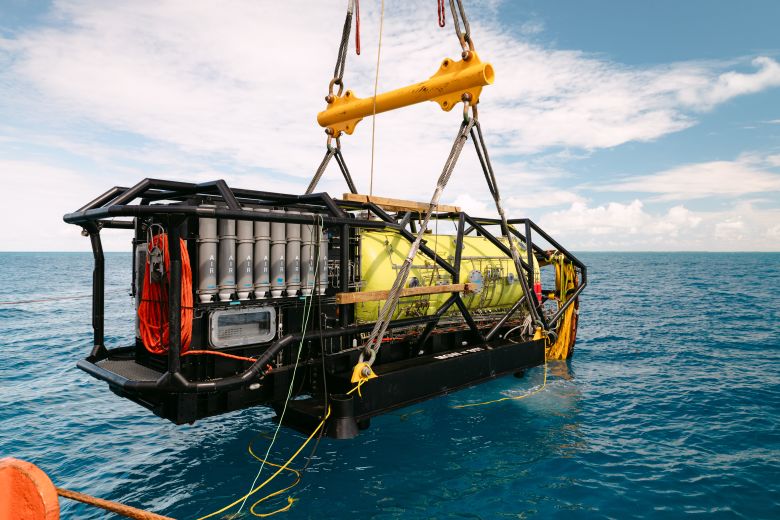
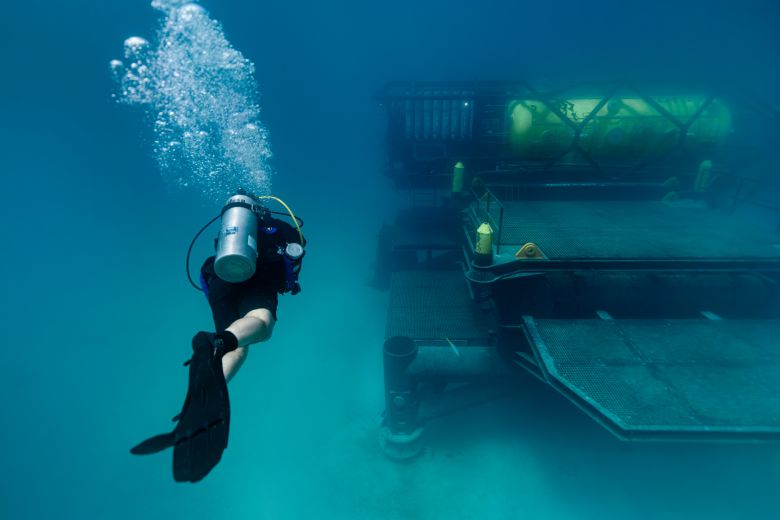
Vanguard has been installed for a five-year stay on the seafloor near the reef, 4.6 nautical miles south of Long Key, a location chosen as a “really solid area for reef restoration,” said Kernagis, DEEP’s director of scientific research.
The reef, known for its deepwater corals and sponges, along with other areas of the Keys, has experienced rising temperatures and bleaching, where stressed corals lose their algae coating, lose its food source and turn pale. Part of the station’s scientific mandate will be to identify resilient corals and replace damaged coral.
There are many benefits to becoming “part of the reef,” said Kernagis.
Aquanauts can explore their surroundings using scuba gear, or helmets fed oxygen via an umbilical cord several hundred feet long.
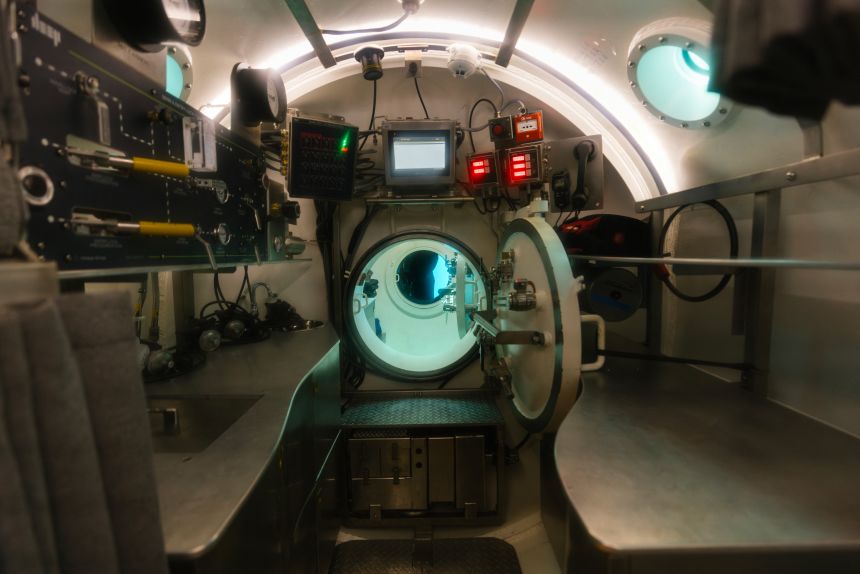
Saturation diving — where humans live at the same pressure as their dive site, facilitating longer dives — allows scientists to “maximize time for data capture, observation, (and) sample collection,” Kernagis explained. Compared to conventional scuba diving — with dive times restricted by oxygen tank limitations and the need for divers to decompress — “you can get a month’s worth of work done in less than a week.”
Analyzing samples at depth rather than bringing them to the surface can also provide better data, as time delays and decompression can alter materials, she added.
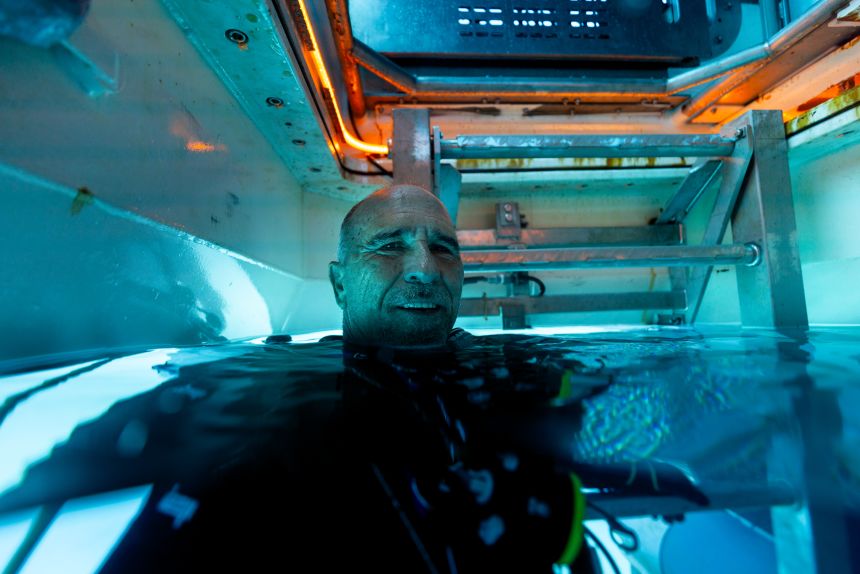
The first scientific team to live aboard the station is still to be announced. The base is undergoing engineering and systems’ testing ahead of demo missions in October, with full missions set to start in November.
Florida’s government has already committed $935,000 to support six research teams from state universities and research intuitions aboard Vanguard. Missions will focus on coral restoration and monitoring, or how humans and machines can work together on the seafloor.
It’s unlikely that the station will be used only by marine scientists. Past subsea habitats have been utilized for military and defense purposes, as well as astronaut training.
“We’re definitely going to be doing work in those spaces and that’s critically important for us,” said Kernagis. But she added DEEP wants to include artists and educators too. In 2024, DEEP received $925,000 in funding from the US Office of Naval Research as part of an educational outreach program on undersea exploration.
Mike Heithaus is a marine scientist and executive dean of the College of Arts, Sciences & Education at Florida International University (FIU), the institution that operates Aquarius. “It would be great if (Vanguard) will serve to grow momentum around answering important scientific and technological questions that support the world’s oceans,” he said.
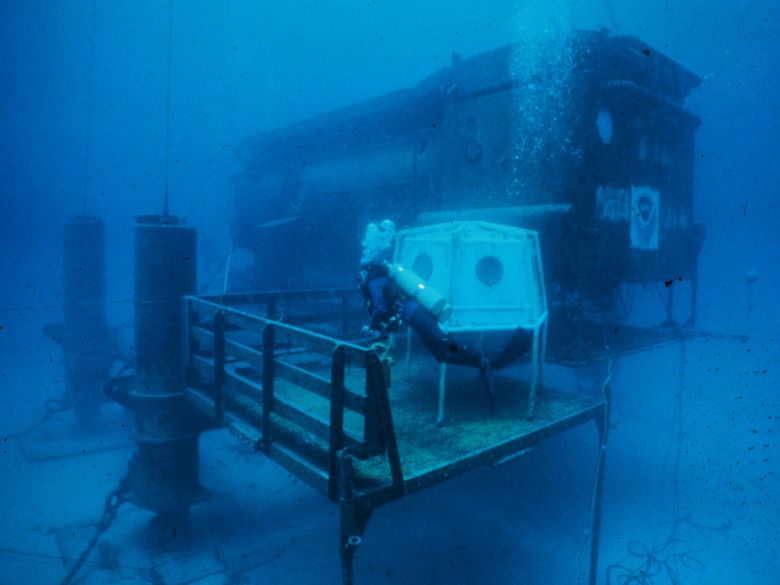
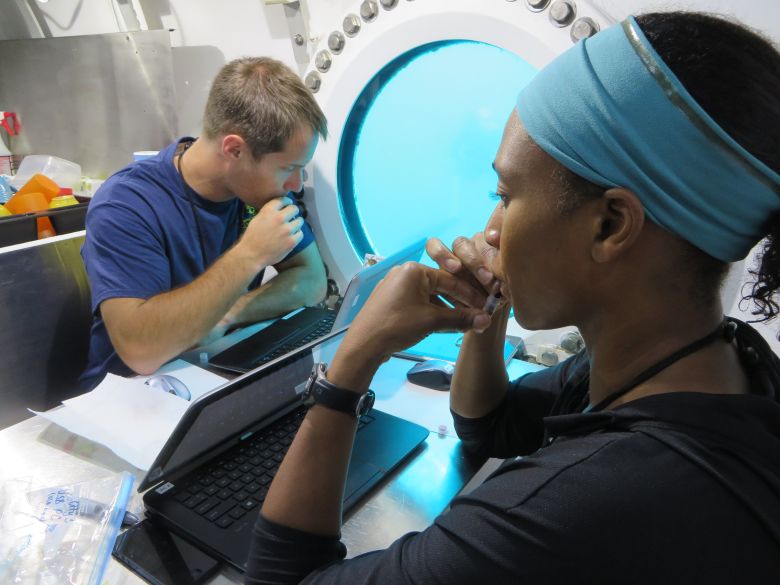
Heithaus said the state of Florida has made “critical investments” to reinforce “Florida’s position as the national leader in environmental conservation,” noting that Aquarius had recently been allocated $5 million by the state, and that the station has upgrades planned.
Asked whether FIU could have a use for Vanguard, he pointed to the benefits of the long-term data captured by Aquarius over its many years off the Keys. “However, starting companion studies at Tennessee Reef could be an excellent collaborative opportunity,” he added.
Unlike many historic undersea habitats, which involved government, institutional or industrial funding, Vanguard is the creation of a private limited company. A spokesperson for DEEP said it doesn’t comment on individual shareholders, but public records name Canadian Robert MacGregor as the owner of a controlling majority.
The company has already outlined ambitious expansion plans and will need deep pockets to execute them. In October 2025, it announced a $100 million investment, along with plans for an engineering hub in Florida and a manufacturing base in Houston, Texas.
Vanguard is considered a pilot habitat (some parts of the station were repurposed from preexisting hardware, others modified, or new). DEEP is already pursuing other habitats, including a modular Sentinel base, which would be larger, and capable of accommodating six aquanauts at depths of over 650 feet for a month at a time.
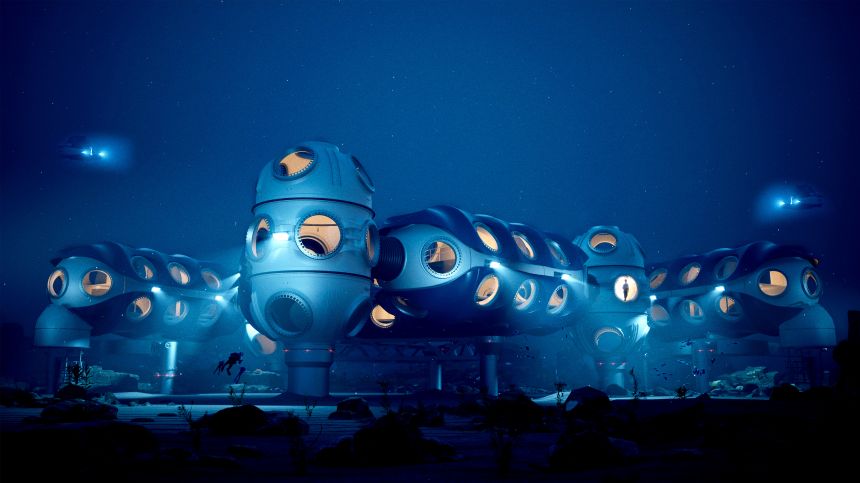
Kernagis said the company is already thinking about multiple stations built with different capabilities. “We have a vision of subsea habitats that are global,” she added.
Could a new race to the bottom of the ocean ensue? Heithaus said FIU is looking to fundraise for a larger and more advanced habitat than Aquarius, designed to accommodate a diverse user group. He said it would take support from industry as well as individuals to realize the new station.
“We see great value in having people able to live and work underwater for long periods of time,” he added. “But, to realize the potential of a network of habitats, a strong collaborative ethic will be critical.”
Marine biology may be on the cusp of a new era of underwater living, though history tells us how precariously balanced the field is. In 2012 Aquarius was nearly forced to close over funding issues, before FIU took over operations from NOAA. Half a century after an explosion of interest in the 1960s, underwater habitation nearly ceased altogether.
But when marine biologists can look up and see the International Space Station with the naked eye, they might reasonably think: Why can we not have a place to study too?
“We’ve had sustained human presence in space since 2000,” said Kernagis. “We really want to be able to bring that to the oceans as well.”