
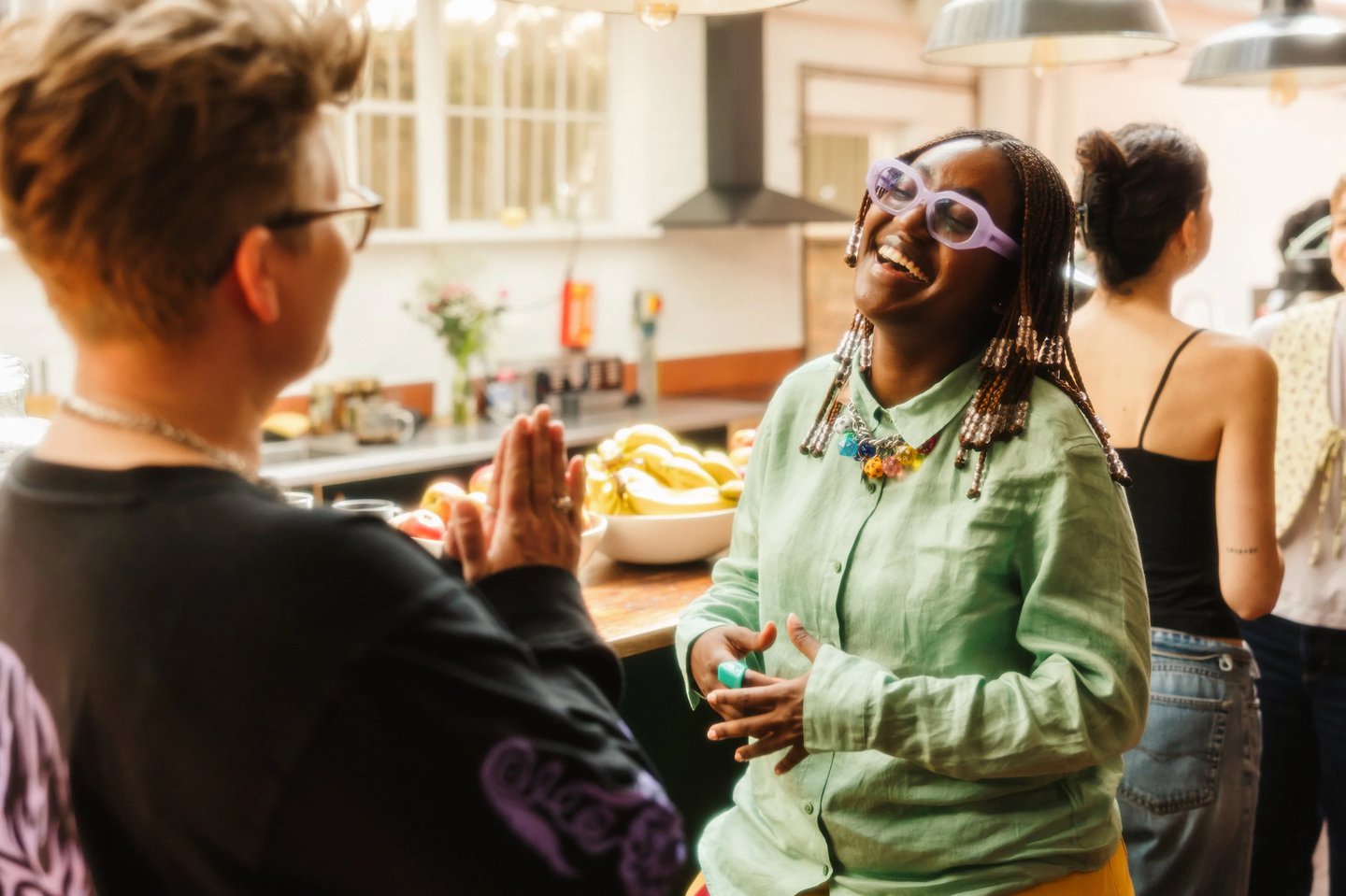
Today the studio presents Physical Culture as an antidote to soulless shared spaces. With hugely impactful projects under its belt such as the global experiential design strategy for 19 Spotify offices, and artworks and installations at LinkedIn offices across six continents, the Acrylicize team is using each brief as a tool to connect places with its purpose through thoughtful design, art, community engagement, events, activations, and innovative strategy. All of this (and plenty more) converges to “create the conditions for belonging; the sense that you’re not just in a space, but part of it”, says James. Physical Culture being the framework, Acrylicize has honed its creative services “to translate what an organisation stands for into what people actually feel when they walk through the door”.
Acrylicize defines Physical Culture as: “the stories, customs, behaviours, collective energy, and creative attributes of a space and the people that inhabit it,” and it’s what’s steered everything from project management to design, production, and art consultancy since its inception. Now formally coining the term, the studio sees Physical Culture as an “essential strategic discipline – one that recognises the profound impact of the environment on human experience, creativity and connection. As hybrid working has sharpened scrutiny of office design, as public institutions face pressure to do more with what they have, and as brands compete to create experiences that feel genuine rather than curated, the question of what a space communicates has never been more important.”