
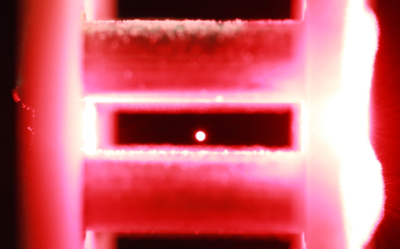
The new David Potter Institute for Quantum Information and Spacetime, established thanks to a landmark award from the David and Elaine Potter Foundation, will seek to reconcile quantum mechanics and gravity, the two most fundamental theories of the universe.
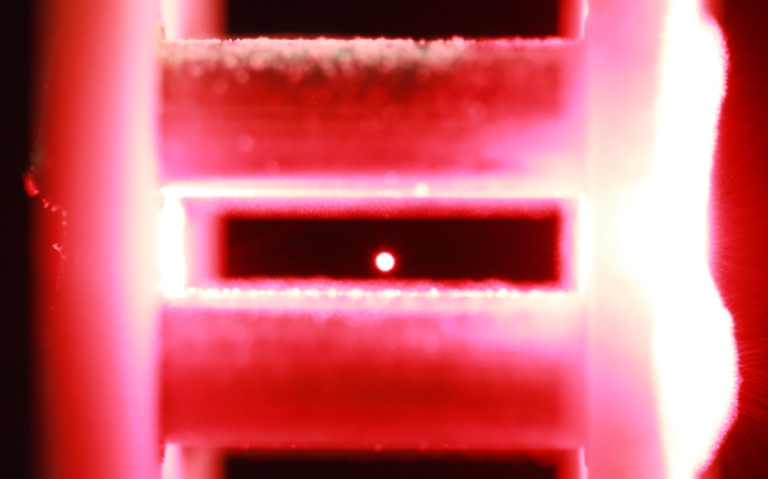
Based within UCL’s Faculty of Mathematical and Physical Sciences, the new interdisciplinary Potter Institute will bring together leading scientists in quantum information theory, gravity and high energy physics.
At the heart of the partnership is a question that has challenged physicists for more than a century: how to unite quantum mechanics, which governs the smallest building blocks of nature, with gravity, which describes how spacetime bends to shape the universe.
Despite significant progress in both areas, scientists do not yet know whether spacetime itself is quantum. The Potter Institute will focus on answering this question by bringing together innovative theoretical ideas with novel experimental approaches, many of which have been developed and trialled at UCL.
Co-director Professor Jonathan Oppenheim said: “Quantum gravity research has historically been pure blackboard physics. We are now in the position of being able to design and build towards experiments that could settle a question that generations of physicists have struggled with.”
Many physicists have argued that Einstein’s theory of gravity must be modified, or “quantised”, to fit within quantum theory, but Professor Oppenheim and colleagues propose that spacetime may, in fact, be classical in nature – not governed by quantum theory at all.
To probe the fundamental nature of spacetime, researchers will develop quantum sensors capable of measuring incredibly small forces with unprecedented precision.
From discovery to future technologies
Created to push the boundaries of fundamental physics, the research led by the Potter Institute could lead to exciting advances in quantum technologies. Quantum sensing is expected to disrupt industries that rely on sensor technology, including healthcare and engineering, and the Potter Institute will be an incubator for innovative spin-out technologies for the benefit of society.
Potter Institute researchers will work in tandem with the Quantum Biomedical Sensing Research Hub (Q-BIOMED), led by UCL and the University of Cambridge, to develop quantum sensing technology that can be deployed in high-impact healthcare settings. This could enable significantly more sensitive detection of cells, molecules and processes in the body, and thereby improve early disease diagnosis and treatment.
The Potter Institute will also serve as a focal point for collaboration, hosting visiting researchers, workshops and students, and helping to train the next generation of scientists working at the frontier of theoretical and experimental physics.
A philanthropic legacy
Dr David Potter CBE, who died in June 2026, was a pioneer of mobile computing and a lifelong champion of scientific research. Born in South Africa, he studied Natural Sciences at Trinity College, Cambridge, before completing a doctorate in mathematical physics at Imperial College London, where he was subsequently appointed to the academic staff. During the 1970s he taught physics at the University of London and the University of California, and wrote academic papers and a book on the application of computing to physics, before leaving a tenured academic career to found Psion in 1980.
Psion became a leader in software for microcomputers, and from 1984 pioneered the management of personal information with ‘The Organiser’, the world’s first handheld computer for personal use. In 1998 David led the creation of Symbian Limited, in partnership with Nokia, Ericsson, Motorola and Matsushita, whose operating system underpinned the first generation of smartphones. His career, moving from the frontiers of physics research into building a globally significant technology company, reflected a lifelong conviction that fundamental science and its real-world application should advance together.
The David and Elaine Potter Foundation was established in 1999 with the mission of contributing to economic development and well-being in a plural, rational and tolerant society. The Foundation has consistently supported projects that promote reason and education, to improve understanding, governance and a stronger civil society. The Potter Institute extends that mission into fundamental physics research: the kind of long-term, curiosity-driven enquiry that shaped David’s own career, and that he believed was essential to progress.
“This gift reflects the Foundation’s long-standing commitment to advancing knowledge and supporting ambitious, long-term research,” said Elaine Potter, co- founder of the David and Elaine Potter Foundation. “The new Potter Institute is a vehicle through which we can help provide the academic freedom to pursue big ideas, the impact of which may shape the future in ways we cannot yet predict. David was excited about the prospect of creating a world-class academic institution to explore the frontiers of knowledge. We are delighted that the Potter Institute will combine experimental and theoretical physics to answer the big questions about life with real-world impact. It will be a fitting legacy to David.”
Leadership at the cutting edge of quantum science
The Potter Institute will be co‑directed by Professors Jonathan Oppenheim and Sougato Bose, internationally recognised leaders whose work has helped to define the field of quantum information and gravity. The head of the experimental programme will be Professor Peter Barker, who leads a world-leading experimental team in quantum levitated optomechanics. The Potter Institute will feature researchers from across the departments of Mathematics, Computer Science, Philosophy and Science & Technology Studies.
Professor Bose said: “With this gift, the David Potter Institute for Quantum Information and Spacetime will become a powerful new base for global collaboration, drawing researchers and students from around the world to UCL.”
Professor Oppenheim said: “By investing in fundamental discovery, the David and Elaine Potter Foundation is helping to lay the groundwork for new ways of understanding the universe and the laws governing our natural world.”
Dr Michael Spence, UCL President and Provost, said: “It is landmark philanthropic gifts like that of the David and Elaine Potter Foundation that shift the dial on what is possible. They light the touchpaper on ambitious, curiosity-driven research that can only be delivered by world-leading researchers in tandem with world-class partners.
“Through our ‘Here, it will happen’ campaign, we are working with partners who share UCL’s belief in the unique power of research and fundamental discovery to change our world. The Potter Institute is a powerful example of how philanthropy can accelerate bold ideas, enable exceptional people, and provide the foundations for major breakthroughs.”
LinksImageTop: A levitating nanosphere in a prototype version of the experiment that aims to establish if spacetime is quantum or not. Middle: Professors Oppenheim, left, and Bose with the interferometer in which the nanospheres are made to levitate. The experiment aims to place a tiny mass into a quantum superposition (existing almost as if it is in two places at once) and then measure how gravity affects it. If spacetime is quantum, gravity should be able to “entangle” two such particles, linking their fates in a way that has no classical explanation. If spacetime is classical, that entanglement can never happen. Bottom: David Potter CBE.Media contactMark Greaves
m.greaves [at] ucl.ac.uk
+44 (0)20 3108 9485