
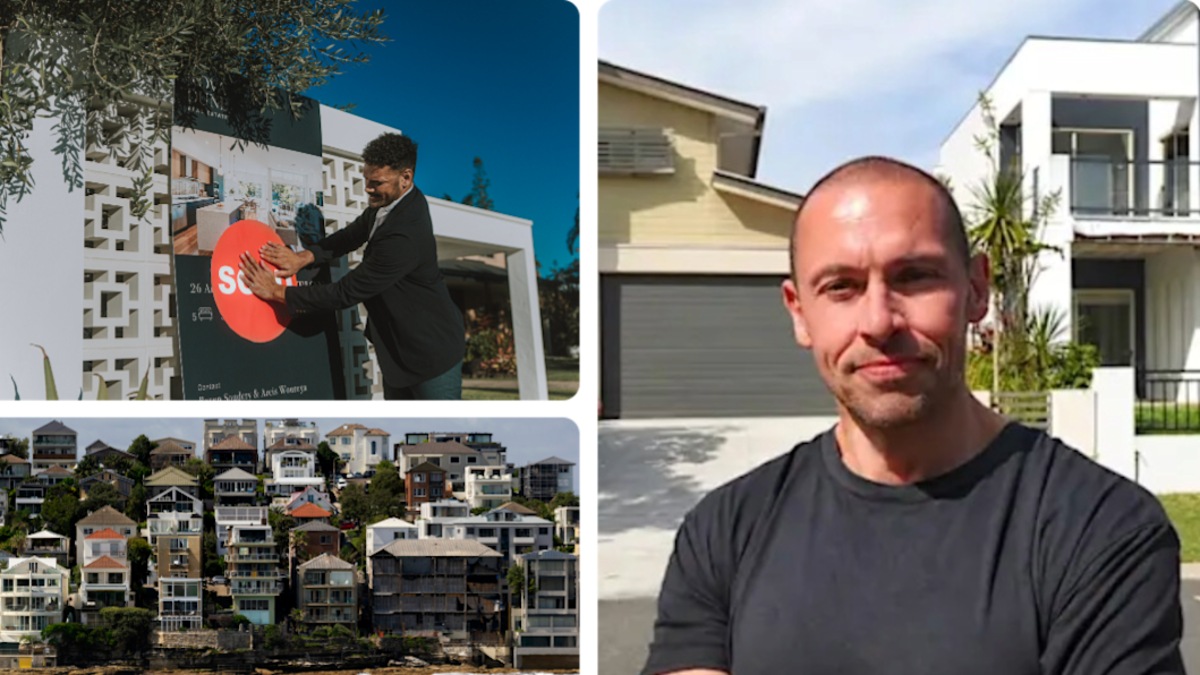
One of Australia‘s biggest markets is in a “property recession” and even an expected interest rate hold from the Reserve Bank won’t be enough to spark it back to life, a buyers’ agent has claimed.
Mortgage holders are crossing their fingers the RBA has seen enough in better-than-expected inflation figures and dipping housing prices to not slug them with another rate hike on Tuesday.
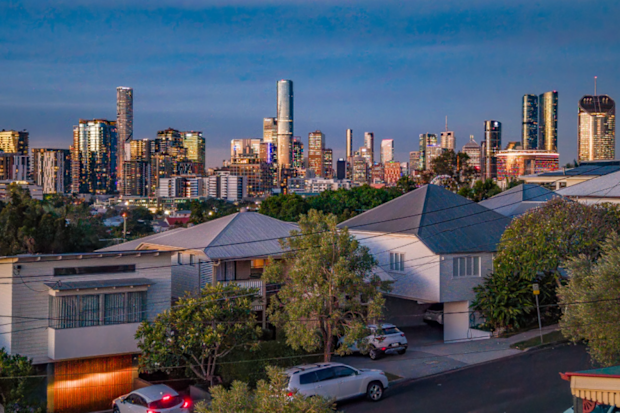
A buyer’s agent has claimed Brisbane is in a “property recession”. Domain
Big banks and market watchers are overwhelmingly predicting the cash rate to hold at 4.35 per cent but real estate figures are increasingly talking doom and gloom when it comes to the effects of rates, inflation and the federal government’s tax changes on the property market.
Price Buyers Agents founder Glenn Price sent his followers a note on Monday morning declaring “we’re in a property recession”, flagging months with more than 60 per cent of auctions failing to sell.
“This weekend I went to seven properties, all between $950k and $1.1m, the kind of price point that used to have buyers lining up like it was free drinks at a nightclub,” the south-east Queensland-based agent wrote.
“At more than half of them, I was the only one there.
“Just me and the real estate agent standing around watching tumbleweeds.
“That’s not a slow market. That’s a market that’s stopped.”
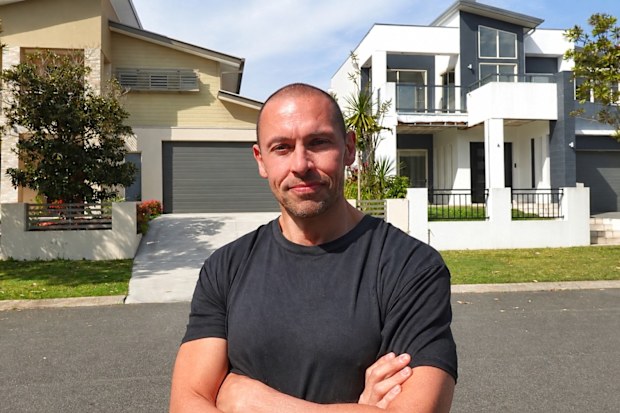
Price Buyers Agents founder Glenn Price. Price Buyers Agents
Cotality figures have measured the national auction clearance rate rate – often used as an early signal of price falls to come – below 50 per cent for weeks, and Brisbane and the Gold Coast’s rate has been below 40 per cent since the week ending June 7.
The provisional Brisbane figure bounced back slightly last week to 38.1 per cent and the national figure hit 55.1 per cent but Price didn’t see signs of any sort of sustained recovery.
Price, who admitted “property recession” was not any sort of officially recognised metric, said he hadn’t seen anything like it in his five or six years as a buyer’s agent.
He said while a decent chunk of his clients would normally be the first home buyers the government’s negative gearing and capital gains tax changes were meant to help get a foot in the market, he currently didn’t have any on his books.
He argued cost of living and rates were too high for owner-occupiers to take advantage of falling prices, citing fears of ending up with negative equity if their home values fell as a key concern.
“Obviously, with inflation being what it is, interest rates being what they are, and then you have the investors kind of pulling back, and then the auction clearance rates, and then we’ve obviously got you know you can go further,” he told nine.com.au.
“You’ve got the war in Iran, and then is there going to be another pandemic?
“People are just scared at the moment. I see a real freeze on what’s happening at the moment.”
In another downward signal for the property market, Westpac on Monday said home loan applications had fallen by up to 20 per cent and predicted investor demand for mortgages would halve in the next two years.
Home prices across the five biggest capital cities and the Gold Coast have fallen 2.7 per cent from the previous quarter, based on Cotality figures, with most of that in Sydney and Melbourne.
Sydney is down 2.6 per cent from last year and Melbourne is down 3.3 per cent but prices in Brisbane and the Gold Coast are still 13 per cent higher than this time last year, with Perth up 20 per cent and Adelaide up 10.4 per cent.
Political fights continue over how much of the decreases can be blamed on Labor’s controversial reforms to property tax, including scrapping negative gearing and removing capital gains tax exemptions, and how much is caused by external factors such as interest rates and inflation.
Still, Price worries the RBA’s “narrow path” of trying to cool inflation without triggering an economic recession – commonly defined as two consecutive quarters of negative growth – has become like “trying to land a jumbo jet on a suburban driveway”.
The RBA will be hoping the target is not quite so narrow when it announces its decision at 2.30pm on Tuesday after two days of meetings.
While Bullock warned late last month the board was willing to increase the cash rate at this upcoming meeting if needed, all signs point to another hold, following three hikes earlier in the year.
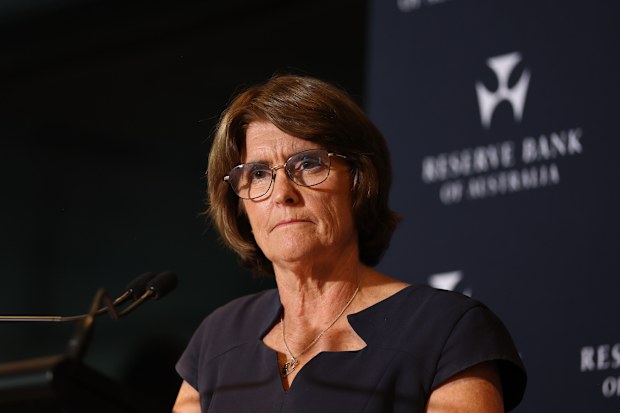
Reserve Bank of Australia Governor Michele Bullock. Louise Kennerley
In a Finder survey of 38 economists, 35 of them believed the cash rate would remain unchanged once again, and the Australian Stock Exchange’s RBA Rate Tracker has a 100 per cent prediction of no change.
But almost half of the experts surveyed admitted they thought rates would rise at least once before the end of 2026.
Headline inflation cooled from 4.0 to 3.8 per cent in June, better news than what economists were expecting, prompting outliers AMP and Westpac to reverse their predictions for an August rate hike and the markets to follow suit.
“The markets are absolutely and overwhelmingly expecting no change,” The Motley Fool chief investment officer Scott Phillips told 9News Late on Monday.
“That I wouldn’t suggest necessarily should be written in pen, but we’re all got our fingers crossed.
“The fact that inflation was still high, but less high than expected this month, that might just be the get out of jail free card.”
But real estate valuation and advisory firm Herron Todd White warned late last month mortgage holders would be wrong to breathe a sigh of relief just yet.
“After three 25 basis point increases to the cash rate in the first three meetings this year, the RBA decided to keep the cash rate on hold last month,” Kusher said.
“But with inflationary pressures persisting, we certainly shouldn’t count out the potential for a further increase in the cash rate over coming months, possibly as early as next meeting.”