
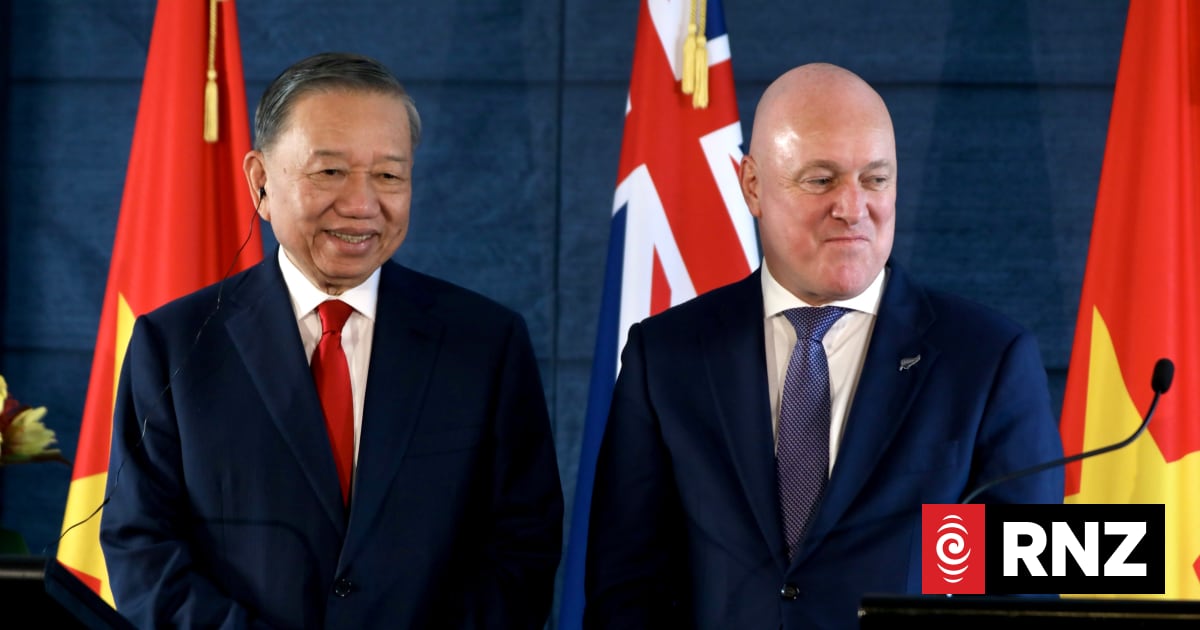
The prime minister says there is clear direction for the relationship between New Zealand and Vietnam, following a visit by Vietnamese president Tô Lâm.
Vietnam is New Zealand’s 13th largest trading partner, with two-way trade valued at $3.41 billion in the year to March 2026, an increase of 72 percent over five years.
Lâm has been president since April, as well as General Secretary of the Communist Party since 2024 – essentially holding the top two positions in Vietnam’s political hierarchy.
Last year, the two countries upgraded their relationship to a Comprehensive Strategic Partnership, to coincide with 50 year of diplomatic relations.
Now, with Lâm’s visit to Auckland, several areas of co-operation have been boosted.
Describing Vietnam as “a rising star of Asia”, Luxon said there were huge opportunities for the countries to work closer together.
Dairy, fruit, and wood are New Zealand’s biggest exports to Vietnam, while its biggest imports include electrical equipment, travel, footwear, and machinery.
The upgrade sees New Zealand able to sell more honey, deer velvet, and venison to Vietnam, while New Zealand would have access to more Vietnamese flowers and foliage, such as carnations, daisies, orchids, and lilies.
The two also signed a fresh memorandum of arrangement, to increase cooperation in agriculture, fisheries, and forestry.
“It’s really important for us to be in there on the ground floor as it grows and as it becomes wealthier. That creates huge opportunities,” Luxon said.
Luxon visited Vietnam last year, and called in on Lâm in Hanoi.
Since then, Lâm has been re-appointed to the presidential role, a position he also held in 2024, whilst also holding onto the general secretary role.
Following their meeting on Thursday, Luxon described Lâm as “probably the most powerful leader in Vietnam, I’d say, since Hồ Chí Minh,” and his state visit, the first by a Vietnamese president since 2007, was a marker of the strength of the Comprehensive Strategic Partnership.
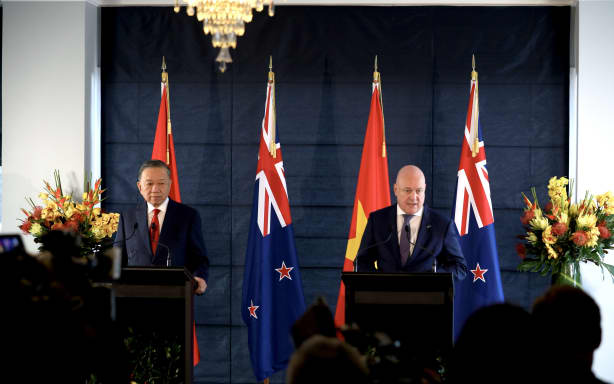
A joint statement was released by Christopher Luxon and Tô Lâm.
RNZ / Marika Khabazi
The joint-statement released by the two leaders said they recognised the elimination of non-tariff barriers to “enhance the impacts of our free trade arrangements to businesses and consumers”.
Vietnam, like New Zealand, has been affected by the United States’ tariffs, and Luxon said the relationship showed the “massive diversification” countries were showing to look elsewhere for trading partners.
“Trade is highly local. It’s actually our exporters in regional New Zealand selling produce into Vietnam they previously couldn’t do. As that country gets wealthier, there’s a greater demand for our products and services, and of course that money comes back home, and is then spent in the local economy, creating jobs and further income.”
On defence and security matters, New Zealand and Vietnam established a new vice ministerial security dialogue, and new funding to tackle transnational and organised crime in the Mekong region.