

(Aug 14): Australia’s pension system is awash with forgotten money: A$312 billion (US$220 billion) held in inactive accounts that continue to attract fees.
Some 18% — or 4.2 million — of superannuation accounts were inactive at the end of March, up almost two percentage points in just nine months, according to an analysis of regulatory data by Elula, an AI software company that focuses on customer retention in the financial services sector.
The accounts haven’t received any contributions or transfers for at least 16 months, which can happen when people change jobs, move overseas or temporarily leave the workforce. Savers can end up with multiple accounts.
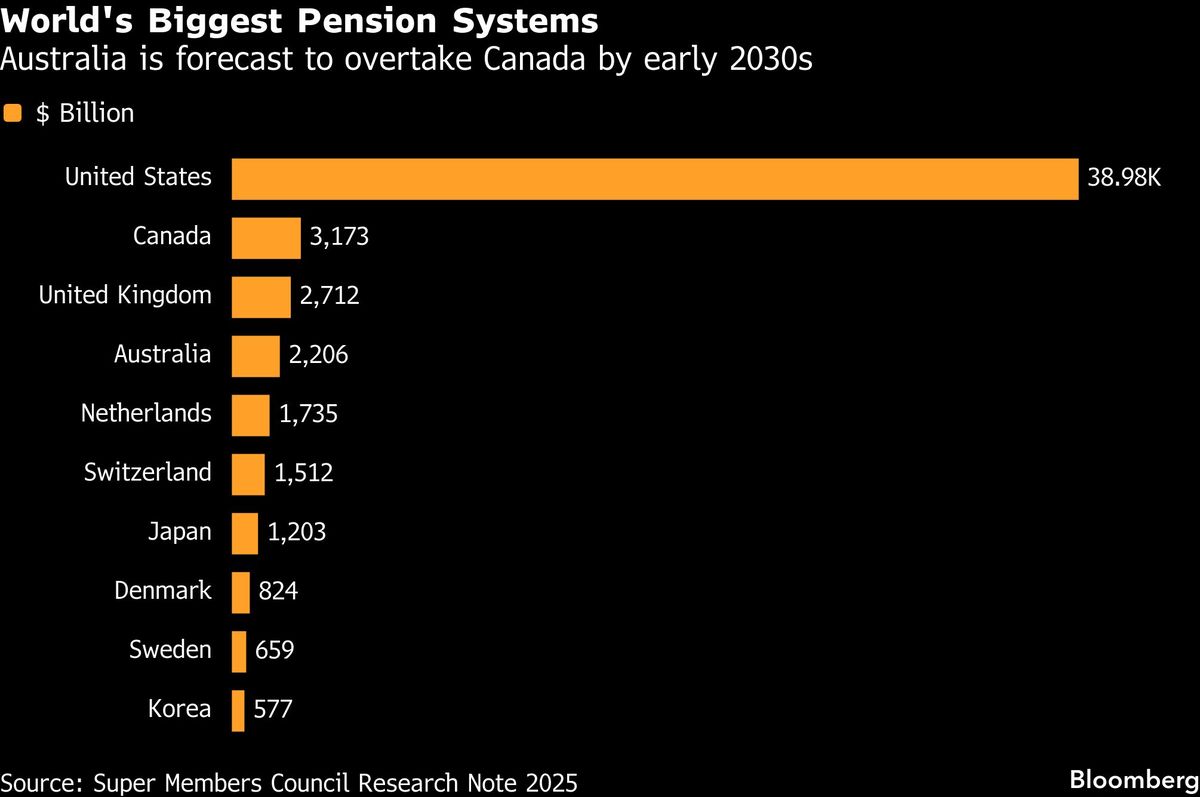
The increase highlights a growing challenge for the A$4.4 trillion system as it shifts from absorbing years of surging inflows to helping more Australians spend their savings. Its sheer scale is exposing shortcomings, with funds under mounting pressure from regulators to improve customer service and reconnect with disengaged members — an increasingly urgent task as 2.5 million Australians approach retirement over the next decade.
The challenge for pension funds is stark, with an AMP survey last year finding that 27% of Australians had either never engaged with their provider, or don’t even know who it is.
“Super funds may have more to do,” said Kirby Rappell, chief executive officer of research house SuperRatings. “But the other half of the equation is that it is extremely hard to engage people who don’t want to be engaged.”
Overall fees on Australians’ inactive accounts could total as much as A$2.2 billion a year, Elula estimates, based on average annual charges that can include administration, investment, insurance and advice costs. Individual fees can vary by member due to a range of factors.
Even a more conservative estimate based solely on a A$70 flat annual administration fee puts the figure at almost A$300 million, according to Bloomberg calculations.
The savings remain invested and can continue generating returns even when accounts are inactive, though members can end up paying multiple sets of administration fees if they have more than one account. Many inactive accounts below A$6,000 are ultimately transferred to the Australian Taxation Office under rules designed to protect small balances from fee erosion.
AustralianSuper, the country’s largest fund, has about 600,000 inactive accounts — the most of any provider — according to regulatory data. It was last year fined A$27 million after Federal Court proceedings brought by the Australian Securities and Investments Commission. The regulator had accused the fund of not doing enough to identify and merge duplicate accounts, which it has warned can leave savers paying unnecessary fees.
Not all duplicates are inactive, however, as some savers choose to hold more than one account for insurance benefits.
“AustralianSuper returned 9.77% for the majority of members last financial year, regardless of whether they chose to interact with their account or not,” a spokesman said in an emailed statement. “Members have lots of reasons they leave an account inactive and we proactively contact them” regularly to discuss their options, he said.
For disengaged members, fees can further eat into savings. Super fund members — including those in self-managed funds — paid A$34 billion in fees in the 2024-25 financial year, according to research house Rainmaker, as funds contend with rising costs in areas such as member services and technology.
More than $2 trillion is estimated to sit in inactive 401(k) accounts in the US, home to the world’s largest pension pool, while the UK had about £31 billion (US$42 billion) of similar accounts in 2024. Australia’s system differs markedly: employers must contribute the equivalent of 12% of workers’ salaries to retirement savings, a rate that’s steadily increased since compulsory superannuation began in the early 1990s.
Reforms allowing Australian workers to keep the same super account when they change jobs are helping reduce unnecessary duplicate accounts, said Misha Schubert, CEO of retirement savers’ advocacy group Super Members Council. “But there’s more to do.”
Uploaded by Liza Shireen Koshy