
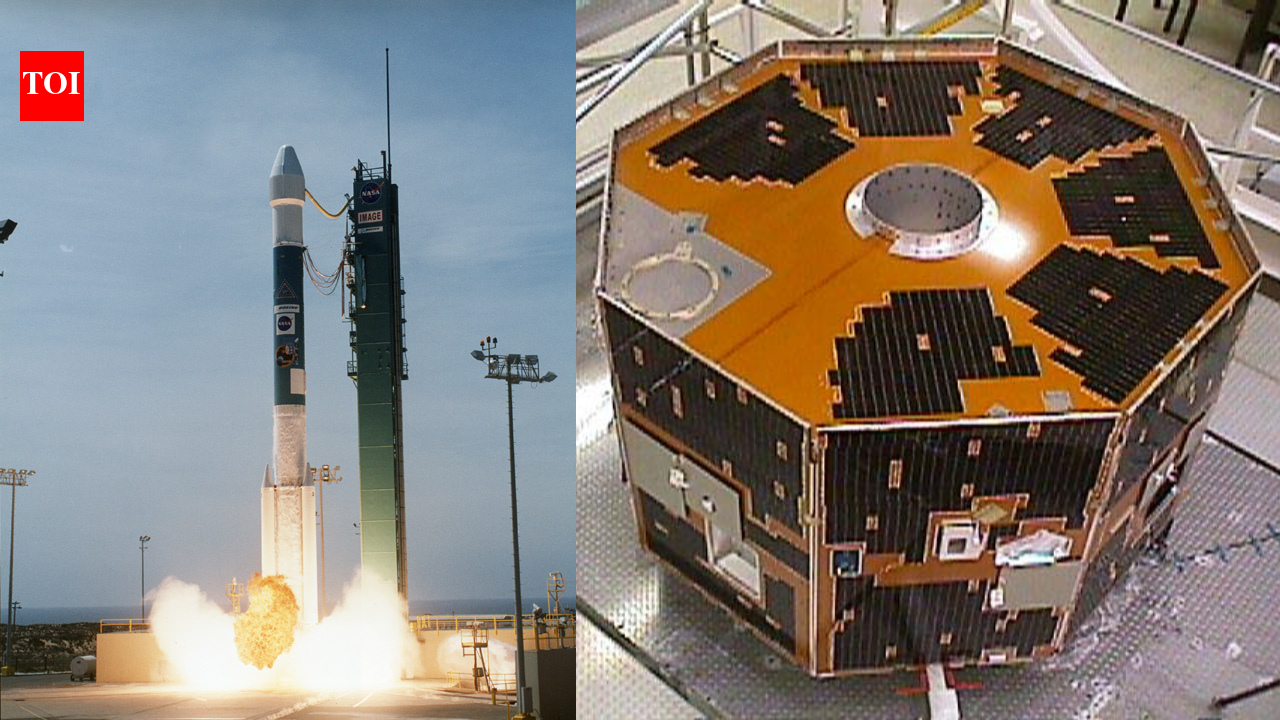
 Launch of IMAGE spacecraft aboard of Delta 277 | Wikimedia Commons For more than 12 years, NASA’s IMAGE spacecraft had been silent. Contact with the satellite was lost on December 18, 2005, and attempts to recover it ultimately failed. Then, on January 20, 2018, Scott Tilley, an amateur astronomer and electrical technologist in British Columbia, picked up an unexpected signal while scanning radio frequencies from his home. Tilley was looking for signals associated with another spacecraft when his equipment detected something in a different orbit. By comparing the signal’s Doppler characteristics with orbital information in a satellite catalog, he traced it to spacecraft 26113, the Imager for Magnetopause-to-Aurora Global Exploration, better known as IMAGE. NASA’s later reconstruction of the recovery described how Tilley initially logged the detection and continued reviewing his data before realizing the stronger signal belonged to a spacecraft that had been considered lost for years. NASA’s mission timeline states that the spacecraft had originally launched on March 25, 2000, to study Earth’s magnetosphere, the region shaped by the planet’s magnetic field. Its mission used several imaging techniques to examine charged particles and other phenomena around Earth. After the signal disappeared in 2005, the spacecraft’s mission was declared over. The detection in January 2018 therefore raised an unusual possibility: IMAGE might still be operating, or at least transmitting, after more than a decade without contact. Science’s report on Tilley’s discovery also documented the unexpected recovery story.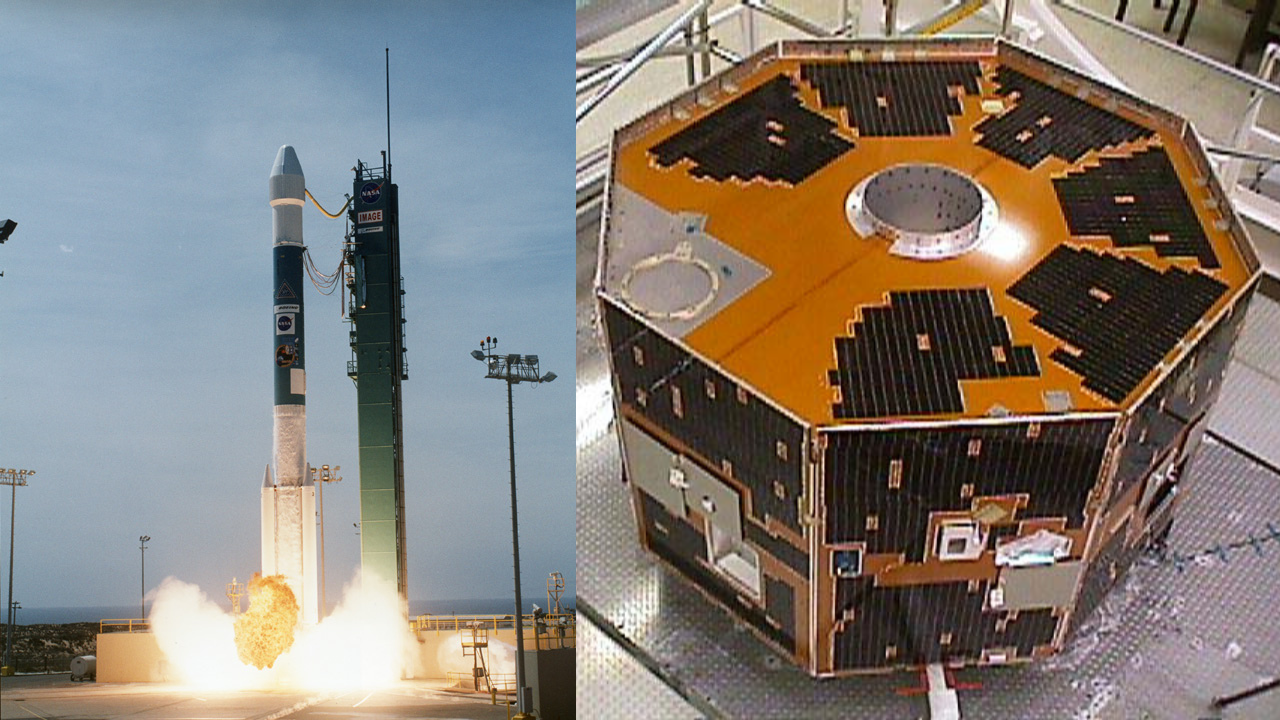
Launch of IMAGE spacecraft aboard of Delta 277 | Wikimedia Commons
A signal found during an unrelated searchTilley did not immediately know the full history behind the satellite he had detected. NASA says he searched public information about the object and found references describing the IMAGE mission in the past tense. He then located material about the spacecraft’s earlier failure and learned that NASA had lost contact with it years earlier. The realization changed the significance of the signal. Tilley published his observations and began trying to reach people connected with the mission. On January 23, he contacted James Burch, IMAGE’s principal investigator at the Southwest Research Institute. Burch responded and passed the information to other members of the former mission team. NASA personnel then began working to determine whether the signal really came from IMAGE and whether they could establish communication with the spacecraft. The task involved more than simply identifying a familiar radio frequency. Engineers needed to compare the detected signal with IMAGE’s known characteristics and recover old mission information that had not been used for years. NASA coordinated observations and prepared its communications systems for another attempt to reach the satellite. The sequence was especially complicated because IMAGE had been designed and operated using technology from an earlier era. Software, databases and command systems associated with the mission had to be revisited before engineers could assess the spacecraft’s condition. It initially began as an amateur observer’s unexpected detection had become an effort involving NASA, former IMAGE personnel and other observers.NASA confirmed the spacecraft’s identityNASA confirmed on January 30, 2018, that the object Tilley had detected was indeed IMAGE. The confirmation came after multiple observations of the radio signal matched characteristics expected from the spacecraft. NASA later reported that the Johns Hopkins Applied Physics Laboratory successfully collected telemetry, including information identifying the spacecraft as IMAGE. Some basic housekeeping data could also be read, indicating that at least parts of its main control system were operational. Early analysis also suggested that the spacecraft’s battery was charged and that the satellite appeared to be in relatively good condition. That did not mean NASA could immediately restart its scientific instruments. Engineers faced the separate problem of recreating or adapting software and command systems that had not been used since the mission ended. NASA’s recovery effort continued through 2018, but communication was unstable. IMAGE’s signal weakened and disappeared in February, returned strongly in May, and then became intermittent again. NASA said the reason for those changes was not known. The spacecraft could transmit telemetry at times, but attempts to send commands were only partly successful.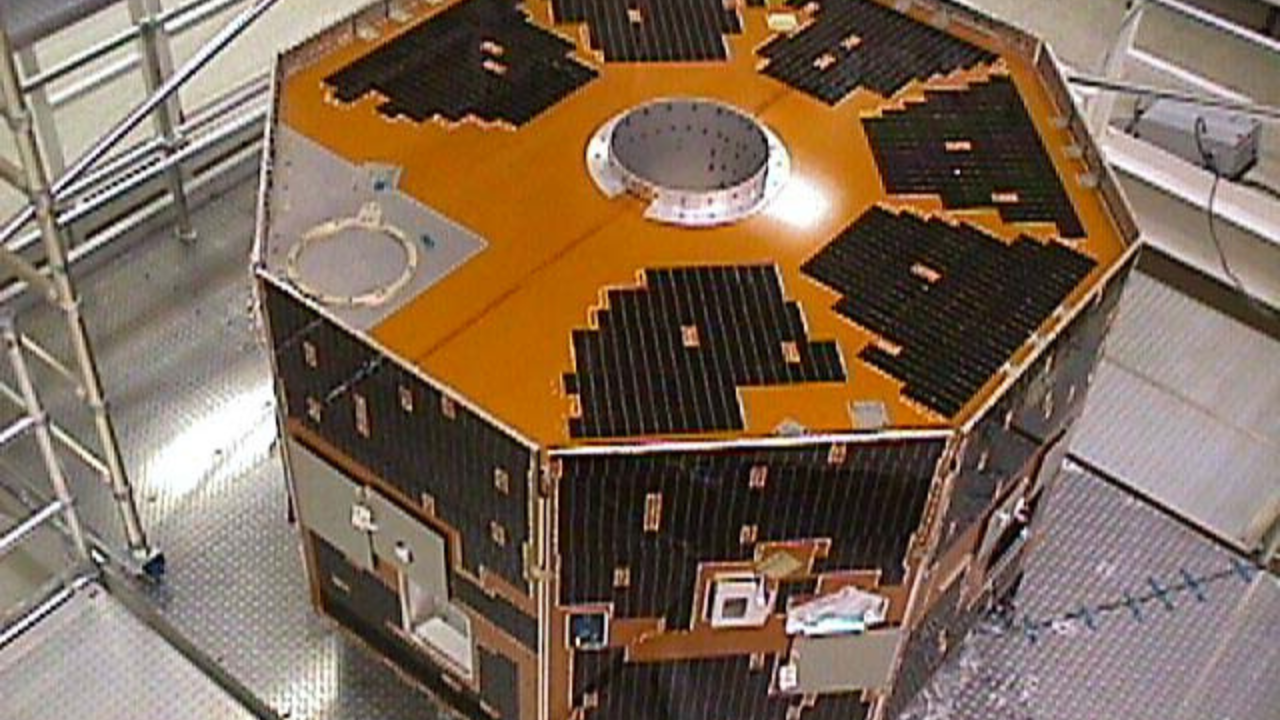
IMAGE (Explorer 78) satellite in preparation | Wikimedia Commons
An old spacecraft that kept returning to silenceThe signal’s behavior remained inconsistent, and engineers could not reliably restore full communication or resume normal spacecraft operations. NASA’s later account says IMAGE eventually returned to the quiet state seen earlier in 2018 despite efforts by teams working to lock onto and communicate with it. Still, the January detection had established one fact that had seemed impossible when contact was lost in 2005: the spacecraft had not simply disappeared from orbit or become permanently inert. It was transmitting, and its signal had been found not by a planned NASA search but by an amateur observer scanning the sky from British Columbia. IMAGE remains associated with research conducted during its original mission, when it produced large-scale observations of Earth’s magnetosphere and related plasma environments. Its unexpected signal in 2018 also created an unusual recovery case for an aging spacecraft whose original ground systems and operational software belonged to another generation of space technology. The confirmed rediscovery remains documented by NASA as a January 2018 recovery event, beginning with Tilley’s January 20 detection and followed 10 days later by confirmation that the long-silent transmitter was NASA’s IMAGE spacecraft.