
Reading Time: 2 minutes

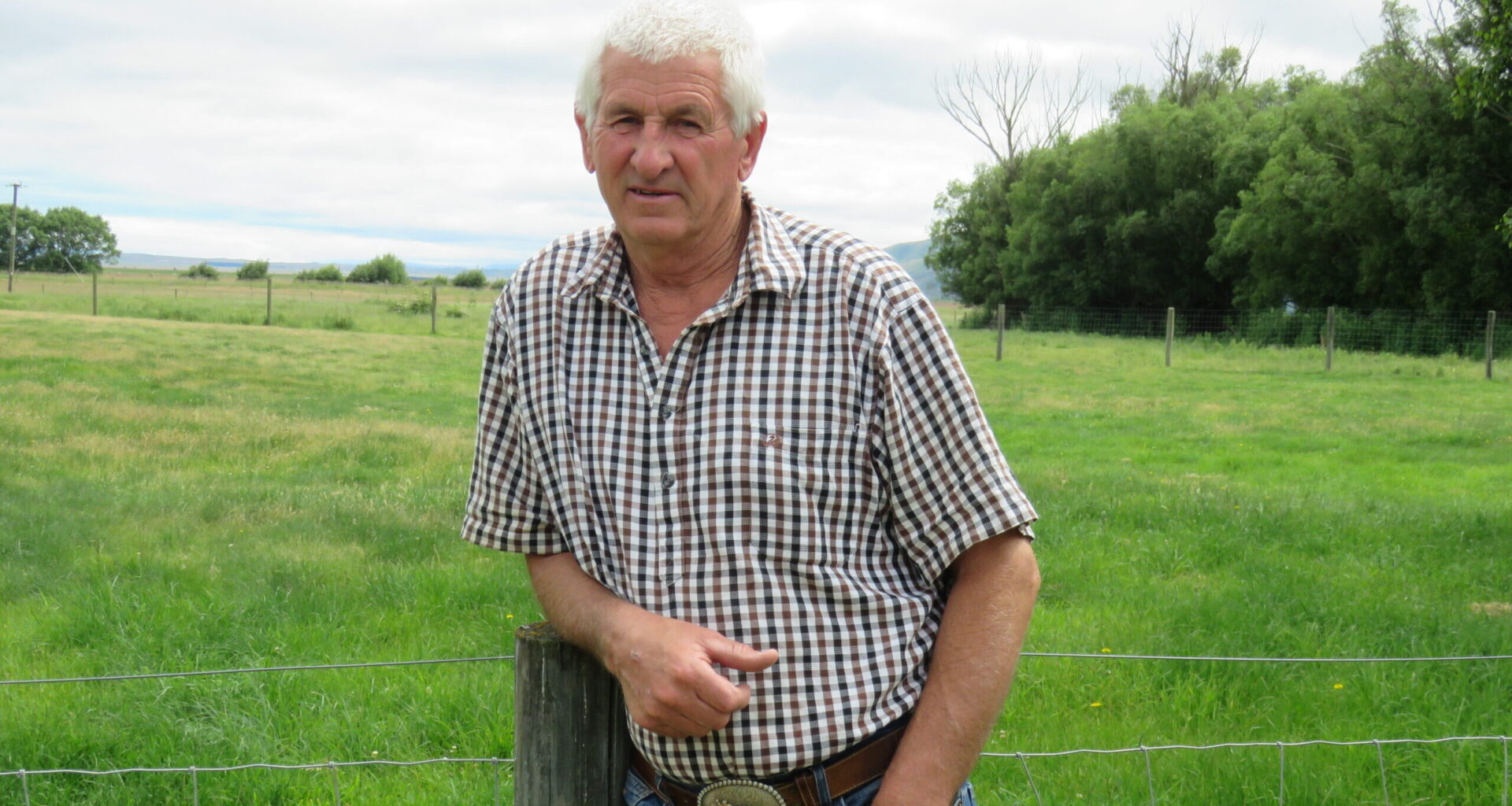
A 320 hectare solar farm to be built on Haldon Station will make the Mackenzie Basin station more sustainable, says long-term manager Paddy Boyd.
Electricity generated will help drive the centre pivot irrigators he installed to finish stock and prevent wind-blown loss of topsoil, while income from hosting the panels will help fund control of rabbits and wilding conifers.
Approval was this week granted to Lodestone Energy to develop the farm on the 22,000ha station on the shores of Lake Benmore, with construction likely to be complete in about 18 months.
Boyd said he spent three years investigating solar farms, visiting several in Australia to see how they fitted into the landscape, something that had to work in the picturesque Mackenzie.
He chose a site away from public view but close to transmission lines and would not change his choice.
“It is a large area but it’s not conspicuous so it will not be a blight.”
New Zealand is about to have an influx of solar farms.
There are currently about 350ha of solar farms in the country with an estimated 2000ha of additional land consented for expansion – and a further 10,000ha under consideration.
Federated Farmers has raised concerns about the scale of the growth, because these farms are also being built on Class 1 and 2 land.
The need for utility-sized solar farms would be negated if farms and homes installed their own solar panel systems, said a solar advocate.
Mike Casey, the chief executive of Rewiring Aotearoa, said if every farm installed solar, there would be a 60% increase in renewable energy and not the need for utility-scale solar farms.
“For every solar panel installed on a dairy shed or roof top, ultimately it means a panel does not need to be installed at a utility-scale solar farm.”
The country needs to double its electricity generation in the decades to comes, and solar will be a major source, he said.
The challenge is not the technology, but implications for people, and he said he understands concerns about the impact of large utility-scale solar farms.
Casey said a benefit from locally generated electricity is that it does not require a massive network of wires and poles, the cost of which contributes about 50% of household electrical bills.
Boyd said since arriving on Haldon he has tried to make the dryland farm sustainable.
In the first few years he battled constant dust storms from wind-eroded topsoil.
Pivot irrigation was installed to stop that soil loss but access to single phase power meant the irrigators had to be driven by diesel motors.
“Here we’re saying we want to be sustainable but having to use fossil fuels to drive our pivot irrigators.”
Income generated from the solar farm will also allow him to invest in rabbit and wild conifer control.
Danny Donaghy, a professor of dairy production systems at Massey University, said researchers have found pasture growth under solar panels fell by 80%.
Between the rows of panels, the structure have a protective effect, reducing moisture loss and offering wind protection, which means growth stays longer into spring and summer.
Pasture growth between panel rows fell about 5%.
If panels are installed on low-producing land, Donaghy said, the impact on a farm would be minimal.
Massey researchers intend putting collars on sheep in solar farms to monitor their behaviour.