
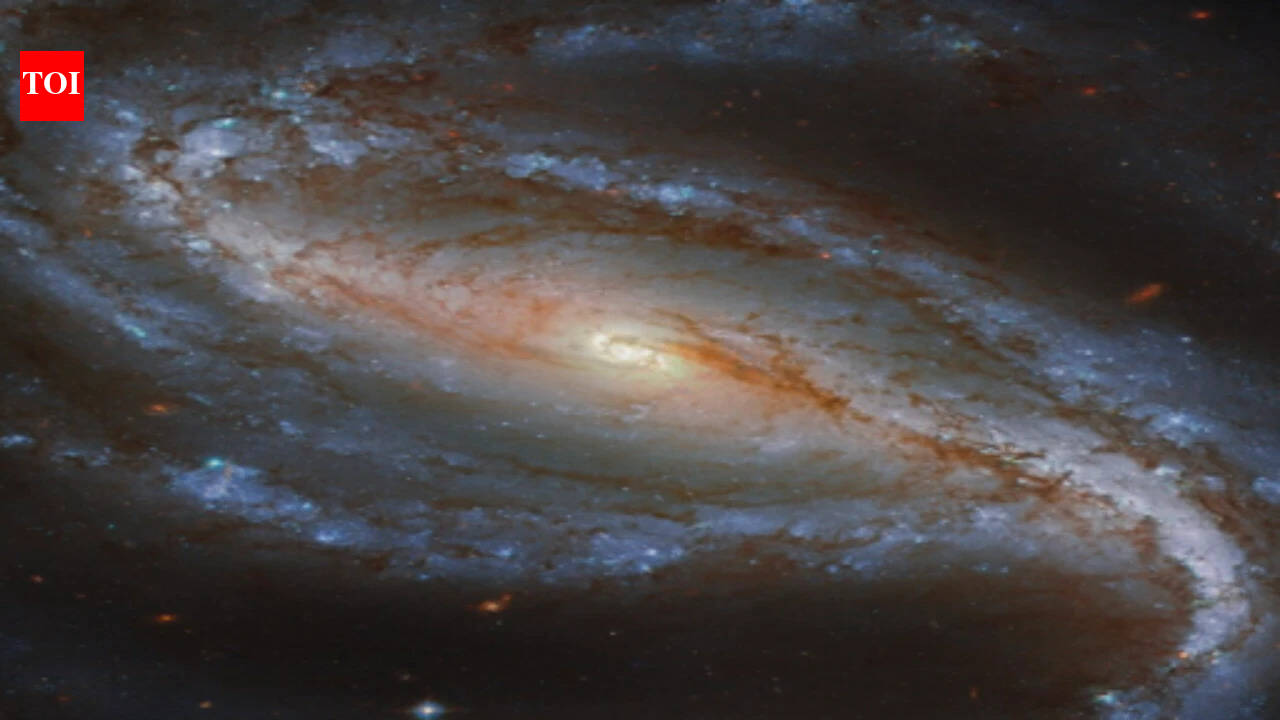
 First discovered in 1798 by German-English astronomer William Hershel, NGC 613 is a galaxy which lies in the southern constellation of Sculptor 67 million light-years away. Image Credit: Wikimedia Commons Víctor Buso wasn’t hunting for a supernova. He was just checking whether his camera worked. On September 20, 2016, Víctor Buso, an amateur astronomer in Rosario, Argentina, pointed his 16‑inch telescope at NGC 613, a barred spiral galaxy in the constellation Sculptor located about 65–70 million light‑years from Earth. He wasn’t running a survey or searching for anything specific.He was using the new camera he had attached to the telescope to take a series of short-exposure photographs and check whether everything was working correctly. That routine test proved important later.A new point of lightAccording to CONICET, as Víctor Buso examined the images he had taken on September 20, 2016, he noticed the appearance of SN 2016gkg in NGC 613. Moving from photo to photo, the point became progressively brighter. In about 25 minutes, the point grew from invisible to clearly visible in each new frame. Buso captured one of the earliest observed rises in brightness from a massive star undergoing a supernova explosion, including the shock-breakout and early shock-cooling phases. The images provide a rare view of the explosion’s earliest observable stages.The finding quickly came to the attention of astronomer Melina Bersten and her team at the Instituto de Astrofísica de La Plata. She recognized that Buso had made an important discovery; astronomers had long hoped to record this very rare event, and estimates of the odds have ranged from about one in a million to one in 100 million. Bersten has estimated the odds at between one in 10 million and one in 100 million.What makes it so difficult to observe this phaseSupernovae occur throughout the observable Universe, but the challenge is observing their earliest stage. The shock breakout takes place when the shock created by the explosion reaches the star’s surface or envelope and the burst of radiation escapes. The event is brief, and the optical rise that follows can last from several minutes to hours or even days.Moreover, it happens suddenly at some random point in the Universe without prior announcement. Survey telescopes detect supernovae after an explosion, when it has become too bright to ignore. Thus, observing the first stages of a supernova requires the telescope to be pointed at the right place at the right moment.Buso’s new camera and habit of checking his test images placed him in just such a scenario. Most supernova searches compare new galaxy images with older reference images to identify newly appearing points of light. This method is effective once a supernova has become detectable in follow-up images, but it is poorly suited to catching the earliest moments of an explosion because there is no way to know in advance which galaxy will host the event.Transforming a fortuitous picture into scientific research Once Bersten realized the significance of Buso’s image, she contacted her colleagues for further observations. A team of researchers led by Filippenko carried out further observations of the supernova over the following weeks and months. According to Van Dyk et al., Astronomer’s Telegram No. 9573, 2016, Filippenko’s group recorded seven spectra using the 3‑meter Shane telescope at the Lick Observatory in California and conducted additional spectroscopic measurements with the twin 10‑meter Keck telescopes in Hawaii, splitting the star’s light into its spectral components like a prism does with white light.Using the spectra, the scientists classified the supernova, identified as SN 2016gkg, as a Type IIb, the collapse of a massive star that had shed most of its outer hydrogen layers before exploding. As per Bersten et al., arXiv:1610.04587, 2016, comparing their measurements to theoretical models, they estimated that the progenitor star was initially 15 to 20 times as massive as the Sun. However, the star did not retain all of that mass. Based on their calculations, the scientists concluded that the star likely lost much of its mass through stripping by a companion star, leaving it about five times as massive as the Sun when it exploded.In an interview, Filippenko said that observations made at the very start of the explosion provide unique data unavailable any other way.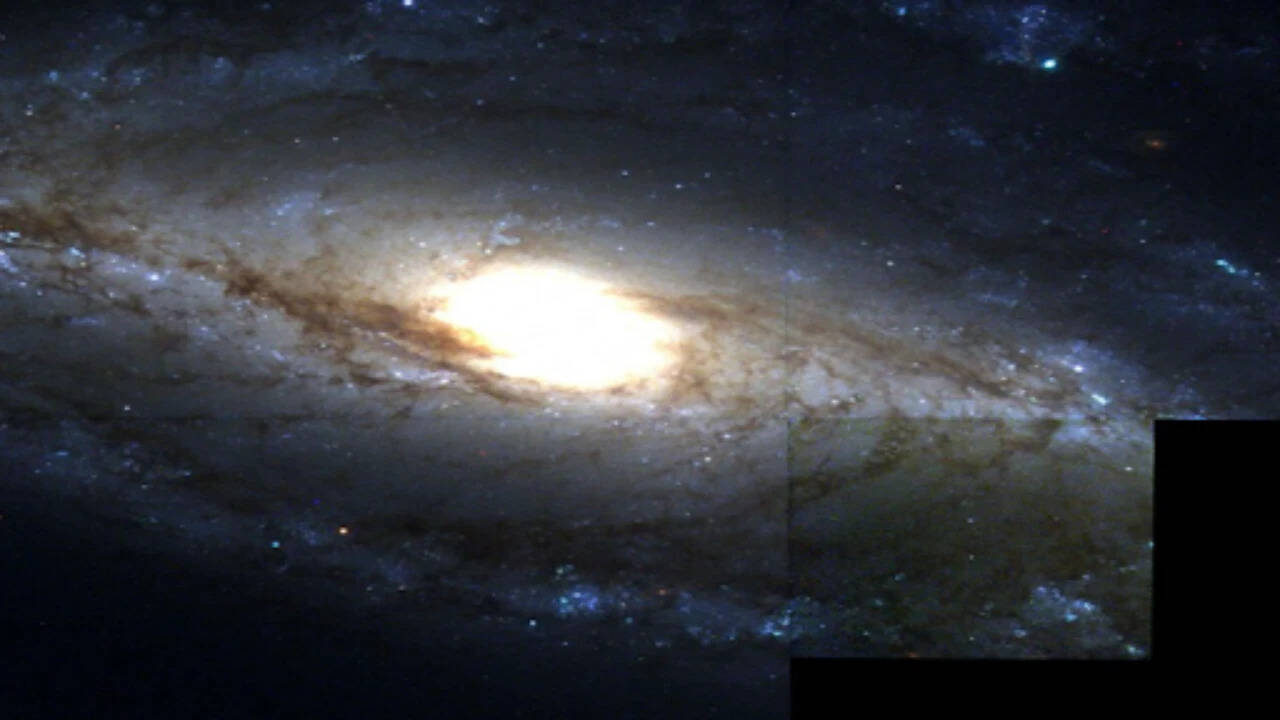
NGC 613 galaxy by Hubble space telescope. Image credits: Wikimedia Commons
An accidental gift to the science of astronomyAccording to Bersten et al., the results, using Buso’s initial photographs and data from global follow-up observations, were published in Nature in February 2018. In a field that depends heavily on expensive telescopes, scheduled observing time and expert crews, the discovery was notable because it came from an amateur astronomer working from a rooftop observatory in Rosario, testing a new camera with no intention of photographing a supernova.The shock breakout remains difficult to catch deliberately. By 2026, space telescopes and increasingly capable robotic surveys have improved the chances of detecting such events, but the phenomenon remains transient and unpredictable and still requires observations to capture the right place at the right time. Buso’s photos were not taken because he knew where to aim his camera; they were taken because he tested the camera, checked the results quickly and noticed that something had changed in the image.