
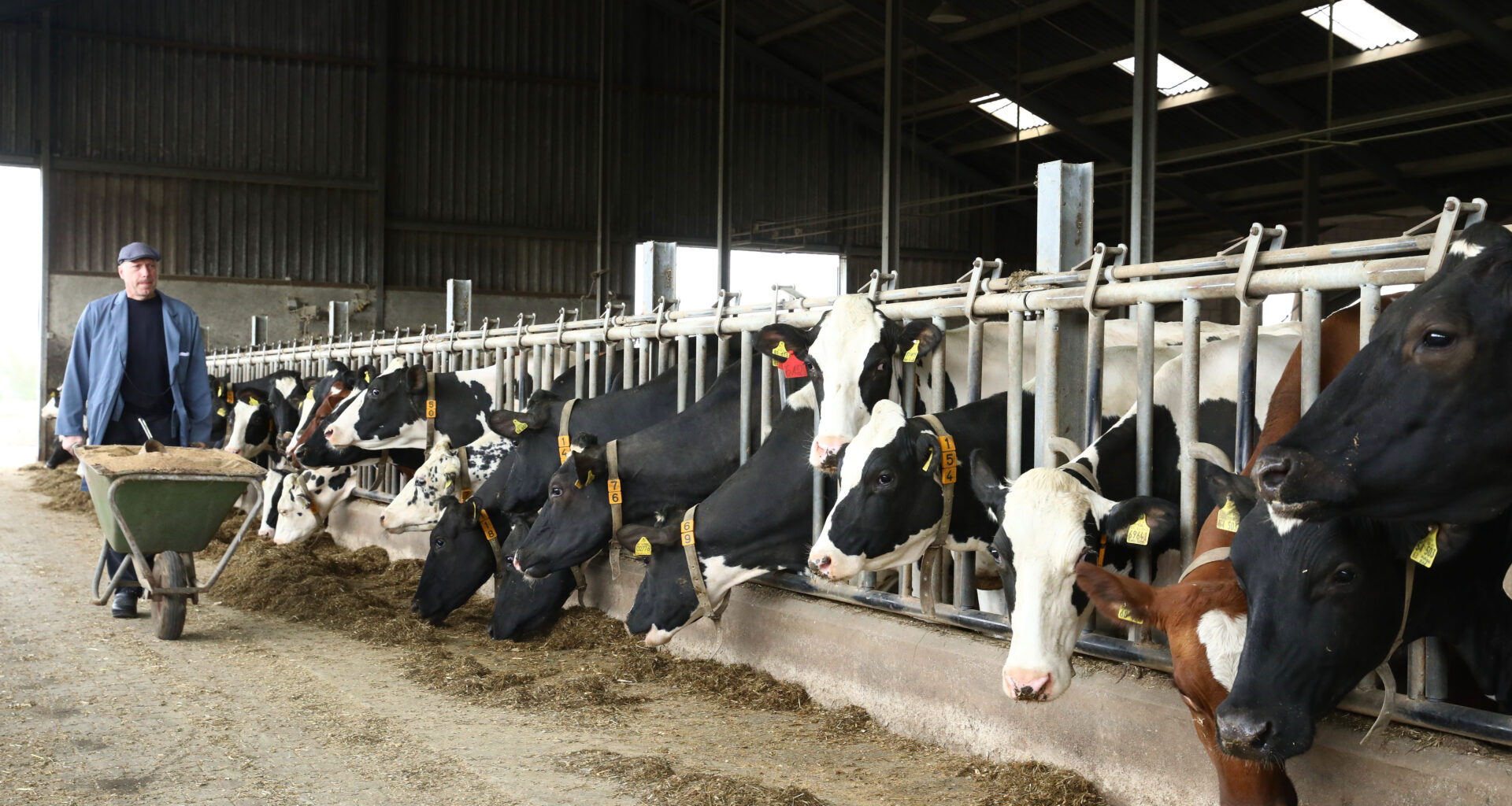
The Dutch organisation Royal GD has observed an increase in reports from veterinarians since last week Monday, noting diarrhoea, fever, and a drop in milk production among their clients’ cattle. This could potentially be linked to the new viral disease affecting cattle that has been detected in France, Switzerland, and Germany in recent weeks.
The new viral disease in France, Switzerland and Germany is the orthobunyavirus belonging to the Simbu serogroup. The increased number of reports is partly due to a message distributed by the Dutch animal health organisation GD last week via its WhatsApp channel for practitioners, aimed at raising awareness of these clinical signs.
The message requested that suspected cases be reported to animal health monitoring system ‘Veekijker’. Veekijker veterinarians are currently visiting the farms to assess the clinical situation and are collecting diagnostic samples to gain greater clarity regarding the cause of the observed symptoms. To date, there have been no confirmed cases.
Schmallenberg
The virus is related to the Schmallenberg virus and is primarily transmitted by biting midges (‘Culicoides’ species). There is currently no evidence of direct transmission between animals. However, transmission from an infected dam to the unborn calf during pregnancy is a possibility.
Experts at Royal GD are in close contact with colleagues within the European veterinary monitoring network to track developments and exchange information.
As with other viruses in the Simbu serogroup, symptoms in adult cattle generally appear to be limited to an acute illness characterised by fever, diarrhoea, and a drop in milk production. Potential consequences of the infection are also anticipated in pregnant animals, potentially resulting in abortion, stillbirth, or congenital abnormalities in calves.
As far as is currently known, there is no evidence that the virus causes disease in humans.