
Over 800,000 graduates enter Kenya’s job market every year, pushing many toward entrepreneurship as a path to financial independenceSeveral viable businesses in Kenya require startup capital ranging from KSh 8,000 to KSh 102,000, covering sectors from food vending to digital servicesEntrepreneurs venturing into low-capital businesses face challenges including county enforcement, stock spoilage, and competition
Search option is now available at TUKO! Feel free to search the content on topics/people you enjoy reading about in the top right corner 😉
With more than 800,000 graduates joining Kenya’s job market annually, entrepreneurship has emerged as a credible alternative to formal employment for many young people across the country.
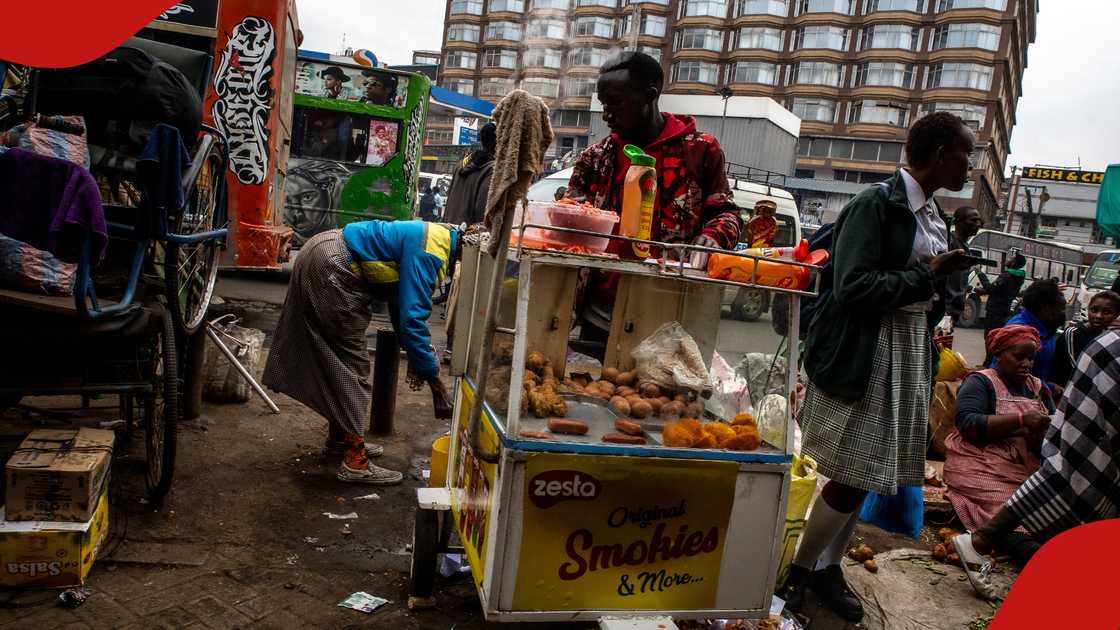 Street vendors sell food items to pedestrians in Nairobi CBD. Smokie business is one othe low-capital hustles in the city. Photo: Donwilson Odhiambo/SOPA Images/LightRocket via Getty Images.
Source: Getty Images
The encouraging reality is that launching a business does not require substantial capital. From Nairobi’s bustling streets to Kisumu’s open-air markets, Kenyans are building sustainable enterprises on budgets starting at KSh 15,000.
Low-capital businesses within reach
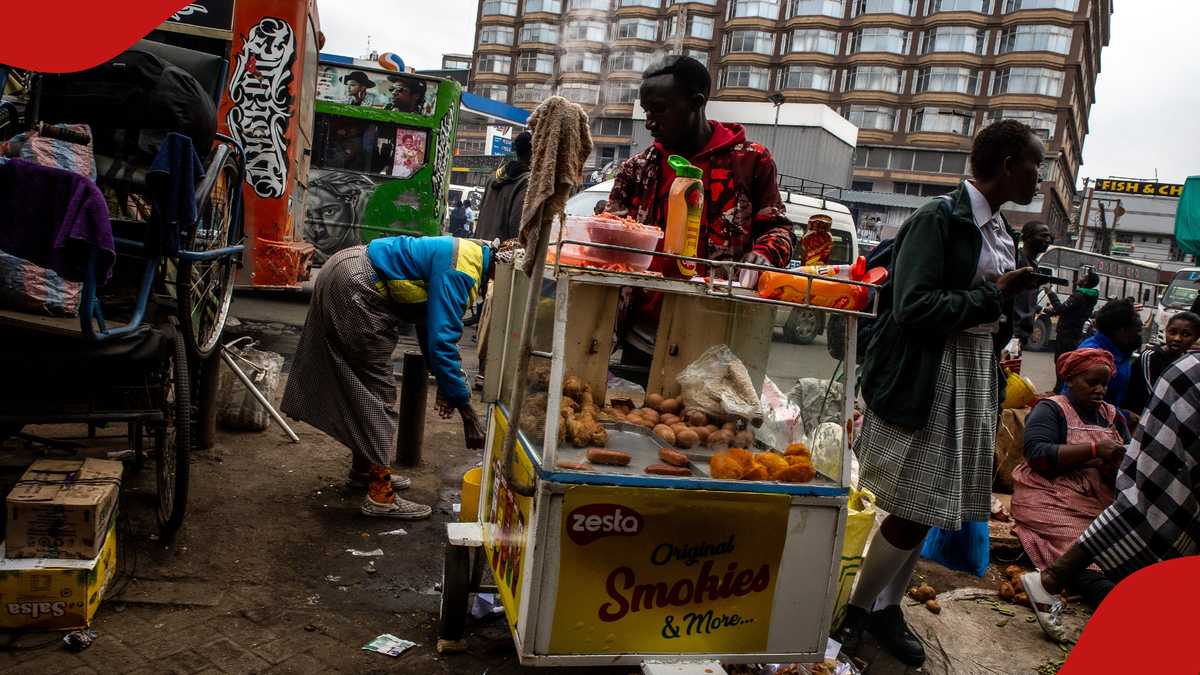
A smokie and eggs trolley remains one of the most accessible entry points, requiring between KSh 15,000 and KSh 20,000. Positioned near schools or bus stops, a trolley can generate consistent daily income.

Read also
World’s richest country announces up to KSh 77k special payment to help citizens with living costs
Search option is now available at TUKO! Feel free to search the content on topics/people you enjoy reading about in the top right corner 😉
For those with digital skills, social media management is even cheaper to launch, with startup costs as low as KSh 8,000.
With more than 10 million Kenyans active on social media platforms, businesses are increasingly seeking people who can manage their online presence, create content, and run advertising campaigns.
Fruit vending, requiring KSh 22,000 to KSh 31,000, offers universal demand and fast stock turnover, while a mobile tea and coffee cart serving commuters and office workers can be launched for KSh 25,000 to KSh 48,000.
Other businesses requiring slightly higher but still modest capital include liquid soap and detergent production (KSh 30,000 to KSh 50,000), mitumba clothing retail (KSh 35,000 to KSh 620,000), and household cleaning supplies distribution (KSh 50,000 to KSh 110,000).
From barbershops to grocery shops
A barbershop, known for high-frequency demand and cash transactions, requires between KSh 55,000 and KSh 135,000. A uji (porridge) stall positioned in a busy market or near a school can be set up for KSh 65,000 to KSh 230,000.

Read also
Tony Ndiema: Questions over KSh 390k used to renovate house as images surface
Other options include a seedling nursery (KSh 75,000 to KSh 295,000), jua kali metalwork or carpentry (KSh 75,000 to KSh 395,000), cereal shops selling staples like maize and beans (KSh 75,000 to KSh 275,000), and cooking gas retail (KSh 80,000 to KSh 180,000), which requires compliance with Energy and Petroleum Regulatory Authority (EPRA) safety standards.
Candle making, with premium scented and decorative products selling for KSh 300 to KSh 800 each, requires KSh 95,000 to KSh 420,000.
The classic corner grocery shop, known locally as a duka, sits at the top of the capital range at KSh 102,000 to KSh 320,000.
Below is the list as compiled by 100+BizKe, a free resource for Kenyan entrepreneurs.
Smokie & Eggs Trolley Business – KSh 15,000 – 20,000Social Media Management Agency – KSh 8,000 – 45,000Fruit Vending – KSh 22,000 – 31,000Mobile Tea & Coffee Business – KSh 25,000 – 48,000Liquid Soap & Detergent Making – KSh 30,000 – 50,000Mitumba (Second-Hand Clothing) Business – KSh 35,000 – 620,000Household Cleaning Supplies Business – KSh 50,000 – 110,000Barbershop – KSh 55,000 – 135,000Uji Power Stall – KSh 65,000 – 230,000Seedling Nursery Business – KSh 75,000 – 295,000Jua Kali Business – KSh 75,000 – 395,000Cereal Shops – KSh 75,000 – 275,000Cooking Gas Retail – KSh 80,000 – 180,000Candle Making Business – KSh 95,000 – 420,000Grocery Shop – KSh 102,000 – 320,000
Read also
UAE details how much a foreigner must be earning monthly to be considered for permanent residency
Common pitfalls for new entrepreneurs
Aspiring business owners should prepare for several recurring challenges. County council enforcement officers, commonly known as kanjos, frequently target unlicensed vendors; securing a single business permit early on reduces that risk significantly.
Perishable stock spoilage can be managed by purchasing only what is likely to sell within one to two days. Theft remains a concern, and building trust with neighbouring traders provides an informal layer of security.
Seasonal slowdowns, particularly during school holidays, call for diversified product offerings and disciplined savings during peak periods.
High competition in low-barrier sectors demands that newcomers distinguish themselves through quality and reliable service.
Starting a business in Kenya with KSh 15,000 is not just possible. It is being done by thousands of young entrepreneurs across the country. From creative services to manufacturing, retail, and food services, opportunities abound for those willing to take the first step.

Read also
Kenyan man shares difference in KU fee structure between 2023, 2026: “Is it this bad?”
With discipline and the right approach, your KSh 15,000 investment can be the seed that grows into something much bigger.
The recent Economic Survey 2026 revealed significant wage disparities in Kenya’s private sector, alongside a notable rise in average earnings.
The report starkly contrasts the high salaries of employees in international organisations with the meagre incomes of those in agriculture, raising questions about equity and fairness in the country’s labour market.
Source: TUKO.co.ke