
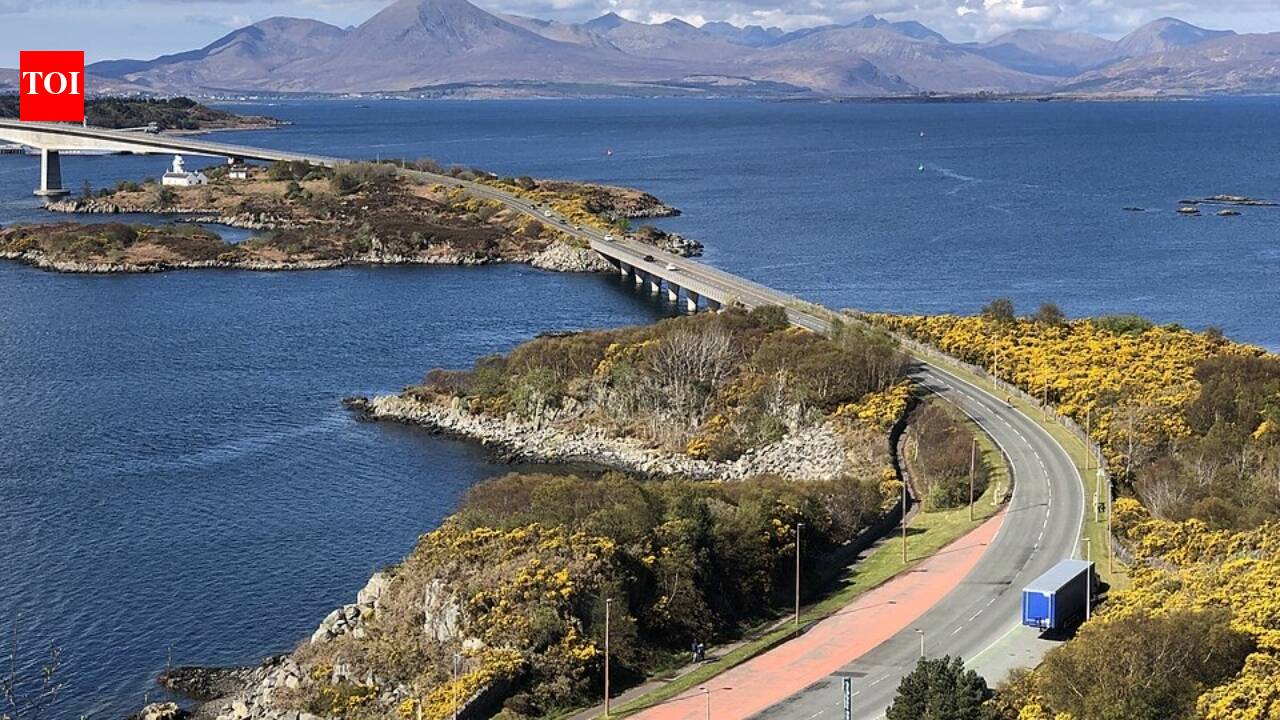
 Skye Bridge on Eilean Bàn. Image credits: Wikimedia Commons In January 1968, naturalist and author Gavin Maxwell lost nearly everything when a fire destroyed his remote home at Sandiag on Scotland’s west coast. The inferno also killed Edal, one of the otters that had become central to Maxwell’s life and writing. The naturalist survived the fire and moved to Eilean Bàn, a tiny island in the Kyle of Lochalsh, where he hoped to create a new home and eventually establish a small wildlife park. According to the Eilean Bàn Trust, the island became Maxwell’s final home and remains closely associated with his pioneering work.A move from Sandaig to Eilean BànMaxwell had purchased the former lighthouse keeper’s accommodations on Eilean Bàn in 1963, several years prior to the Sandaig fire. The island, whose name means ‘White Island,’ lies between the Scottish mainland and the Isle of Skye, covering roughly six acres. Following the purchase, Maxwell’s close friend Richard Frere undertook the major structural work to convert the two separate lighthouse cottages into a single habitable residence. However, because Maxwell remained fully engrossed in his writing and conservation work at Sandaig, the interior of the Eilean Bàn property was left largely unfinished. It served only as an occasional summer studio, and after the Sandaig disaster stripped him of his primary home that this uncompleted island retreat was hastily pressed into service as his immediate refuge.As per biographical research, on January 21, 1968, Maxwell and his assistant Andrew Scott were in Sandaig when the house caught fire. The pair attempted to extinguish the blaze and rescue the animals, managing to save Teko, another of Maxwell’s otters, but Edal died. The house was reduced to ashes, leaving the author with almost none of his possessions. The loss was especially heartbreaking as Maxwell had already transformed Sandaig into the setting for his best-known work, Ring of Bright Water. Published in 1960, the book described his life with Mijbil and subsequent otters and became an international bestseller. An article by The Independent reported that the book eventually sold more than one million copies. Notably, while this surge in global popularity brought an unprecedented wave of eco-tourists that compromised the absolute solitude Maxwell originally sought, it also shifted his paradigm. He realized that private isolation alone could no longer protect these species, prompting him to pivot toward designing structured, public-facing wildlife parks that could channel popular enthusiasm into formal conservation education.An island turns into Maxwell’s new abodeEilean Bàn offered Maxwell something different, as instead of attempting to recreate what he had in Sandaig, he imagined developing the island into a small wildlife refuge. According to historical accounts, he planned a private sanctuary featuring native West Highland wildlife, as well as a visitor centre at Kyleakin. The naturalist had already begun assembling animals, including Teko, a gannet, two foxes, a tawny owl and feral goats.In 1969, Maxwell invited naturalist John Lister-Kaye to join him on the island and help develop the ambitious wildlife park. Lister-Kaye later described his experience on the island in his book The White Island, which was published in 1972. However, the original plan never progressed far, as Maxwell was suffering from cancer and died on 7 September 1969, less than twenty months after the fire that had driven him from Sandaig.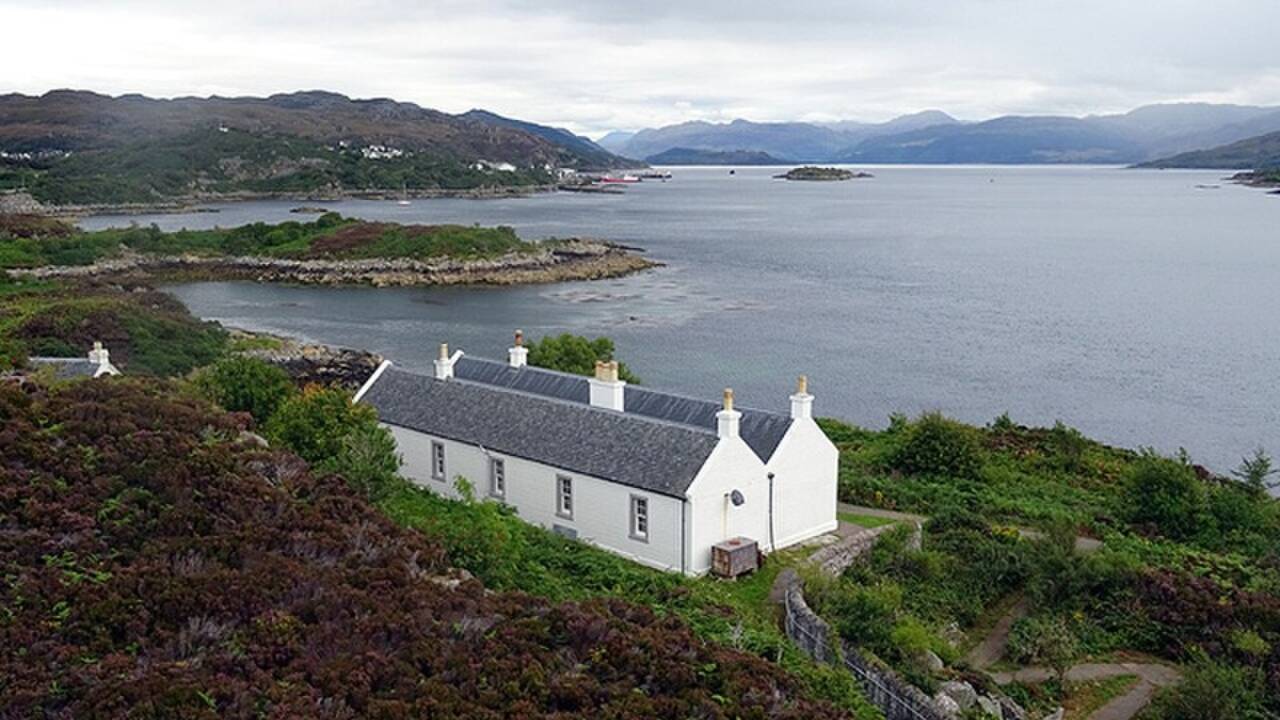
Lighthouse keepers’ accommodation on Eilean Bàn. Image credits: Wikimedia Commons
It is, however, worth noting that while Maxwell’s proposal for a wildlife sanctuary never became the institution he envisioned, the island subsequently acquired a conservation role of its own. Data compiled by the Trust heading into 2026 confirms that the strictly managed habitats now support stable, breeding populations of otters, seals, and pine martens. Furthermore, the surrounding marine zone has evolved into a key tracking corridor for migratory minke whales and basking sharks, monitored by modern acoustic arrays installed in the early 2020s.Maxwell’s influence in otter conservationMaxwell’s influence also extended beyond the island itself, as his books helped make otters familiar to a mass English readership at a time when concern about wildlife conservation was growing. A study of British environmental discourse noted that Ring of Bright Water helped establish Maxwell as a major cultural figure in Britain’s relationship with otters.The Eurasian otter (Lutra lutra) depends heavily on healthy freshwater and coastal ecosystems, thus making its presence a useful indicator of habitat quality. The author’s writings brought the animal’s behaviour and ecology into popular culture, while later conservation initiatives increasingly focused on protecting the waterways and coastal habitats on which the species heavily depends.Following Maxwell’s death in 1969, the island’s future hung in the balance for a quarter of a century. The property was eventually compulsorily purchased by the Scottish Office to serve as a construction base and support pillar for the Skye Road Bridge, which opened in 1995. To save the remaining landscape from industrial neglect, a local community campaign backed by the Born Free Foundation stepped in, successfully purchasing the island at auction. This effort culminated in the formation of the Eilean Bàn Trust, which has owned and managed the island as a protected nature reserve since 1998, while preserving Maxwell’s former home and the lighthouse.Though Maxwell did not live to realise his vision, the ultimate transformation of Eilean Bàn is striking. Today, through the efforts of the Trust, the landscape honours the naturalist’s legacy, who made otters famous, while continuing to provide refuge for wildlife, fulfilling the very vision of a sanctuary that Maxwell had hoped to create in his final years.