
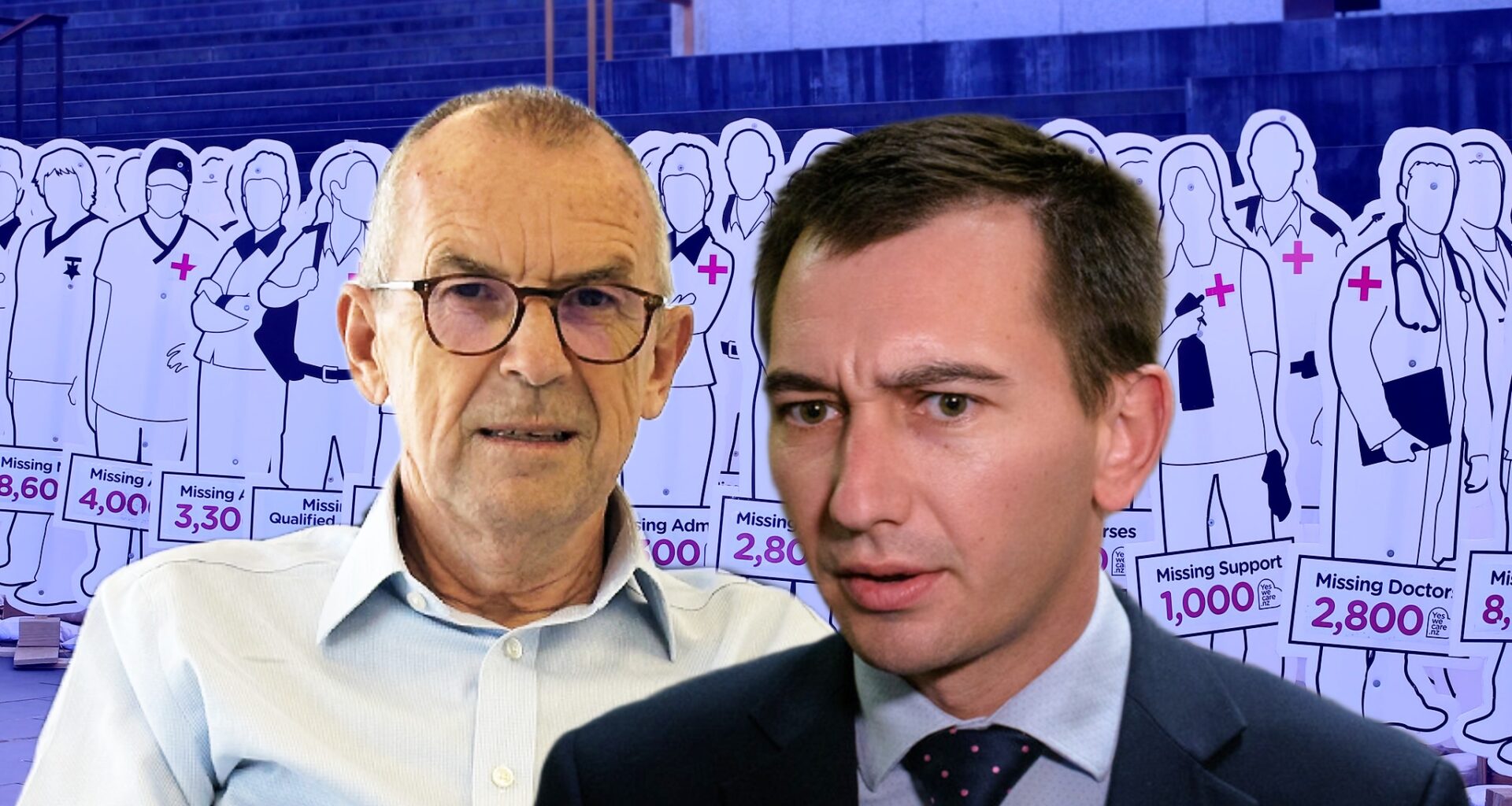
Public Service Commissioner Sir Brian Roche will now have the final say on Health NZ’s collective bargaining agreements with workers, following a government directive that unions fear could turn the country’s largest employer into a “puppet”.
The move is the latest effort to have the Public Service Commissioner take a more hands-on role in public sector pay negotiations to keep costs down, following a similar approach to the education sector.
In a ministerial direction issued on July 21, Health Minister Simeon Brown ordered Health NZ to obtain the Public Service Commissioner’s approval for bargaining strategies, draft offers and terms of settlement.
The agency must also include the commissioner in collective bargaining processes, providing him with “information reasonably necessary to facilitate informed involvement”.
Health NZ was still responsible for leading day-to-day bargaining, managing employment relationships and its statutory obligations, and funding workforce costs, the direction said.
The order has been issued under the Healthy Futures (Pae Ora) Act, after the coalition Government changed the law to allow the Public Service Commissioner to take on such a role.
In its departmental report on the changes, the Ministry of Health said the new approach was consistent with the Government’s direction in areas like education, and would create “a co-ordinated and fiscally responsible approach to collective bargaining, particularly where there is a significant potential impact on the Crown and precedent for pay and conditions in other sectors”.
But health unions fear the commission’s new role could reduce Health NZ’s flexibility during negotiations, while politicising the bargaining process and distracting from the main issues facing workers.
NZ Nurses Organisation chief executive Paul Goulter said the move was “an unnecessary overreach”, with Health NZ designed to act as a standalone entity and handle its own employment decisions.
“It’s a further politicisation of collective bargaining across the public sector, and health is one of the last areas to be dragged into this sort of framework that now exists.
“What that does is it treats every government department and agency the same and doesn’t allow for suitable discretion in the hands of the senior management of that agency … I don’t think that’s a particularly useful way to approach employment relations.”
Individual government departments were being turned into “puppets for the Public Service Commissioner” and government ministers, which in turn would reduce the commission’s ability to act as a quasi-mediator for stalled bargaining.
Association of Salaried Medical Specialists executive director Sarah Dalton said the union had already dealt with the commission in its last “protracted and difficult” bargaining round, where officials often did not seem well briefed on the status of talks.
“My real concern is that whatever the intentions might be, this focus on the bargaining process and who’s involved really fails to pay attention to the key issues we face, which is significant senior medical and dental workforce shortages.
“If it does signal a shift of playing hardball around bargaining on core terms and conditions for health workers, I would question what the Government’s agenda is for people’s access to healthcare.”
PSA national secretary Fleur Fitzsimons said the union welcomed Roche’s involvement in health bargaining, but it needed to come with an understanding of the pressures facing health workers and their families.
“Our collective agreements impacted by this directive cover tens of thousands of long-serving loyal public health workers.
“The commissioner will need to spend significant time understanding their work, the workplaces and the impact of bargaining claims on how our public health system operates.”
The commission and Health NZ needed to work effectively together so the bargaining process was not unduly protracted, Fitzsimons said.
In May last year, Roche announced he would take responsibility for bargaining with education unions for the first time in nearly three decades, citing the need to manage fiscal pressures across the public sector.
“Teachers and principals make up a significant and vital workforce and these settlements will likely create a precedent for other public sector bargaining.”
The commission’s role in public sector negotiations has at times proved contentious, with an independent review into its social media ads criticising strike action last year finding the organisation risked being seen as not politically neutral.
In a statement about his new role in the health sector, Roche told Newsroom he had been asked to oversee collective bargaining negotiations for nine of Health NZ’s agreements.
“Bargaining is not expected to start until the end of this year, so there is work to do before then. My focus is on working constructively with Health NZ to ensure we’re well prepared for the negotiations ahead and give effect to the ministerial direction …
“My expectation is that all parties approach the process in good faith, treat each other with respect and focus on finding practical, affordable solutions that work for everyone.”
Labour health spokesperson Ayesha Verrall said it was hard to see how the bargaining process would not be slowed by requiring Health NZ to seek approval from the commission.
“If the Public Service Commission is at the table, we have to ask are they adequately resourced to be across the intricacies of negotiating agreements of such a large organisation that will affect thousands of employees across a wide range of roles and locations?”
A spokesperson for Brown said the change had been “well signalled throughout the parliamentary process”, with the Government keen to take an all-of-government approach to collective bargaining through the Public Service Commission.