

“I was — to be frank — a spoiled, miserable, narcissistic, self-destructive and thoughtless young lout, badly in need of a good butt-kicking.” This quote, from Anthony Bourdain’s best-selling memoir “Kitchen Confidential”, introduces Tony (2026). Directed by Matt Johnson, the film is an inspiring tale of ambition and self-discovery. The story is largely fictionalized but captures the spirit and tone of the early chapters in “Kitchen Confidential”.
The film takes place in the summer of 1975. Anthony “Tony” Bourdain (Dominic Sessa), a student at Vassar College, is eager to get away from his overbearing parents for the summer. When he’s passed over for a writing fellowship in New York, Tony chases his crush, Nancy (Emilia Jones), to Provincetown, Massachusetts, claiming to have won the fellowship and being there to write.
Instead, his first night, he gets drunk and is thrown out of a dive bar for being rude to the staff. To add insult to injury, he’s robbed and left in the gutter. The bar’s owner and chef (Antonio Banderas), referred to as Chef in the film, finds him at closing time and takes him home. Tony wakes up in a hammock and realizes that he’s got no money. Chef puts him to work in his kitchen and lets him keep sleeping in the hammock outside.
Tony (2026) fleshes out the man before the world knew him.

Over the course of the summer, the audacious, lying scoundrel that is Tony learns the ropes washing dishes and shucking oysters. He keeps lying to Nancy every chance he gets, hoping he can impress her. Still, the camaraderie he finds in the kitchen and the mentorship he receives from Chef are quietly shaping him into the next chapter of his life.
Tony isn’t a biopic in the sense of making a full account of Anthony Bourdain’s life. Because the story is mostly fictional, its goal seems to be less about teaching people about Anthony Bourdain’s actions and more about the kind of person he was before the world knew him.
In the earliest parts of the film, he’s arrogant, loud, rude, and lies to get whatever he wants. He lies to Nancy, assuming he’s already got the fellowship. He lies to Nancy in more places than he tells the truth. He lies to his parents, too. He lies to them after being rejected. He lies about where he’s going.
The power of a person’s choice weaves its way through Tony’s and Sal’s paths.
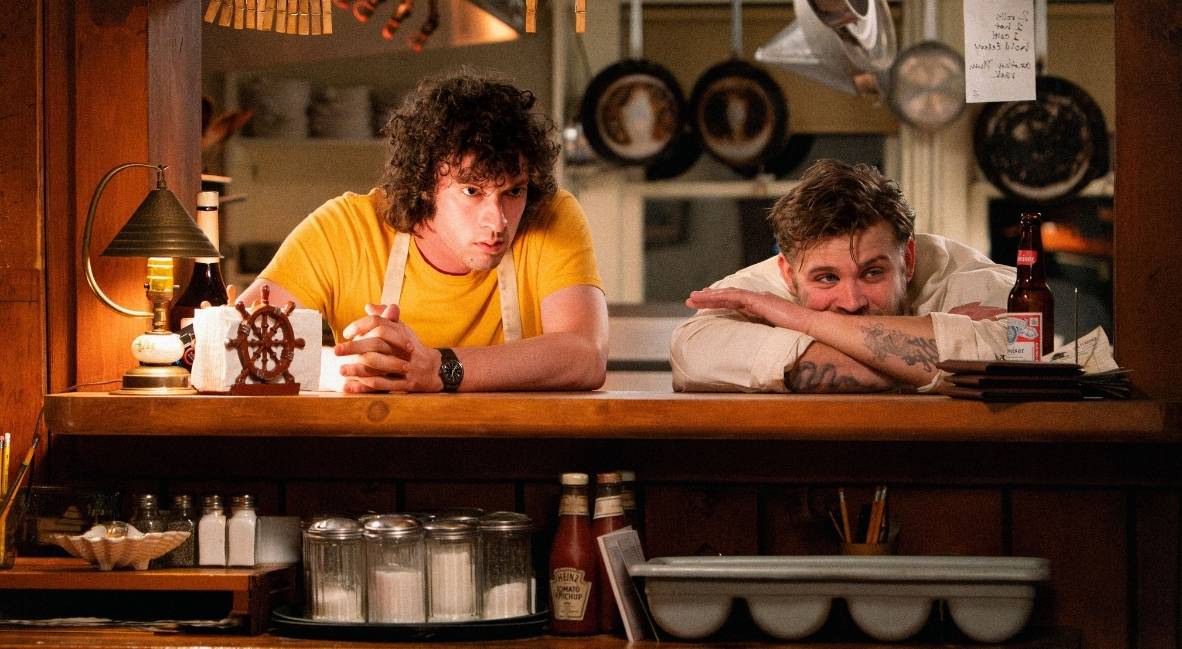
Tony (2026) is not afraid to be brutally honest about the young man who would eventually grow up to be the revered chef Anthony Bourdain. Incredibly, it’s done in a way that respects Bourdain’s legacy. Tony doesn’t present a clean, sanitized version of Anthony Bourdain but rather a messy and complicated version, much more likely to be closer to the truth. A few pacing issues, however, at times make scenes drag on longer than needed.
His friend and confidant at the bar, Sal (Leo Woodall), is a firestorm of bad choices that helps hone in on a very important theme about the power of our choices and our ability to rise above them. By comparison, Sal makes Tony look like a timid choir boy. He introduces Tony to drugs and is a constant example of hedonism throughout the entire movie. At a critical moment, Tony rises above, while Sal remains the same as when he was first introduced.
Chef is potentially the only person who truly believes in him, and even that is based on a lie. In a defining moment, Chef says to him, “You can be anything you want to be, and yet, you are nothing.” While the line is spoken in disappointment, Tony eventually harnesses that message and uses it to turn things around, eventually enrolling in his true-to-life alma mater, The Culinary Institute of America.
Antonio Banderas is the beating heart of Tony (2026), inspiring and guiding in his performance.
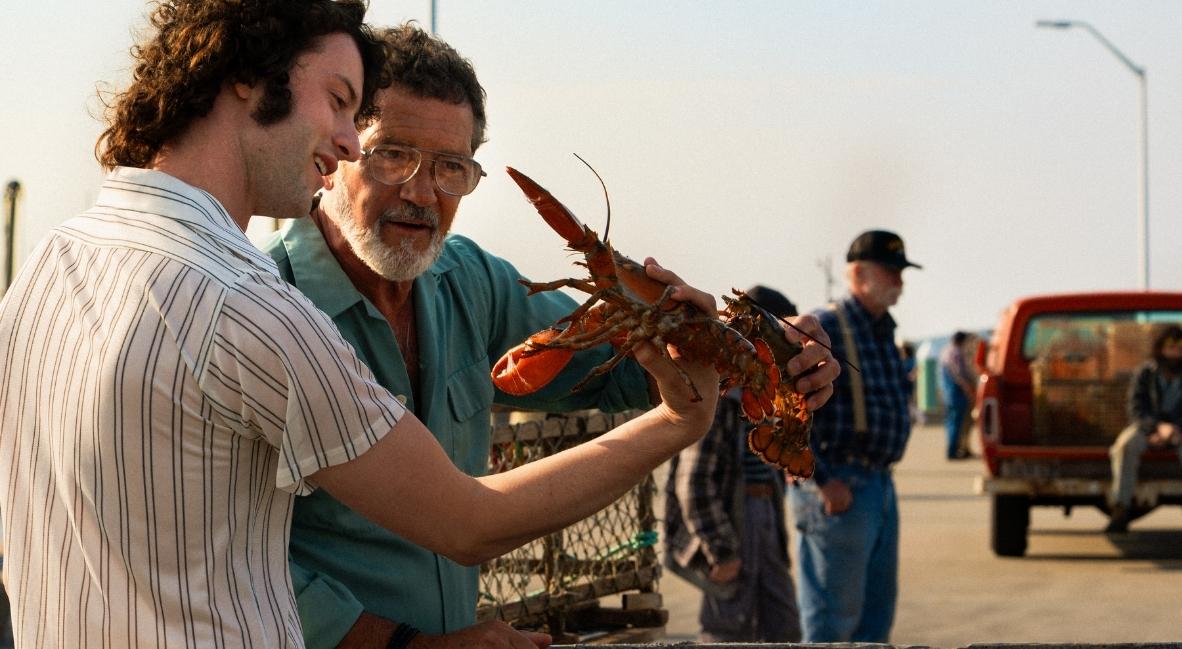
Helping this message stick is an array of performances that dial in the drama to get to the heart of why Tony is such an important film. Dominic Sessa could easily have come across as a modern man playing a 19-year-old from 1975, but instead, he truly transforms into Bourdain.
Antonio Banderas is the heartbeat of this entire film. His calm but impactful performance shows someone who Tony can aspire to. The gravitas with which he portrays Chef is exactly what audiences have come to expect out of him. Even Emilia Jones and Leo Woodall in supporting roles are able to shine next to the movie’s leads. The entire cast successfully transports audiences to the 1970s.
The message is hopeful and reminds us that our choices don’t define us. In spite of everything, we get to make the decision to be the very best version of ourselves that we can be, and it’s never too late to start working toward what motivates us.
While the film does not absolve him of his sins, it shows the path forward for a legend.

The kitchen isn’t merely where Tony discovers his passion. It’s where he first learns that his actions have consequences. Arrogance doesn’t get food onto a plate, lies don’t get dishes washed, and talent means very little if you’re unwilling to put in the work. Chef doesn’t magically fix him, either. He simply gives him something that Tony has never really had: someone willing to believe in him fully.
What makes Tony’s transformation compelling is that the film never suggests he suddenly becomes a good person. His mistakes don’t disappear simply because he learns to cook, and the people around him aren’t obligated to forgive him. Instead, Tony begins to understand that becoming the person he wants to be requires him to stop treating everyone around him as supporting characters in his own life.
There’s something surprisingly hopeful about that message. Tony isn’t inspirational because he’s secretly perfect. He’s inspirational because he isn’t. He’s selfish, dishonest, arrogant, and often his own worst enemy, yet Tony refuses to believe those things have to define him forever. Despite being fiction on the surface, Tony (2026) feels real and raw. Moreover, the film is worth the watch.
Tony (2026) is playing in theaters now.
Tony (2026)
8.5/10
TL;DR
Despite being fiction on the surface, Tony (2026) feels real and raw. Moreover, the film is worth the watch.