
Trade is central to that question. African governments and businesses are strengthening commercial ties with the Gulf, China and India, while placing greater emphasis on regional demand and intra-African commerce. The African Continental Free Trade Area provides a framework for larger regional supply chains, but progress will depend on efficient customs systems, stronger transport links, aligned regulation and payment infrastructure that allows goods, services and capital to move more easily across borders. This realignment also strengthens the case for domestic manufacturing and value addition. Côte d’Ivoire’s focus on agro-industrialisation, energy and private sector investment illustrates the potential of this approach, while Aliko Dangote’s participation at the summit brings the perspective of an African business leader operating at industrial scale.
Capital mobilisation forms the second pillar. Declining aid flows and greater selectivity in global finance are encouraging African countries to make fuller use of domestic resources. Pension funds, insurance reserves, sovereign wealth funds and local capital markets could finance infrastructure, renewable energy, manufacturing and expanding businesses. Directing this capital into productive investment will require appropriate market structures, credit guarantees, blended finance and closer cooperation between governments, commercial institutions and development finance institutions. At the summit, Taiwo Oyedele, Minister of Finance and Coordinating Minister of the Economy, Nigeria and Ahmed Shide, Minister of Finance, Ethiopia will contribute to the opening panel on the future of finance, while Leslie Maasdorp, CEO of British International Investment (BII) will examine how development finance institutions can support the continent’s next phase of growth.
Technology provides the third pillar. Africa’s digital economy is entering a phase where connectivity, computing capacity, data infrastructure and reliable power will shape the quality of future growth. The 2Africa cable and the expansion of low-earth-orbit satellite services are increasing available bandwidth and extending coverage. The next priority is to build the terrestrial fibre, data centres, cloud services and power systems that can convert connectivity into economic value. Local data centres can support resilience and data sovereignty, while locally relevant datasets will be essential for artificial intelligence tools designed for African markets. Salima Monorma Bah, Minister of Communication, Technology and Innovation, Republic of Sierra Leone, and Babacar Seck, Founder & Managing Partner, Askya Investment Partners, will contribute to the summit’s discussions on connectivity, technology infrastructure and competitive African technology hubs.
These three pillars reinforce one another. Regional trade requires transport, digital payments and reliable communications. Manufacturing requires patient finance, energy and access to larger markets. Technology companies require cloud infrastructure, skilled talent and investment that supports growth beyond their early stages. Stronger outcomes will depend on these systems developing together, with public policy and private capital aligned around shared economic priorities.
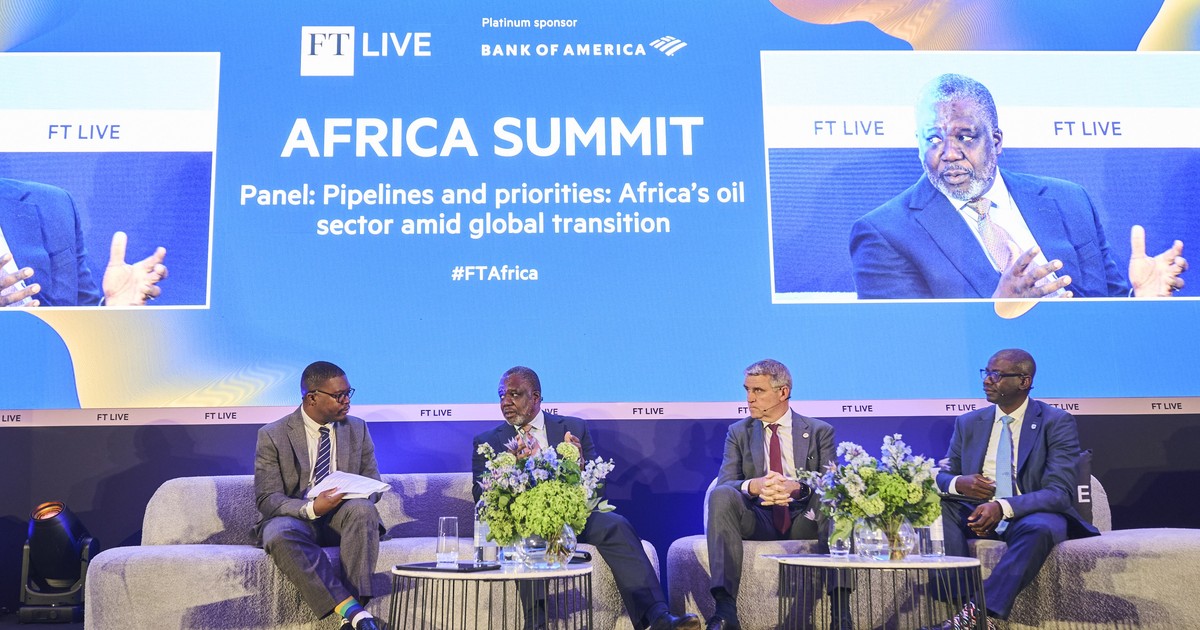
This is the context for the FT Africa Summit 2026, held under the theme “Mobilising Growth in a New Global Order.” Across two days in London, policymakers, investors and business leaders will examine how trade realignment, domestic capital and digital infrastructure can support lasting growth. The question running through each of these conversations is the one facing the continent itself: how to convert a changing global order into progress that is built, financed and owned in Africa.