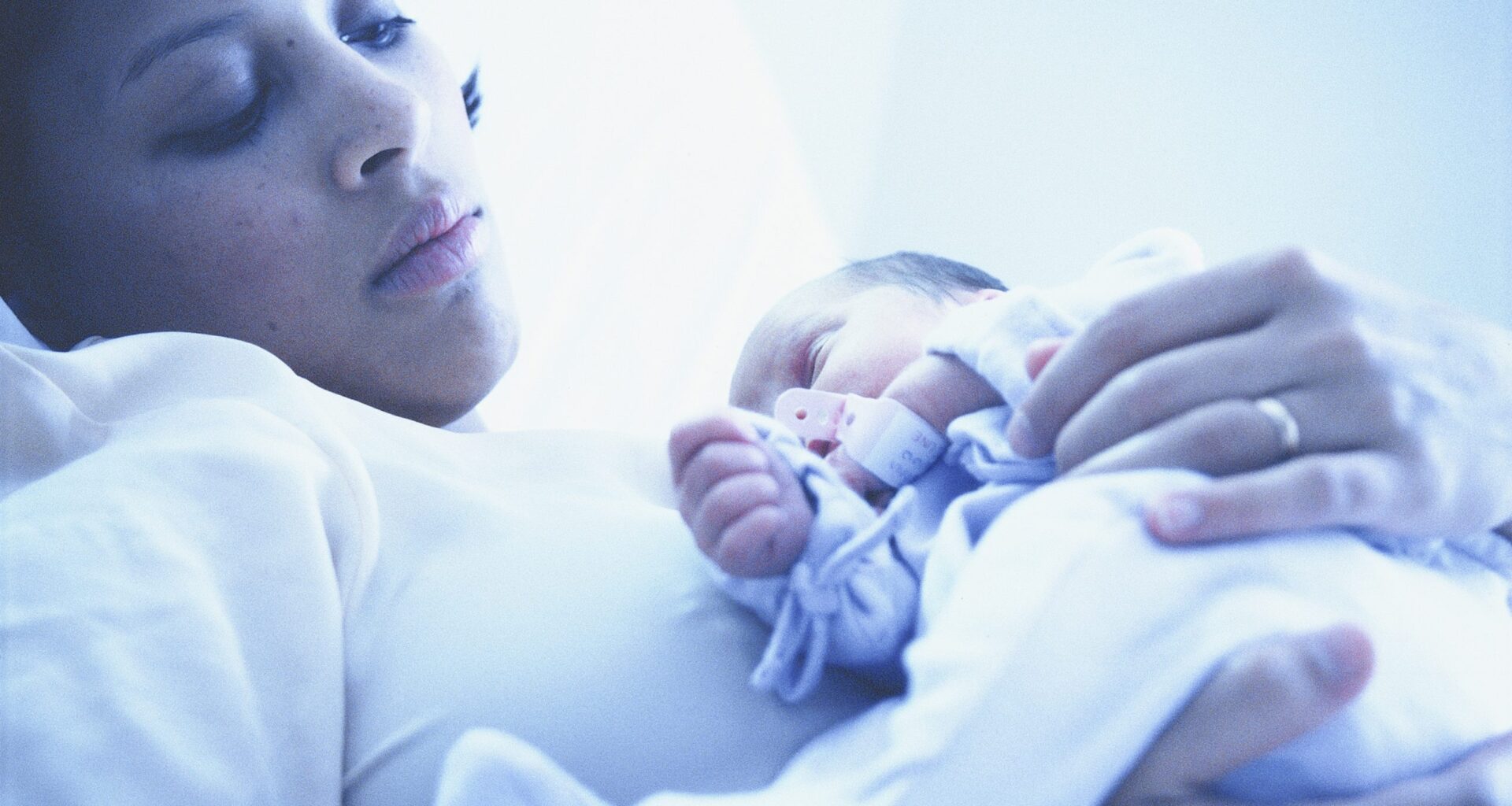
For many Kiwi mums, pregnancy and new motherhood are a time of overwhelming joy.
But every year, for nearly 30,000 women, the months and even years become a battle with mental distress, psychosis, grief and, in the most devastating cases, end in suicide or the death of their children.
Now, new reports have put a spotlight – and a cost – on what happens when those mothers don’t get the help they need.
One report, commissioned by Health New Zealand Te Whatu Ora – and largely kept secret until NZ Herald political editor Thomas Coughlan forced the publication – reveals a third of women experiencing significant maternal mental health distress are not getting the specialist care they are likely to need.
Another report, commissioned by the Tindall Foundation, found the long-term social cost of mental distress among new parents is estimated at more than $2 billion a year.
The numbers are staggering. But behind them are mothers like Kristy Maguire, who experienced postnatal psychosis after the birth of her baby, from whom she was then separated.
She spoke to Coughlan, who tells The Detail that “when you have women’s health and mental health at the same time it’s sort of like falling through two cracks at once”.
And, he says, it’s not a new problem.
“In reporting the story, I’ve sort of found that at times when you look at the history of it going back sort of 10 to 20 years, it sort of felt like this has not necessarily been the first cab off the rank in terms of problems that health ministers going back generations haven’t wanted to deal with.”
Coughlan says when reports commissioned to investigate those problems were finally completed, getting them into the public domain proved difficult.
“I was surprised at how long it took to get those reports out … There were four of them, and so they weren’t all included in the same release.”
“It’s bizarre because, in my view, the reports are sort of something that should have been proactively released when they returned. Most of them returned to ministers in 2023, late 2023, and they’re the sort of thing that I would expect to have been released proactively sometime in 2024.
“But most of them were only released after we requested them under the [Official Information Act]. They were declined and then proactively released. So yeah, there’s a wee bit of feet dragging and that I guess is indicative of just the wider health system not exactly falling over itself to remedy these very real issues.”
The scale of the problem is stark, he says, with around 15 percent of mothers estimated to experience significant mental health distress during the perinatal period.
Around a third of those women are not getting the support they need, in part because of where they live.
“It varies a lot by region, and this is … one of the reasons why Health New Zealand was created back during the Labour government’s health reforms, to end this postcode lottery of care, and maternal mental health is just like so many other conditions, where where you live can have a big impact on the quality of care that you receive.”
Only Auckland and Christchurch have mother-and-baby units, where women can receive inpatient mental health care without being separated from their newborns, which Coughlan says is considered best practice internationally for treatment and improvement. But those facilities don’t exist elsewhere.
The old district health board boundaries, he says, are still influencing access to specialist care.
“We still have these 18 district health boards which kind of live on in zombie form inside Health New Zealand and what these four reports revealed is that where someone lives – their old DHB boundaries – can have a big impact on whether they are able to get care.”
For Tauranga mother Kristy Maguire, the consequences were terrifying.
After a caesarean section, she began experiencing symptoms of postnatal psychosis.
Coughlan says she described her world as beginning to feel like the film The Truman Show – as though everyone around her knew something she didn’t, and “in which everyone was in on some sort of secret that she wasn’t let in on”.
“The smell of gas could convince her that her house was about to explode. She would grab her baby and bolt for the door.”
Eventually she was sectioned under the Mental Health Act, and separated from her newborn. It was a trauma.
“It’s not best practice … she was taken into a unit which doesn’t best meet the needs of a new mother who was going through what Kristy was going through.”
She’s since become an advocate for mother-and-baby units, and a significant change to the law was passed a few months ago.
“It’s written in the Mental Health Act now that … in the first instance our mothers should be kept with their newborn children when they’re receiving care, so that’s a really big change and hopefully when it’s rolled out it means better care for so many people,” says Coughlan.
For some other mothers, the system has failed in a different and profoundly painful way.
After Serra Clark experienced a stillbirth, her midwife told her a referral would automatically be made to maternal mental health services. It wasn’t.
“In the eyes of the health system, to access that mental health support you have to have what they call, you know, in the bureaucratic language, a live baby in your care,” says Coughlan.
“That’s clearly a massive crack in the public health system because it’s a time in your life when you clearly need and deserve mental health support but the rules that were put around who gets mental health support and who doesn’t mean that you don’t get the support at a time when you arguably need it more than you might ever need it in your life.”
There is now a new pathway for bereaved parents experiencing stillbirth, but Coughlan says changes and progress have been painfully slow.
In another devastating report by Coughlan, he covered Kristen Taylor’s death by suicide during the pandemic period, after a difficult pregnancy and birth and a deterioration in her mental health.
Her husband, Alastair Taylor, has since become a fierce advocate for better maternal mental health services.
Coughlan says over 15 months, Taylor recalled his wife making eight or nine attempts to take her own life.
And he says the mental health care she received was nowhere near good enough, with conditions inside the inpatient facility also deeply concerning.
“Alastair described going to a mental health inpatient facility in the Hutt – they live in the Wellington region – and he described it as being unfit for his dogs to spend time in, let alone his wife who’s just given birth.”
The Tindall Foundation commissioned research into the long-term social cost of parental mental distress.
Paulien Fa’atafa, the tangata tiriti co-lead of Te Hokinga Mai and the initial project lead on the report, says the figure – more than $2b a year – is staggering, but it isn’t surprising.
“We know 29,000 women every year have some level of distress, so I think the $2b puts a number to it, but in community we’ve known this for so long and this report is really a chance to just start showing what lack of action is doing, cumulatively, for lots and lots of mums each generation.”
And she has one message she wants to make absolutely clear: “This is never the fault of mothers.”
The $2b figure captures the long-term social costs of clinically diagnosed mental distress, such as depression, anxiety, or postpartum psychosis, and she says that number may be considerably larger when it includes people who may be experiencing “a huge amount of stress”, but don’t have a diagnosis.
“That number could be up to $4.3b, which the researchers still estimated was conservative.
“It’s mind-blowing, this number, and cumulative – because every year we don’t do something differently, that $4.3b is added on to the next 57,000 mums who have babies.”
The consequences don’t stop with the mother, with Fa’atafa saying 65 percent of the $2b cost sits with the child.
And the impacts can stretch across decades.
“They happen over 25 years, so if mum doesn’t receive the support that she needs while she’s in distress then there can be ongoing impacts for the child, and that can be in health, that can be in education and … also be with kind of increased interactions with Oranga Tamariki and justice and future productivity for the child.”
But she says asking for help isn’t always easy – there is stigma and fear, and for some mothers, disclosing that they are struggling can feel like putting their family at risk.
“It’s still a huge problem; there is lots of stigma placed on mums when they say that they’re not coping or that they’re not doing well, and you know lots of the services and supports from our government agencies that are meant to support mums and birthing parents and whānau actually can make life really hard.
“Mums with custody arrangements in family court can end up losing their child because they’ve disclosed a mental illness, or if they are interacting with Oranga Tamariki, the fear of losing their child because you’re saying you’re unwell actually stops many mums from reaching out for help.”
And even when they do reach out, there may be nowhere to send them.
“That is the other end, you know, when you do reach out for help because the clinical services and the hospital-based services are under so much pressure, there actually needs to be really, really severe [need] before mums can engage with some of those services.
“Community is already there doing it, they’re just having to do it for free, so if you funded them so they could do it well and be supported to do it, we think you could see immediate benefit.”
Fa’atafa says “it’s not a matter of whether you can afford to invest in community and in prevention and in supporting whānau for wellbeing, it’s whether we can afford not to”.
Check out how to listen to and follow The Detail here.
You can also stay up-to-date by liking us on Facebook or following us on Twitter.