


Jacobs Stock Photography Ltd/DigitalVision via Getty Images
Congratulations. You made it to retirement.
You spent decades working, saving money, investing, and hopefully avoiding enough bad financial decisions that you have a decent retirement portfolio.
Now Fidelity would like $185,500.

Fidelity
That’s Fidelity’s latest estimate for the amount a 65-year-old retiring in 2026 can expect to spend on healthcare and medical expenses throughout retirement.
Unfortunately, that’s the estimate for one person. The estimate increased 7.5% in a single year. In 2025, Fidelity’s estimate was $172,500.
Apparently, healthcare costs haven’t heard about Costco’s $1.50 hot dog policy.
Wait, I Have Medicare
Great.
You’ll still need money. Fidelity’s estimates already assume that the retiree is enrolled in Medicare parts A, B, and C. Nothing says “enjoy retirement” like spending your free time trying to figure out which letters of the alphabet pay for which medical bills.
The estimated $185,500 by Fidelity goes toward premiums, copayments, and other out-of-pocket costs for medical care and prescription drugs. Most people understand that healthcare is expensive. They just don’t understand how expensive it is. According to Fidelity’s research, 54% of pre-retirees incorrectly believe Medicare will cover all of their health expenses. Medicare is valuable. It just isn’t a magical coupon that makes every bill disappear.
Fidelity estimates:
45% of the $185,500 goes toward Medicare Parts B and D premiums.
48% goes toward Medicare cost-sharing, deductibles for things like hospital visits, and excluded benefits like vision and hearing exams.
7% goes toward out-of-pocket prescription drug expenses.
Having fun yet?
We’re not done.
Now For The Really “Great” News
The $185,500 does not include long-term care.
Presentation
Apparently Medicare found the only two people excited to read this list.
This is where retirement planning can get exceptionally painful. If someone needs help with basic daily living, Medicare and most health insurance generally won’t pick up the tab.
We’ve warned investors about this for years. A prolonged stay in a nursing home can absolutely decimate a retirement portfolio. I wish that was hyperbole.
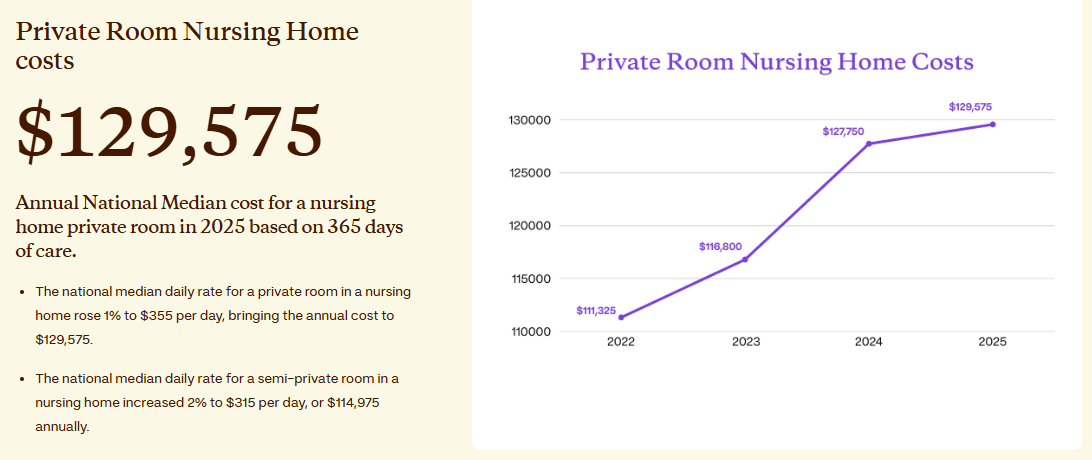
CareScout’s latest cost of care survey puts the 2025 national median cost for a private room in a nursing home at $129,575 per year.
Presentation
Looking for an amazing bargain? You can get a semi-private room at $114,975 instead. Want assisted living instead? The national median is $74,400 per year. I love the term “semi-private.” If you put a curtain between two people living in the same room, you can throw the word “private” into the description. I guess that means every bathroom stall is a private suite?
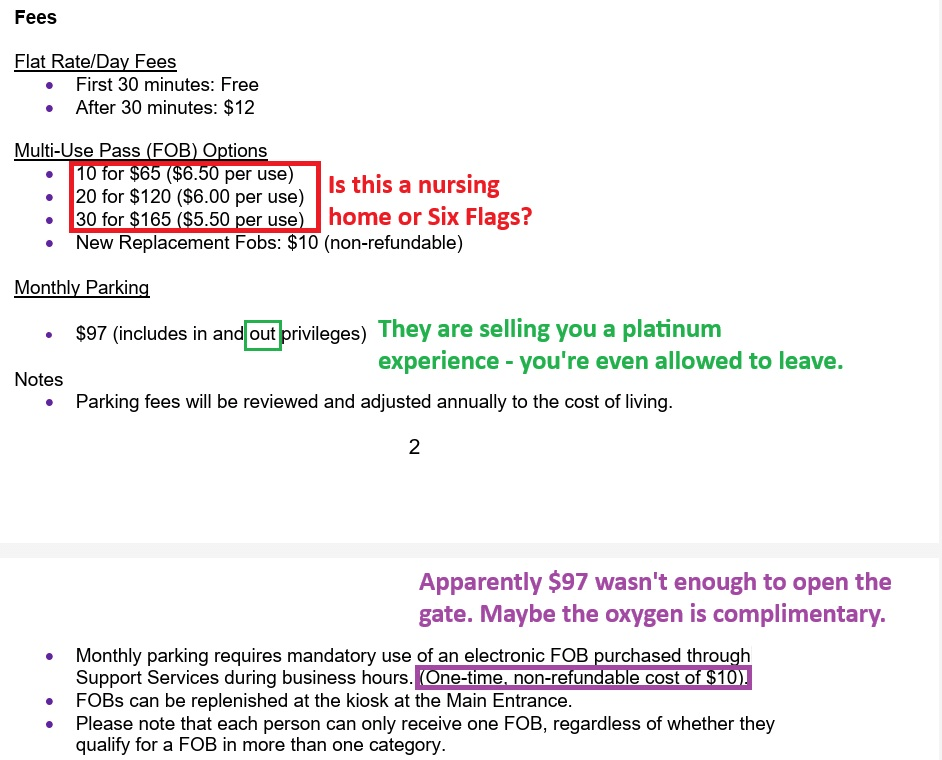
Maybe the nursing home won’t charge you separately for parking? I guess not:
Perleyhealth
This is why retirement planning can’t simply mean an arbitrary portfolio value. A retiree with $500,000 and very few expenses can be in a significantly better financial position than a retiree with $1 million and high expenses.
The portfolio is only one part of the equation.
Your Portfolio Has A Job
This article isn’t meant to make investors panic and try to build a retirement portfolio bunker. It means the portfolio needs to be designed with reality in mind:
Income
Growth
Diversification
We want enough liquidity if there’s an unexpected expense so we aren’t forced to sell at the worst possible time. We also don’t want to destroy our portfolio chasing every gigantic dividend yield we can find. A 14% dividend yield looks fantastic until the dividend gets thrashed. Retirement investing isn’t about finding the investment with the largest number coming right before the percent sign. It’s about building an intelligent portfolio that is capable of producing income without taking on reckless risk.
That’s why we spend so much time researching REITs and preferred shares. For example, we recently covered Welltower (WELL) in significant detail. Welltower owns healthcare real estate, which is relevant to what we’re discussing. That does not mean we believe investors should run to buy WELL because healthcare is expensive. That’s not how valuation works. It’s a great company but at the wrong price. The stock trades at a massive multiple, and that’s partly because investors are betting on rents for senior housing rising substantially over the next several years. So as bad as paying for healthcare looks today, it can look even worse in the years to come.
We spend a significant amount of time covering 64 preferred shares and baby bonds at The REIT Forum. Those shares can provide investors with a substantial amount of income without having to take on the risk of the common stock. However, valuation still matters. We’re always comparing preferred shares to find which ones have the best combination of price, yield, risk, and upside. We’ve published a significant amount of preferred share articles for Seeking Alpha readers. If you’re interested, here are some of our recent articles:
While these preferred shares won’t suddenly solve retirement, they will help investors avoid the temptation of chasing the biggest yields.
And that’s where retirement planning meets investing. It’s easy for someone to just say you need a certain amount by a certain age. Reality has a nasty habit of ignoring specific numbers. Healthcare costs will rise. The market may fall. Dividends can be cut. Roofs sometimes need replacing. Cars die. And apparently a private nursing home can now cost you $130,000 a year.
There isn’t a magical portfolio value that makes all these problems go away (OK – technically there is if the portfolio is massive enough, but that isn’t magic). There isn’t a magical dividend yield either. And that’s really the point.
Stop looking for magic.
Build a portfolio with enough income, growth, and flexibility to fit your personal needs. Then, spend the rest of your retirement worrying about something more important. Like where you’re going on vacation. Retirement should involve deciding which cruise line you want to go on, not whether your room will be a balcony room or a staff room. Don’t spend it discovering that a nursing home costs significantly more than getting on a cruise ship.
There are plenty of ways to build a portfolio for retirement.
Investors willing to take more risk can own individual stocks. Technology has created some spectacular winners, including Nvidia (NVDA), Micron (MU), Palantir (PLTR), and Amazon (AMZN). Picking individual stocks also comes with the opportunity to pick individual losers. That little detail doesn’t get discussed all that much. While we believe investing in individual stocks can and does work, it should be done very carefully. Further, you don’t want a single security to take up too much of your portfolio.
For investors who don’t want to risk their entire retirement on picking a fight with “winning” stocks, ETFs generally provide materially more diversification. The Invesco QQQ Trust (QQQ) provides heavy exposure to technology for investors who want to be in tech. The Vanguard S&P 500 ETF (VOO) provides exposure to the S&P 500. Income investors may also be familiar with the Schwab U.S. Dividend Equity ETF (SCHD).
Diversification doesn’t mean investors need to own every investment that exists. It means one bad stock in your portfolio shouldn’t be able to wreck your retirement plan. That’s one reason we spend so much time researching REITs and preferred shares.