
We are not alone.
The stigma is not here.
We need to talk about this more.
These were the recurring themes of those who took part in the sixth diocesan Mental Health Day of Prayer. Held at Good Shepherd Church in Alexandria Aug. 22, the day began with Mass celebrated by Bishop Michael F. Burbidge.
“Providentially, we gather today as the church celebrates the Queenship of the Blessed Virgin Mary. How blessed are we that from the cross Jesus gave us his Mother as our Mother to watch over and protect us,” Bishop Burbidge said during his homily.
“She understands our pain and sorrows and is our powerful intercessor. That is why St. Bernard says: ‘With her as your guide, you shall never go astray; while invoking her, you shall never lose heart; and if she walks before you, you shall not grow weary.’ Dear friends: Mary walks with you every step of the way.”
Dr. Frank Moncher, chair of the diocesan mental health council, said the day was an “important event” for those who often suffer in silence.
“The church is a refuge for all, where pain and suffering is received; and the goal of this event is to heighten awareness of the need to accompany one another in our parishes every week of the year, providing support for those in need,” he said.
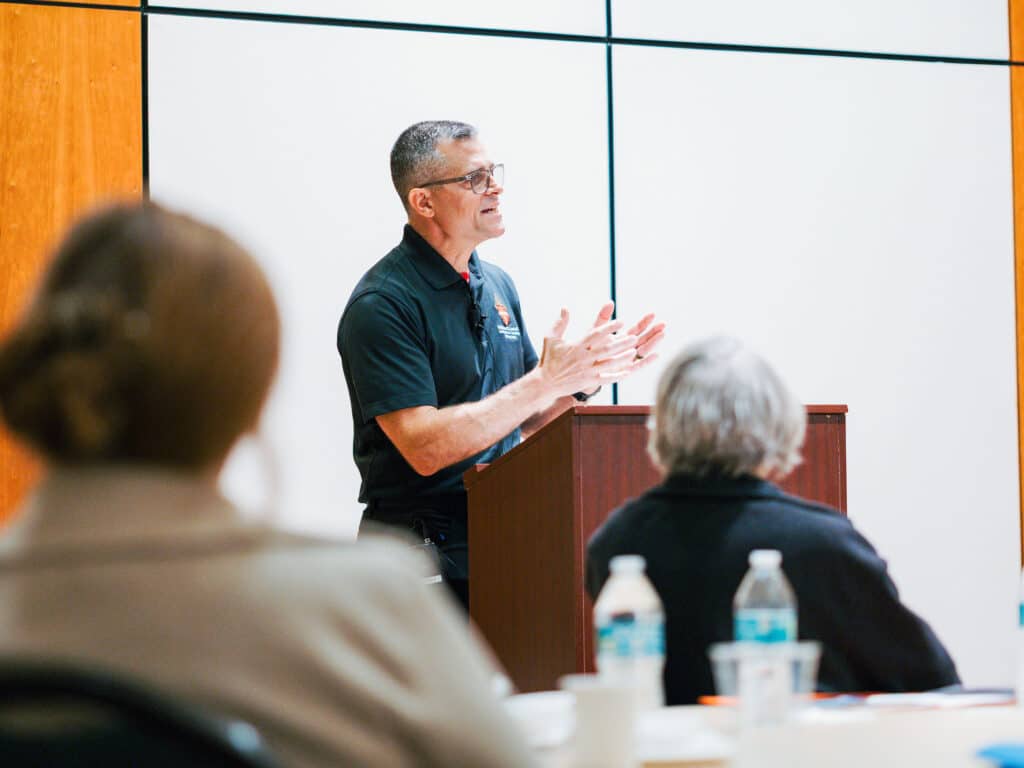
After Mass, more than 150 people gathered in Creedon Hall to hear keynoter Deacon Brad Watkins from the Diocese of Raleigh, N.C. Bishop Burbidge invited Deacon Watkins to speak, having worked with him in the past, including ordaining him to the diaconate while serving as bishop of Raleigh.
Deacon Watkins spoke extensively about how in modern society there is a focus on specialization, but when it comes to mental health there needs to be a focus on the entire person.
“Aspects of life are not neatly contained in separate boxes. A difficult relationship can negatively affect sleep. Lack of sleep affects our emotions; anxiety and depression impact our diet. Physical illness can influence our spiritual life. Loneliness takes its toll on the body. Chronic stress strains our thoughts and damages our health. The person is not easily divided because the person wasn’t created to be divided,” he said.
“He is spot on,” said Mary Mayor, a parishioner of St. Louis Church in Alexandria, as she listened to the address.
Deacon Watkins, headmaster at St. Thomas More Academy, a 6-12 co-ed high school in Raleigh, repeatedly said he was not an expert. But he shared several stories during the 45-minute presentation that he said helped him understand the mental health crisis in schools and communities.
Jennifer Cotnoir is part of a team that gives SafeTalk training in schools and even to priests in the diocese to help recognize the signs of suicide ideation. During the lunch break, she spoke about the importance of discussing suicide because it can affect anyone.
“Everyone needs to know about #988, the nationwide number the government spent millions on to implement. It’s like #911 but for mental health. We have to talk about these things,” she said.
Organizers offered participants various breakout sessions during the daylong event in both English and Spanish.
Joel de Leora, director of diocesan Hispanic ministry, said mental health is a major challenge for the Hispanic community. Many parents are navigating challenges with their children in the United States they never faced in their native countries.
“Mental health concerns are more shamed in the Hispanic community because for many of these adults when they were younger, they were told to just deal with it,” said de Leora, noting this was the second year with a Spanish component to the program.
Tricia Perez, a parishioner of Nativity Catholic Church in Burke, said the day was invaluable.
“There is such shame associated with mental health conversations. You don’t just bring it up when you meet someone. But here it is, the conversation, and it’s already brought up. It’s so nice to know we are not alone,” she said.
Mayor said the conference “delivered more than she expected” and she was grateful for the day.
“Bishop Burbidge is walking the walk in raising awareness about this issue and I am so appreciative meaningful conversations could take place in a productive way,” she said.
Nancy Emanuel, coordinator of diocesan special needs ministries, led a session on caregiver support. She cautioned caregivers to ensure they take care of themselves as well as the person or people in their care.
“You may be caring for someone with extreme needs, but you are just as important as the person you are caring for,” she said.
Emanuel said more than 20% of the population are caregivers in some capacity, and they are prone to burnout. She recommended reaching out to the Holy Spirit but also finding support among friends or going on nature walks — whatever it takes to find time for yourself.
Everyone in her session was female. They spoke of dealing with mentally disabled children and sick relatives, among many other challenges. One participant asked where she could find support groups dealing with the concerns she faces.
Carolina Avendaño Arce, a parishioner of Good Shepherd, said through all her challenges she has come heavily to rely on God because she would be lost without him.
“I have had multiple tsunamis in my life,” she said. “God always gives me the right boards because I have the Messiah on my side.”
Shaffrey is diocesan director of media relations.
Watch the video
To watch Deacon Brad Watkins’ talk, go to bit.ly/3UiQqNA.