
With an annual growth rate of 4.9%, lending to the business sector is at its highest point since the Reserve Bank began recording it in 1998.
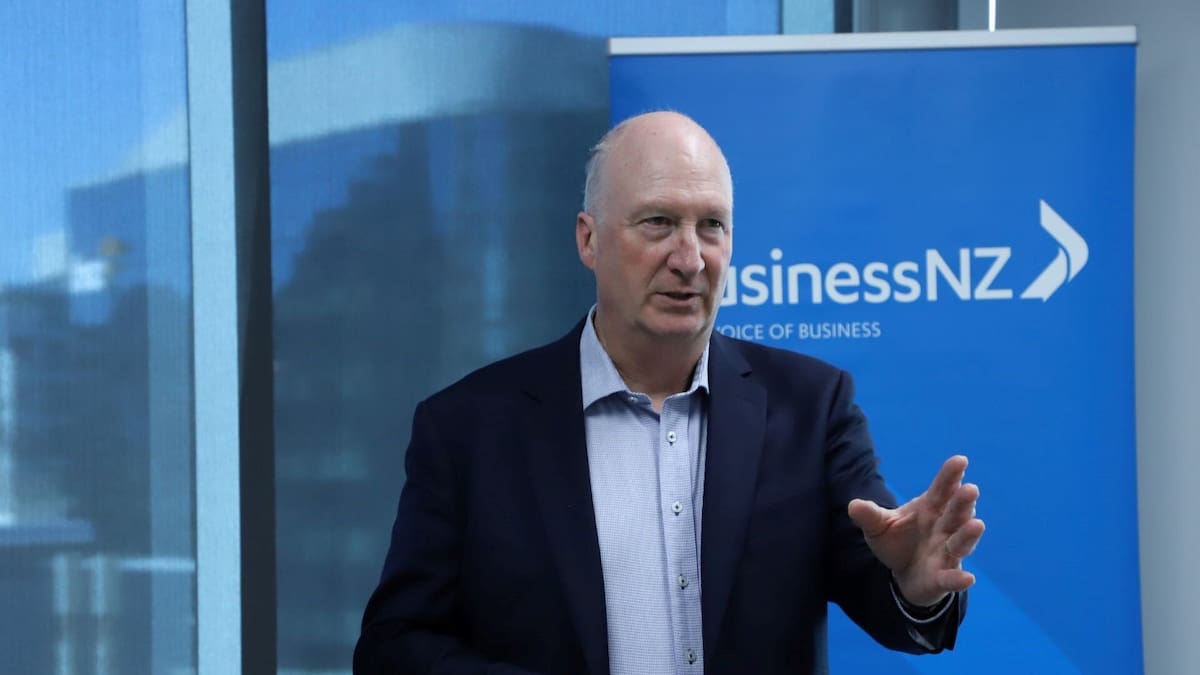
BusinessNZ chief economist John Pask said rising business debt was an indicator of an economy coming out of a long period of reasonably static growth.
“While lending levels are not necessarily related to economic growth over the short term, it is a positive step forward as business confidence continues to improve, despite geopolitical risks around the world,” Pask said.
“Recent economic data for a range of sectors shows improving economic growth in areas like tourism, agriculture, and manufacturing, as reflected in the recent BNZ-BusinessNZ Performance of Manufacturing Index (PMI).
“All of this points to continued growth as businesses move to expand production over coming quarters. Increased levels of debt are part and parcel of this reality.”
Nation of Debt. Illustration / Paul Slater
Pask said the improved economic outlook would be responsible for some upward movement in lending, but argued other policy factors were likely responsible for increased investment over the past year, including the Government’s Investment Boost – launched in last year’s Budget.
However, he acknowledged mixed views in the business community on whether this has resulted in new investment being undertaken or brought forward because of the policy.
Tax debt and defaults
While those with the capacity to take on debt appear to be on the up, small to medium businesses, particularly those in the construction, retail and hospitality industries, continue to face tough choices.
The May 2026 Centrix Credit Indicator report showed business credit demand declined by 3.6% year-on-year, although current activity remained broadly consistent with longer-term trends.
On an industry basis, hospitality credit demand had increased 22% over the year to May, agriculture up 13% and wholesale up 5%.
While business credit defaults are trending downward – falling 14% year-on-year to May – company liquidations remained elevated, rising 17% overall.
Centrix said the divergence highlighted improving repayment behaviour among active companies, even as business closures continue to reflect the lagged impact of economic pressure.
Centrix general manager of analytics Stuart Baxter said a modest increase in credit defaults in recent months reflected the slower-than-expected economic recovery.
“While default levels have improved on a year-on-year basis, they remain elevated relative to the levels observed during 2023 and earlier, indicating that business financial stress remains above historical norms,” Baxter said.
For businesses unable to pay their debts, many have turned to insolvency and liquidation.
According to the Ministry of Business, Innovation and Employment (MBIE), 3275 businesses were placed into liquidation between May 2025 and May 2026, up 13.5% year-on-year.
It’s a trend that has steadily grown year-on-year since 2021, as a result of rising costs, lower consumer and business confidence, and persistent economic shocks.
On top of those pressures, the Government has given the Inland Revenue Department (IRD) more funding to crack down on those who owe tax.
Latest IRD figures showed total overdue tax and entitlements debt had reached $ 9.4 billion as of March 31, 2026, with 556,000 customers in debt.
The majority of that figure, about 75%, is debt owed to the IRD by businesses.
Of that $9.4b, $3.6b was owed by “micro-businesses”, $2.5b by small-to-medium enterprises, and another $968 million owed by significant enterprises.
By tax type, $2b was owed under employer activities (obligations or deductions like PAYE), with another $3.4b owed in goods and services tax (GST).
GST and employer obligations account for 57% of the overall debt despite these being taxes businesses must collect and pass on to the Government.
Roughly a third of all debt owed to IRD is interest and penalties, with $100m under an active repayment plan.
The IRD has also ramped up debt collection measures in recent years to claw back the $748m lent to businesses through the Small Business Cashflow Scheme (SBCS) during the Covid-19 pandemic.
Fixity director and licensed insolvency practitioner Larissa Logan.
Fixity director and licensed insolvency practitioner Larissa Logan said the IRD had taken a relaxed stance towards debt collection pre-Covid, but had since strengthened its enforcement, leaving businesses to catch up with the status quo.
“I think the IRD need to enforce and they have a right to collect. That’s tax that’s owed, and it’s going to help this economy whether it’s for roading, health, schooling etc.,” Logan said.
“It’s a shock to some businesses who have been using IRD as a working capital funder for a long period of time, but also it’s happening at the absolute worst possible time in an economy which is so impacted by offshore challenges.”
Logan said businesses coming to her were evaluating all options, including turning to second-tier financiers, which she believed were on the rise.
“Whenever I see one of those financiers on the personal property securities register (PPSR), I know [the business is] in trouble because if you don’t pay, they enforce a lot quicker than the mainstream banks.
“By the time you’re in that position where you can’t pay the IRD and you’re trying to get second-tier lending at really expensive interest rates, it’s just a spiral down. It’s just how long can you last.”
COMING UP IN THE SERIES
Monday: NZ debt nears $1 trillion, but borrowing growth has slowed sharply
Wednesday: Housing debt
Thursday: Government debt
Tom Raynel is a multimedia business journalist for the Herald, covering small business, retail and tourism.
Stay ahead with the latest market moves, corporate updates, and economic insights by subscribing to our Business newsletter – your essential weekly round-up of all the business news you need.