
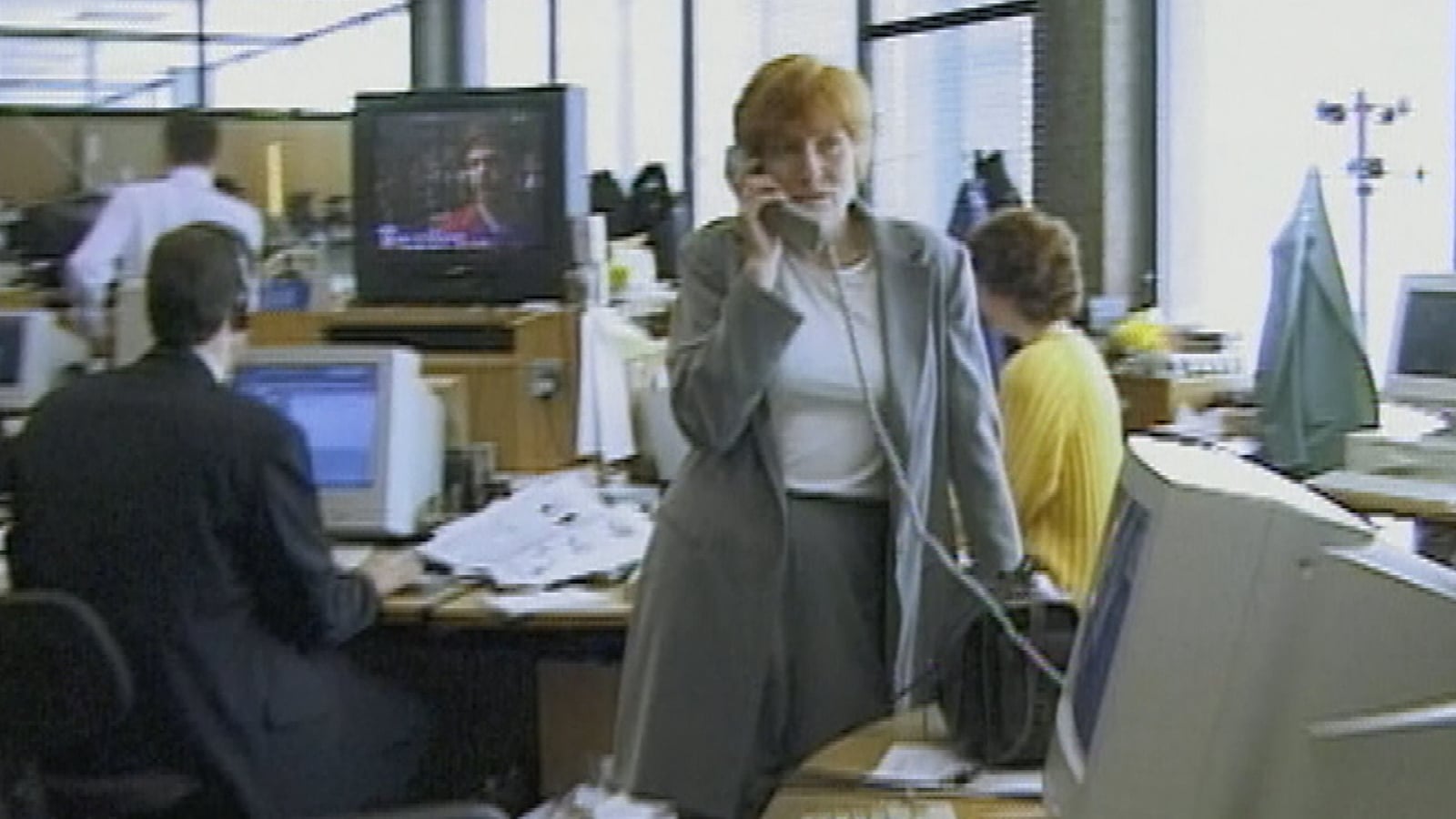
“Baile o dhia oraibh.”
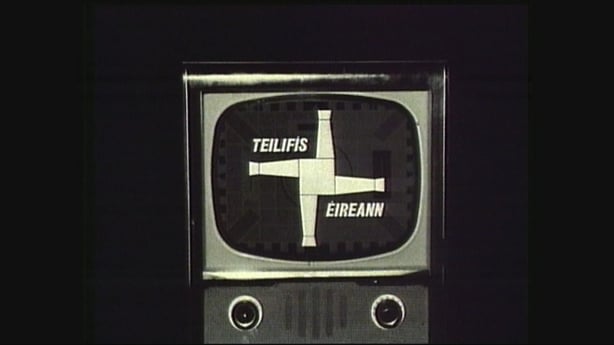
With this greeting, on New Year’s Eve 1961, uachtarán Éamon de Valera launched the RTÉ television service.
But his warm welcome for this new service contained a warning as he said that “never before was there in the hands of men an instrument so powerful, to influence the thoughts and actions of the multitudes”.
The arrival of television into Irish homes was going to change the way news and information was shared.
As part of the RTÉ100 anniversary, RTÉ News will be looking back at some of the stories, the people and the way news gathering has changed over the years, which has contributed to coverage across the last century.
An Uachtarán knew and understood the profound adjustments the pictures beamed into homes was going to make to the lives and thoughts of the people of Ireland.
The development of the news service transmitting those grainy black and white pictures brought viewers deeper inside stories.
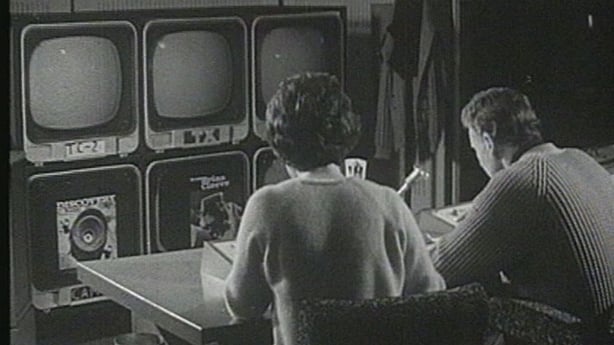
In black-and-white footage, an episode of the documentary programme Discovery, ‘RTÉ, a TV station’ made in 1965, gave viewers a behind-the-scenes look at the technology and processes that made television.
The script explained how this new technology worked, explaining over shots of studio cameras and film-editing machines that “through this eye, the telecine machine, we shall see film, any kind of film turned into pictures that our television sets can receive”.
The behind-the-scenes views of the operation that supported the new technology was fascinating to viewers, and the rollout of the early RTÉ News TV service quickly became a popular fixture on Irish TV sets.
The newsroom began to hire its first generations of TV news journalists, and Wesley Boyd, former Director of News 1974-1990, explained that “the journalists we employed, without exception, came from newspapers and they came from that print tradition – there was no other source of journalist employment at the time”.
The TV news service was a key part of the RTÉ content, and across its first decade, RTÉ’s news service brought stories such as the turbulent farmers’ protest in 1966 right into people’s sitting rooms.
It is one of the earliest examples of the influence that Irish TV news had when there were government objections to the coverage given to the story.
The shot of protesting farmers walking hundreds of miles, starting out in county Cork and heading to Dublin, made for compelling viewing and discussions.
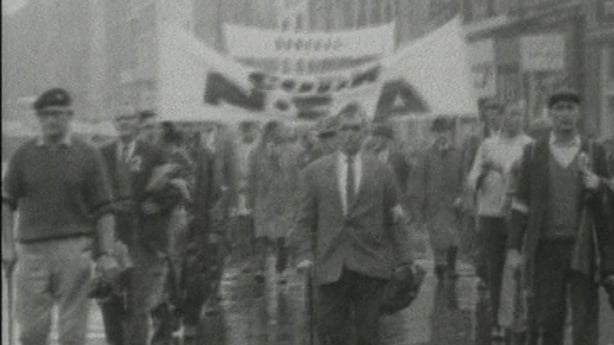
Farmers on the road during the protest in 1966
The stories and the people who delivered the stories became topics of national conversation, with the newsreaders and especially Charles Mitchel becoming household names.
Mitchel, an actor who was hired in 1961, became the first of many familiar faces on RTÉ television screens.
In a documentary called 40 years of News, Andy O’Mahony, a fellow newsreader, spoke fondly of Mitchel’s newfound fame and described how many letters used to arrive into the newsroom for him.
“Charles Mitchel loved it,” he said, adding that “on Friday nights he would go down and wave at the Late Late show audience” and the audience members would be delighted.
Mitchel himself said at his retirement that when he bade viewers goodnight at the end of the bulletin, he was told that they would often reply to him in their homes with “Goodnight, Charles”.
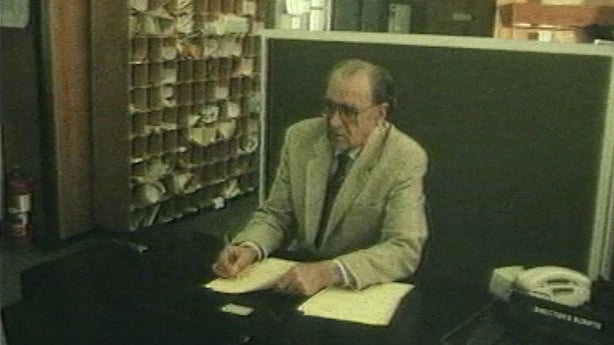
Charles Mitchel became the first of many familiar faces on RTÉ television screens
Major investment in colour television
The decades moved on, and the 1970s saw major investment by RTÉ in colour television, which changed the way news was produced.
An example of some of the powerful stories that RTÉ News covered was the stark report from 1975 by Brian Black showing the aftermath of the Miami showband massacre.
Journalist Maggie O’Kane worked in the RTÉ newsroom for some years, and her coverage in 1984 of the Dunnes Stores strike was another example of newsroom coverage of a story that elevated the protest to a national level.
1985 saw another major transformation for operations in the newsroom, as the teams there moved from using film to tape.
With the rollout of videotape in March 1985, RTÉ News was transformed. This new technology offered flexibility, speed, and mobility.
Just one example from the RTÉ archives available online is a moving report from the former Western Correspondent, Jim Fahy, who was reporting from the site of attacks on elderly people in the west in March of that year.
The report covered the story of elderly siblings Michael and Kathleen Carroll, whose farmhouse had been attacked.
The camera crew was able to go right up to the house and record shots of their home still smoking from the arson attack.
The footage shocked viewers, with Jim Fahy explaining in a voiceover that “staying at their sister’s house … the house is still smouldering”.
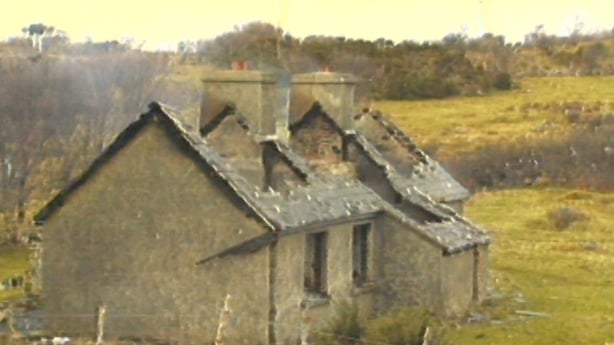
Michael and Kathleen Carroll’s farmhouse on fire
Then, in the 1980s and 90s, the rollout of mobile units meant more flexibility and opportunities for news crews around the country to cover stories.
1984 marked another milestone in the RTÉ newsroom story, with the launch of RTÉ Radio 1’s Morning Ireland programme.
Meanwhile, the lunchtime News at One programme broadcast daily at 1pm and the This Week programmes on Sunday have been successful fixtures of the news radio service schedules for decades.
The look and sound of the TV news programmes has adapted and modernised over the decades too with the unveiling of the new ‘Six One’ television format with Una O’Hagan and Bryan Dobson on 3 October 1988.
Launch of RTÉ website
In 1996, RTÉ News went online, adding another valuable strand to the service.
1996 saw the launch of TG4 too and another formative part of the news service, as Gaeilge, was rolled out.
The RTÉ website launch took place in May 1996, and a new era for news coverage was rolled out.
Meanwhile, behind the scenes, the newsreader Anne Doyle said in the 40 years of News documentary in 2002 that “one of the greatest changes I have seen in the length of time I have been here and that’s nearly a quarter of a century, is that the newsroom is no longer male-dominated”.
She went on to explain how “off the top of my head – nearly two out of three working here are women”.
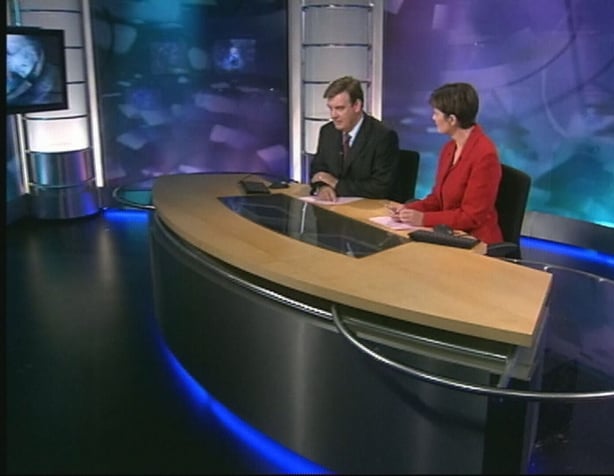
Bryan Dobson and Una O’Hagan presenting the Six One
The news service, which broadcasts in English, Irish and Irish Sign Language, has changed and adapted over the years, so what are the challenges ahead?
Dr Roddy Flynn, from the School of Communications at DCU, thinks that “perhaps the major challenge, because that is what RTÉ has talked about, is having to go where the audience is”.
He notes that “especially the younger audience” has found its favoured sources of information and “it’s clearly online, but online is a very different space to the old kind of radio and television broadcasting space of the 20th century”.
While the recent Reuters Digital News Report 2026 showed that RTÉ News and local radio news stations are the most trusted sources in Ireland, it also found that global trust in news was down at 37%, so there are clearly challenges ahead for newsrooms nationally and across the globe.
From shortwave in the GPO to instant updates on the RTÉ News app, the RTÉ newsroom has told quite the story over 100 years.