
Analysis: The Act Party has chosen a side in the increasingly politicised debate over how fisheries should be managed, leaving New Zealand First alone to bat for industry.
Act isn’t the first party to come to mind on environmental or ecological issues, instead concerning itself with over-regulation, the Treaty and so on.
When Fisheries Minister Shane Jones announced his sweeping reforms to the Fisheries Act last year, its oceans and fisheries spokesperson Mark Cameron said the sector had been “over-regulated and stigmatised by landlubbing activists with no idea of practical realities at sea”.
In support of the controversial bill, Cameron said it gave fishers “real hope of relief from unnecessary red tape”.
By the time the bill made it to its first reading in late March, following much public outcry, the party had changed its tune.
But it appeared to be largely the opinion of one man, its conservation spokesperson and list MP Cameron Luxton.
During the debate, Luxton was the bill’s most vocal opponent from the right of centre.
Like many other politicians, he started his speech by talking about his connection to the ocean and his fishing experience.
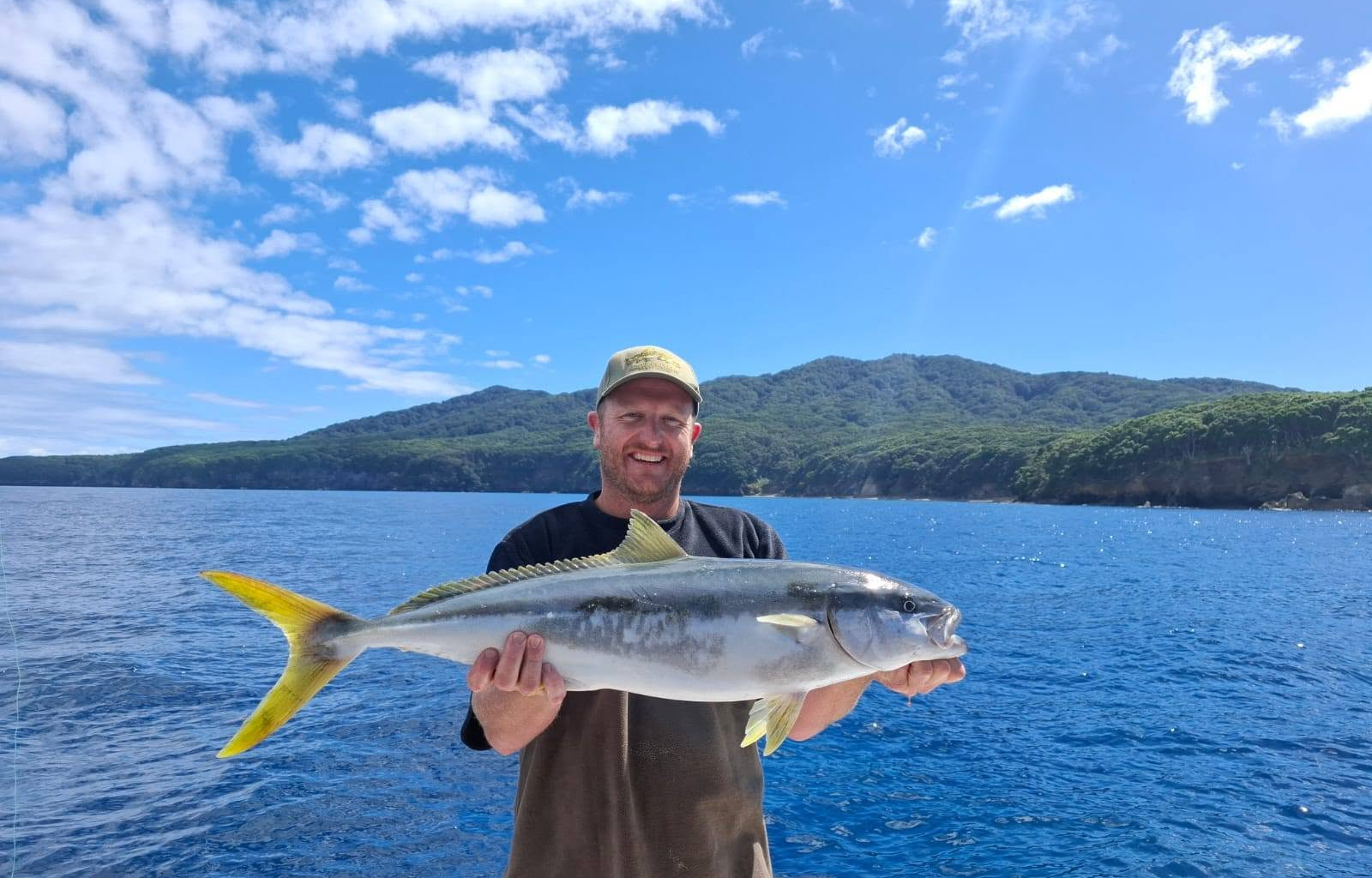
But unlike many of those other politicians, he is certifiably fishing mad. His social media feeds are full of grip and grins with kingfish, snapper and trophy trout– his Act Party profile even has a photo of him wading a lake fly rod in hand.
It’s little surprise then that Act’s fisheries policy, introduced by Luxton in his capacity as conservation spokesperson, read like they are heavily influenced by his interest in recreational fishing, and recreational fishing groups.
The policies, announced midday Sunday, will create a distinct fisheries management area for the Hauraki Gulf Marine Park and permanently end scallop dredging in currently closed North Island scallop fisheries.
“Scallop dredging is the most destructive harvesting method available in New Zealand. If scallop populations eventually recover, there is no reason to automatically return to dragging dredges across the ocean floor when more selective harvesting methods are available or can be developed.”
The policies will also require Fisheries New Zealand to quantify the economic and environmental cost of high-impact fishing methods, such as bottom trawling, and adjust existing fisheries levies accordingly – a policy aimed at encouraging lower-impact methods.
Fisheries infringement fees would be lifted, and a limit of 10 per day would be put on shellfish not currently subject to limits in an effort to address rock pool stripping seen in areas around Auckland.
In a wider policy point, Luxton says Act will change the way important fisheries are managed, aiming for higher fish stocks and greater abundance rather than treating maximum sustainable yield as the target.
An explainer released alongside the announcement says New Zealand’s approach of managing fisheries around maximum sustainable yield leaves less room for error when recruitment is poor, environmental conditions change, scientific estimates are uncertain, or management decisions take too long to respond.
It pointed to the recent collapse of the eastern Tarakihi fisheries, now thought to be sitting at just 7.7 percent of pre-fishing levels, driven in part by factors outside of fishing, such as low recruitment and warmer sea temperatures.
Changing this approach would provide abundance and resilience, it says.
“The first reason is abundance. New Zealand should aspire to fisheries where finding and catching fish is normal, rather than treating scarcity as an acceptable equilibrium.
“The second is resilience. A larger fish population provides a buffer when spawning is poor, environmental conditions change or scientific estimates turn out to be wrong. Instead of managing close to the line, fisheries should have enough headroom to withstand unexpected shocks.”
Luxton says this would benefit everybody, “A healthy marine environment is the foundation of a successful fishing industry. Abundant fish stocks are good for commercial fishers, recreational fishers and the wider ecosystem.
“Act’s approach is to protect the resource while preserving the freedom to use it. That means rebuilding fisheries where they are depleted, protecting vulnerable habitats from genuine damage, and replacing blunt restrictions with rules focused on actual risks.
“We live in a bloody paradise and we need to look after it. Act will unlock the potential of our fisheries so our oceans support more fish, more opportunity and better fishing for generations to come.”
In some respects these policies line up nicely with what National’s Tama Potaka came out with earlier in the year when he committed to reviewing bottom trawling in the gulf.
With New Zealand First’s possible coalition partners Act and National seemingly taking a conservation-forward approach, and the distant prospect of Opportunity (which has a policy to phase out bottom trawling) joining in on the fun, it draws a question mark over Shane Jones’ industry-focused approach to fisheries.
NZ First is yet to release its fisheries policy for the election, but it’s probably fair to assume the shelved Fisheries Amendment Bill can be read like something of a manifesto, or bare minimum, for what Jones (who to his credit has undertaken a significant number of quota cuts) will be seeking.
However, if the centre-right coalition can make it across the line come November, Winston Peters will have the fisheries minister role for his right-hand man pretty high up in any negotiations.
In that situation, we may see Act and National’s conservation-forward stances melt away.