
Sleep, most often. Or the racing thoughts before a Monday. Or a low mood that has outstayed the circumstances that explained it. The person sitting in the waiting room has rehearsed a version of the problem that feels manageable to say out loud, and by the time they say it, they half believe it themselves.
The drinking rarely comes up in the first session. Sometimes it does not come up in the first year.
None of this is dishonesty. It is a rational response to a system that treats two problems as though they were unrelated, and to a culture that charges very different prices for admitting to each.
What the data shows about where people actually go
An analysis of federal survey responses from more than 92,000 American adults found something that ought to have reorganised how behavioural health services are designed.
Among people with a substance use disorder, only around 14 per cent had received any substance use treatment in the past year. But 37 per cent had received mental health treatment. The same people. The same year. More than twice as likely to walk through the psychological door as the addiction one — and that pattern held across outpatient visits, telehealth and medication.
Put plainly: for a large share of people with addiction, the mental health clinic is not an alternative route into care. It is the route. It is simply not built to notice.
The scale of the mismatch shows up elsewhere too. Federal data for 2025 counted 54.6 million American adults with any mental illness, of whom roughly half accessed treatment in the past year. Among the 18.2 million with serious mental illness, around two thirds did. Compare that with the substance use side, where four in five people who need care receive none, and the asymmetry becomes hard to explain by access alone.
The price of the confession
Something else is doing the work, and it is social rather than clinical.
Telling a colleague you are seeing someone about anxiety now costs almost nothing. It may even earn a small amount of credit — evidence of self-awareness, of doing the sensible thing. Telling the same colleague you are worried about how much you drink costs a great deal, and the cost is not recoverable. The first is understood as something happening to a person. The second is still heard, in most workplaces and most families, as something a person is doing.
So people report the acceptable half. They describe the insomnia and leave out what they were doing at one in the morning. They mention the anxiety and not the three glasses that reliably switch it off for ninety minutes.
Clinicians know this pattern well. Patients tend to disclose substance use in the order of social cost — cannabis before alcohol, alcohol before pills, pills before anything else — and often only after enough sessions have passed that losing the therapist starts to feel like a real risk.
The screening question does exist. It is usually asked once, on an intake form, in the same block as height and weight, at the precise moment a new patient is least inclined to be candid.
Treating half of a two-part problem
The consequence is a particular kind of quiet failure.
Someone receives competent care for depression. They engage. They do the exercises. And they get somewhat better, then plateau, then slip, because the drinking that was never named is undoing the medication and interrupting the sleep that the medication was supposed to fix.
What happens next matters enormously. The plateau gets read as personal failure — by the patient first, usually, and sometimes by everyone else. People conclude that therapy does not work on them. They stop going. And the thing that actually needed treating was never on the table at all.
The reverse failure is just as common. Someone completes a course of addiction treatment, stays sober for three months, and then relapses into an untreated panic disorder that the abstinence has left completely exposed. Substances were doing a job. Remove them without replacing the function, and the underlying condition arrives with the volume turned up.
Federal benchmarking captures how rare it is to get both right. Of American adults with co-occurring substance use and mental health disorders, roughly 17 per cent received both mental health care and specialty substance use treatment in the reference year. Which leaves the substantial majority receiving one, or neither.
Integration is a staffing decision, not a philosophy
The fix is not conceptually difficult. It is operationally awkward, which is why it remains uncommon.
Genuine integration means a psychiatrist and an addiction clinician working from the same notes, in the same building, in the same week — not a referral that the patient is expected to chase during the worst month of their life. It means medication management running alongside therapy rather than after it. It means the treatment plan is written once, for one person, rather than twice for two diagnoses that happen to share a body.
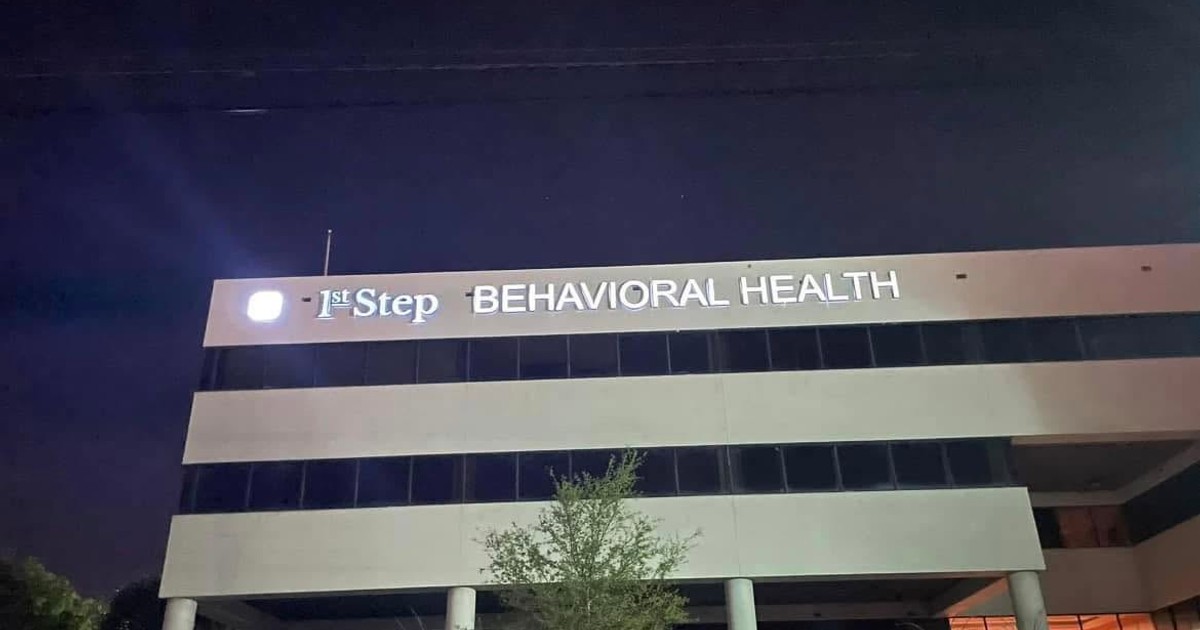
Facilities licensed for dual diagnosis are structured around this from admission. First Step Behavioral Health in Pompano Beach, Florida, for instance, runs psychiatric care and substance use treatment inside a single continuum, on the straightforward logic that a patient who has finally agreed to walk through one door should not be asked to find a second one unaided.
Accreditation is a reasonable proxy for whether that integration is real. Joint Commission or CARF status, state licensure for co-occurring care, and an on-site psychiatric team are checkable facts. Warmth in a brochure is not.
The questions that separate real integration from the word
Is there a psychiatrist on staff, and how frequently will the patient actually see them? Are substance use and psychiatric care delivered by the same team, or coordinated between two? Are medications for alcohol and opioid use disorder prescribed on site? Is the facility licensed for co-occurring disorders specifically, rather than for addiction alone? And what does the discharge plan name — a person and a date, or a general intention?
Programs that hedge on those answers are usually describing an aspiration.
The door people use
Health systems tend to build the door they think people should use, then wonder about the low footfall.
The evidence suggests people with addiction have already chosen a different entrance, and are using it in large numbers, for reasons that make complete sense once the social arithmetic is taken seriously. They are arriving at the mental health clinic. They are describing the part they can bear to describe.
The clinical task is not to redirect them. It is to be ready for the rest of what they came in with.
Anyone struggling with substance use or mental health can call or text 988 in the United States, or contact SAMHSA’s national helpline on 1-800-662-HELP (4357), which is free, confidential and available around the clock.