
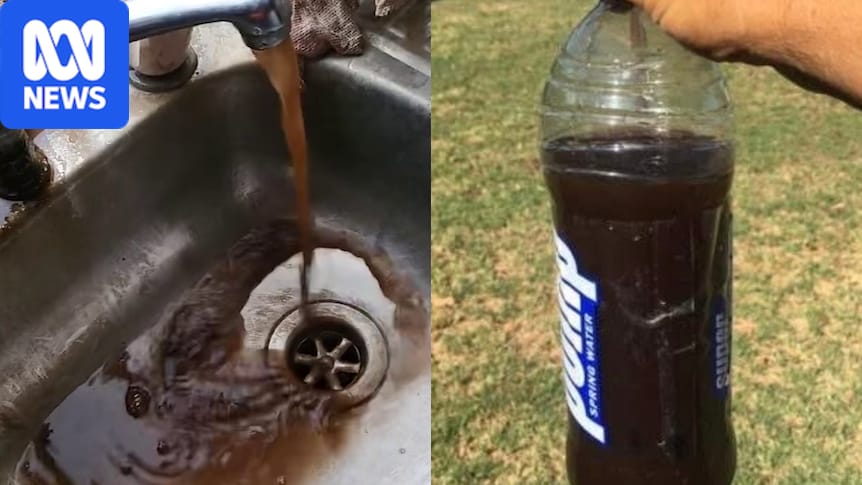
In Queensland more than half of the state’s water infrastructure is beyond its service life, but in the town of Hughenden, many residents have stopped drinking tap water entirely.
“They’re choosing to buy water rather than drink out of the tap due to the smell, taste and colour,” said Maree Christensen, who runs one of the town’s grocery stores.
Families are paying upwards of $50 a week for bottled water because the town’s water supply is discoloured and tastes foul — some locals have likened the smell and taste to pool water due to chlorine, with unpredictable levels of sediment sometimes leaving a grainy texture.
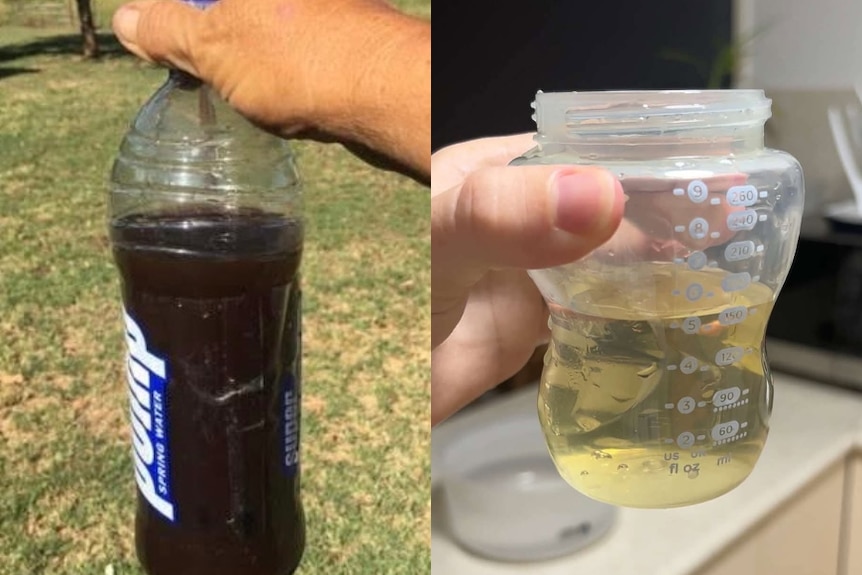
Photos supplied to 7.30 show the state of the town’s tap water. (Supplied)
In Maree Christensen’s store alone, locals are purchasing more than 800 litres of water a week.
“You have families come in and buy anywhere from four to six of the 10-litre [bottles] a week,” Ms Christensen told 7.30.
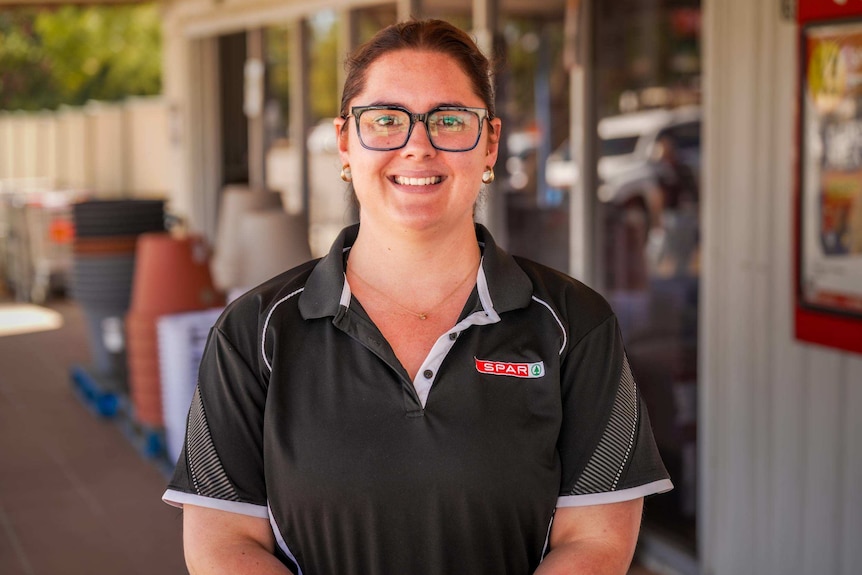
Maree Christensen manages Hughenden’s local grocer and sells more than 800 litres of water a week, and that’s just the 10 litre bottles. (ABC News: Chris Gillette)
“Three to six times a day [we] top up the shelves. It’s just an ongoing process.”
The water quality from the town’s bore pipes has become so poor a local café has switched to operating solely off bottled water, including for its coffee machines.
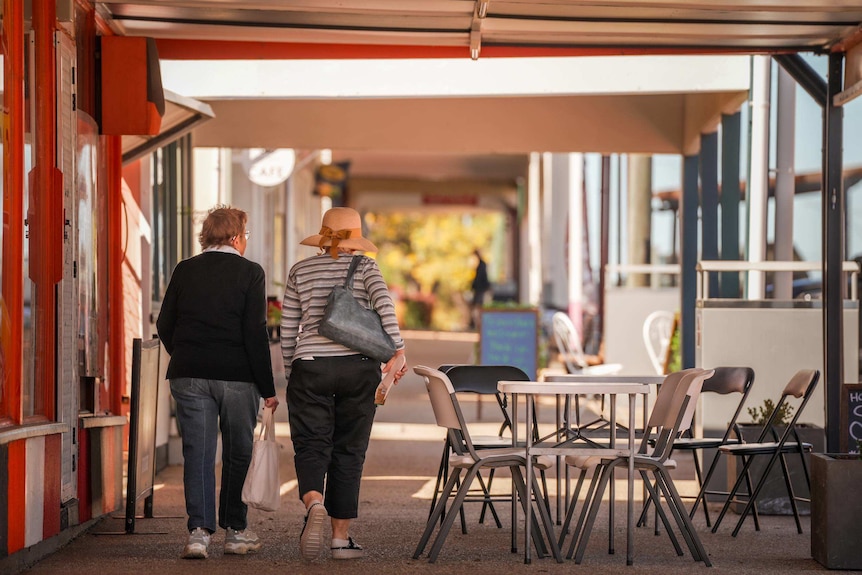
One cafe in Hughenden’s main street has switched to bottled water to avoid taste and maintenance issues. (ABC News: Chris Gillette)
It’s a familiar story for Flinders Shire Mayor Kate Peddle, who has spent years campaigning for funding to improve town water.
“I’ve run the bath to put my kids in, and it’s been brown,” Ms Peddle said.
“There is some regard in communities where we are resilient and there are expectations that we’re not going to have the same services as everybody else.
“I don’t think water should be one of them.”
Bore pipes past their use-by date
The average service life for a bore drilled into the Great Artesian Basin is about 60 years, but most of those servicing Hughenden are well past that.
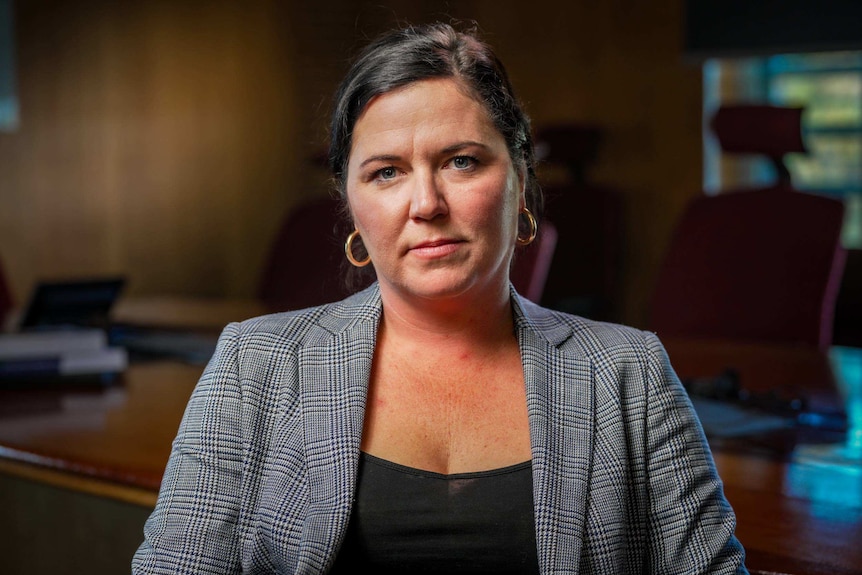
Kate Peddle has been lobbying for more funding to upgrade the town’s water for years. (ABC News: Chris Gillette)
Mayor Peddle took 7.30 on a tour of one of the oldest bores, which is more than double that age, having been constructed in 1902.
Another had turned brown from dripping water — and replacing these bores would cost $1 million each.
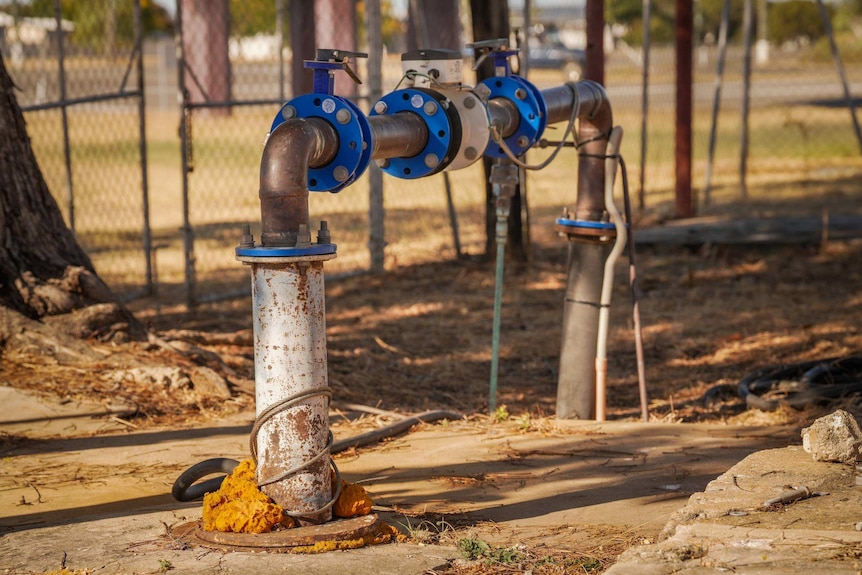
One of Hughenden’s town bores was drilled in 1902. (ABC News: Chris Gillette)
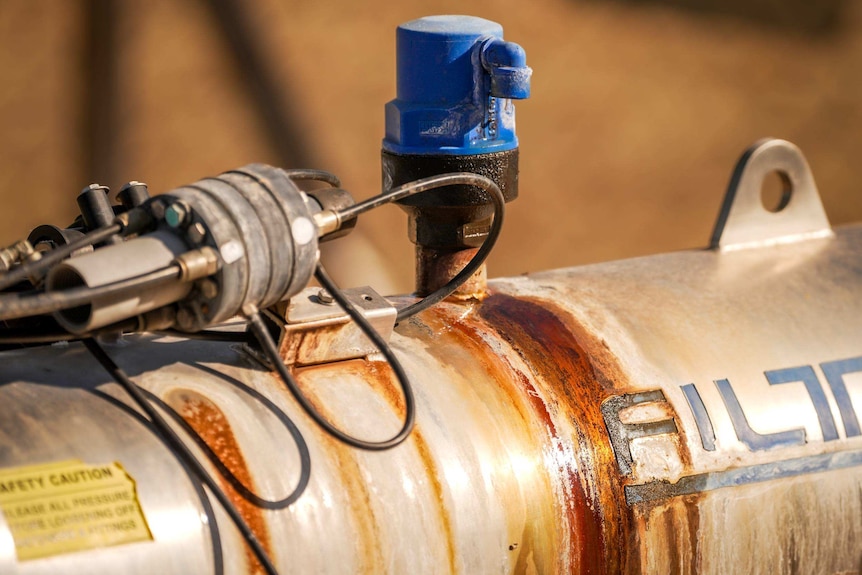
Replacing the bores would cost $1 million each. (ABC News: Chris Gillette)
“Each year we try and put what we can conservatively into the budget to address the old network so we can replace little patches at a time, but we are chasing our tail,” Mayor Peddle said.
“We’re sort of fixing the problems, but we’re not getting ahead of it because we can’t be proactive in the planning to replace, because we’re always replacing what’s broken.”The infrastructure ‘cliff’
According to a Local Government Association report, the cost of completing urgent works on Queensland’s water infrastructure exceeds $5 billion.
Advocacy body Queensland Water said the issue had reached a crisis point.
“There was a bit of a development frenzy sort of 1945 up until the 1970s so all our infrastructure is getting to the stage where it is well beyond its designed life span,” CEO Dr Georgina Davis said.
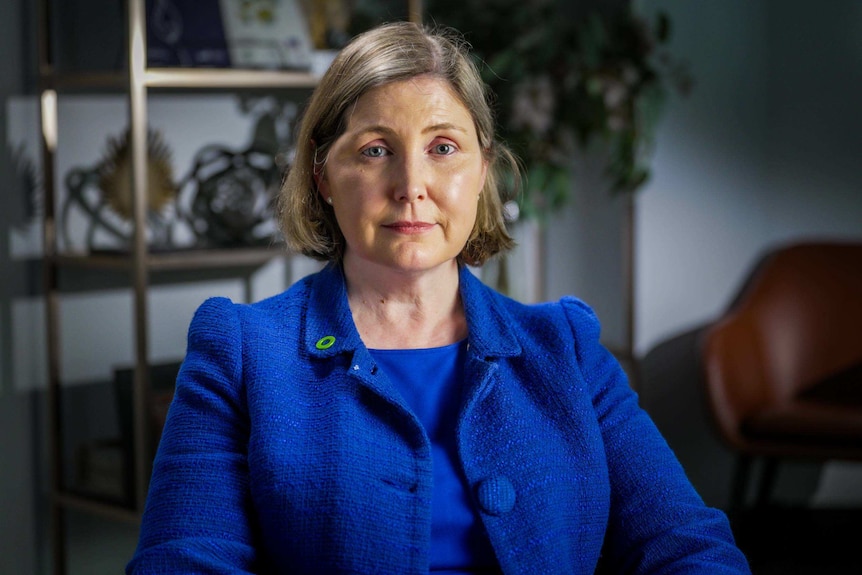
Queensland Water CEO Georgina Davis says the end of a permanent funding scheme for water infrastructure has exacerbated the challenge of ageing pipes and treatment plants. (ABC News: Chris Gillette)
“In Queensland we lost permanent funding for water infrastructure back in 2009 and councils since then have not had any money to really invest in new capital works even though we knew everything was becoming older.
“Whilst Queensland certainly has more than its fair share of ageing infrastructure, the infrastructure cliff actually is an issue across Australia in terms of asset age.”
State and territory governments are responsible for regulating drinking water with state-specific legislation informed by the Australian Drinking Water Guidelines (ADWG).
The majority have enforced the guidelines, which outline what’s required to deliver safe and good quality water, through legislation.
Bligh Tanner’s associate director for water and environment, Michael Lawrence, previously worked for the Queensland water regulator and said the state’s drinking water legislation did not require the ADWG to be met in full.
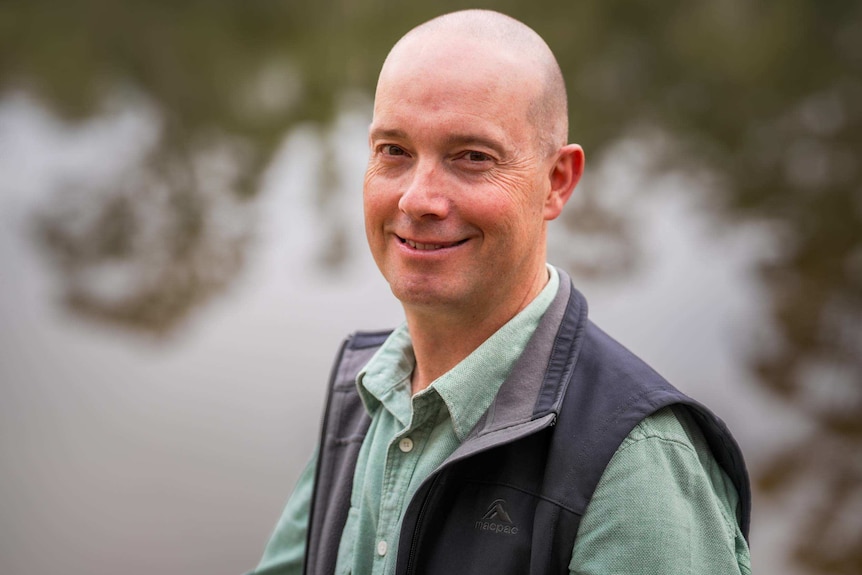
Michael Lawrence previously worked for Queensland’s water regulator. (ABC News: Chris Gillette)
“They are based on the elements of the ADWG, but they don’t require exact compliance and exact meeting all of those elements,” Dr Lawrence said.
The ADWG also has guiding principles.
“One of those is that we need to have multiple robust barriers that’s designed to treat the level of risk, which is in a water source that’s being used,” he said.
The guidelines were updated following internationally significant events, including the 1998 Sydney water crisis, where millions of people were unable to drink tap water after an outbreak of Cryptosporidium.
The waterborne parasite can cause severe illness and is resistant to chlorine, meaning additional treatments are required.
Not all of Queensland’s older treatment plants can filter out Cryptosporidium and other protozoan pathogens.
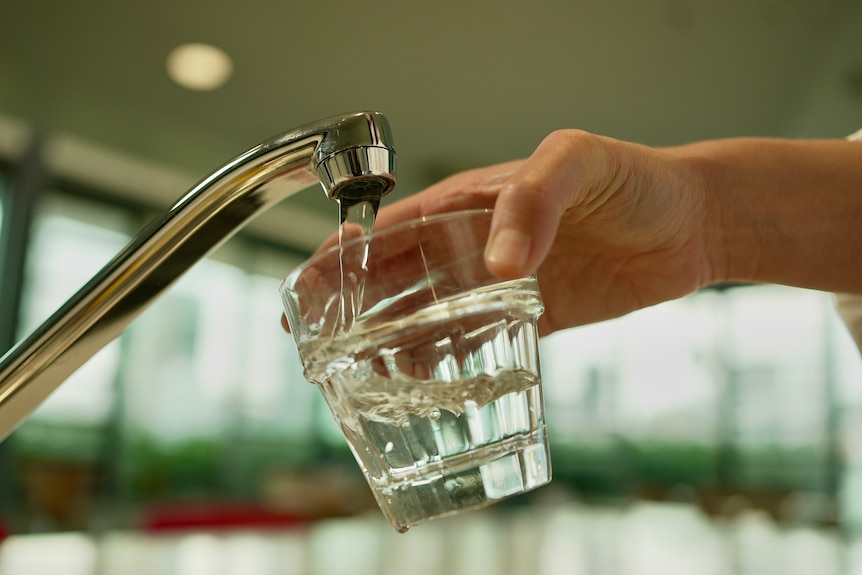
The estimated cost of completing urgent water and wastewater works across Queensland exceeds $5 billion. (ABC News: Mark Leonardi)
Dr Lawrence said that created a risk, pointing to a 2016 bacteria outbreak in water in Havelock North, New Zealand, which left thousands of people sick and four dead.
“These are rare events, but the consequences are completely unacceptable when they do,” he said.
“When these treatment plants were designed, we didn’t fully understand that pathogens like Cryptosporidium were a health risk.
“The filtration processes were designed for a different purpose than what we’re currently asking those processes to do.”Population boom
Despite ongoing water issues, Hughenden’s population will grow by 50 per cent over the next six years.
The town is the major hub for the $14 billion CopperString project that will connect the state’s west to the national electricity market.
Mayor Peddle credited that build as the breakthrough that secured $20 million in state funding for a water treatment plant.
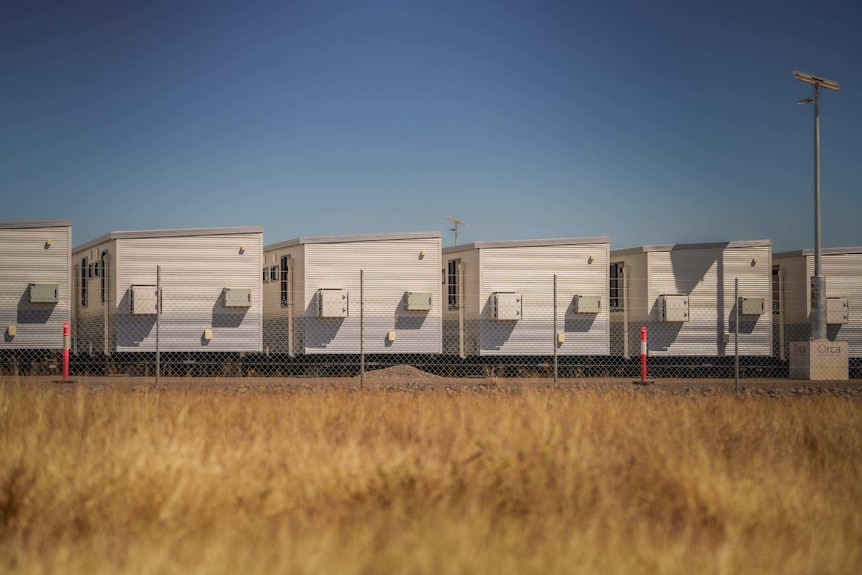
Up to 500 workers will live in this purpose-built site on the edge of town during the $14 billion CopperString project. (ABC News: Chris Gillette)
“It was the fact that there was a nation-building, a state-building project in our community that we were able to leverage to be able to improve our services,” she said.
“But across the state absolutely, it’s an incredible problem. I’d say it’s a crisis.”
Construction of the water treatment plant will take several years, while an estimated $15 million in additional funding is required to upgrade other parts of the system.
In the interim, locals continue to rely on bottled water.
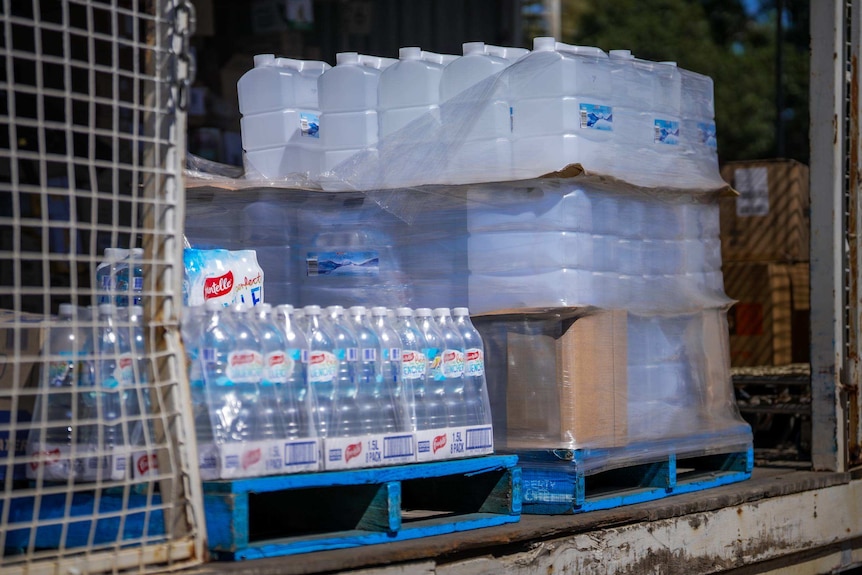
The weekly delivery of bottled water sits ready to restock the shelves at Hughenden’s supermarket. (ABC News: Chris Gillette)
A spokesperson for the Queensland government said it was committed to delivering safe and affordable drinking water across the state.
“While local governments are responsible for providing drinking water for their communities, we are backing them with record levels of funding through our now permanent $100 million Works For QLD program and $2 billion Residential Activation Fund,” the statement read.
“We continue to work closely with councils and water service providers to help them build capability and deliver safe drinking water for all Queenslanders.”
Watch 7.30, Mondays to Thursdays 7:30pm on ABC iview and ABC TV
Contact 7.30
Do you know more about this story? Get in touch with 7.30 here.