
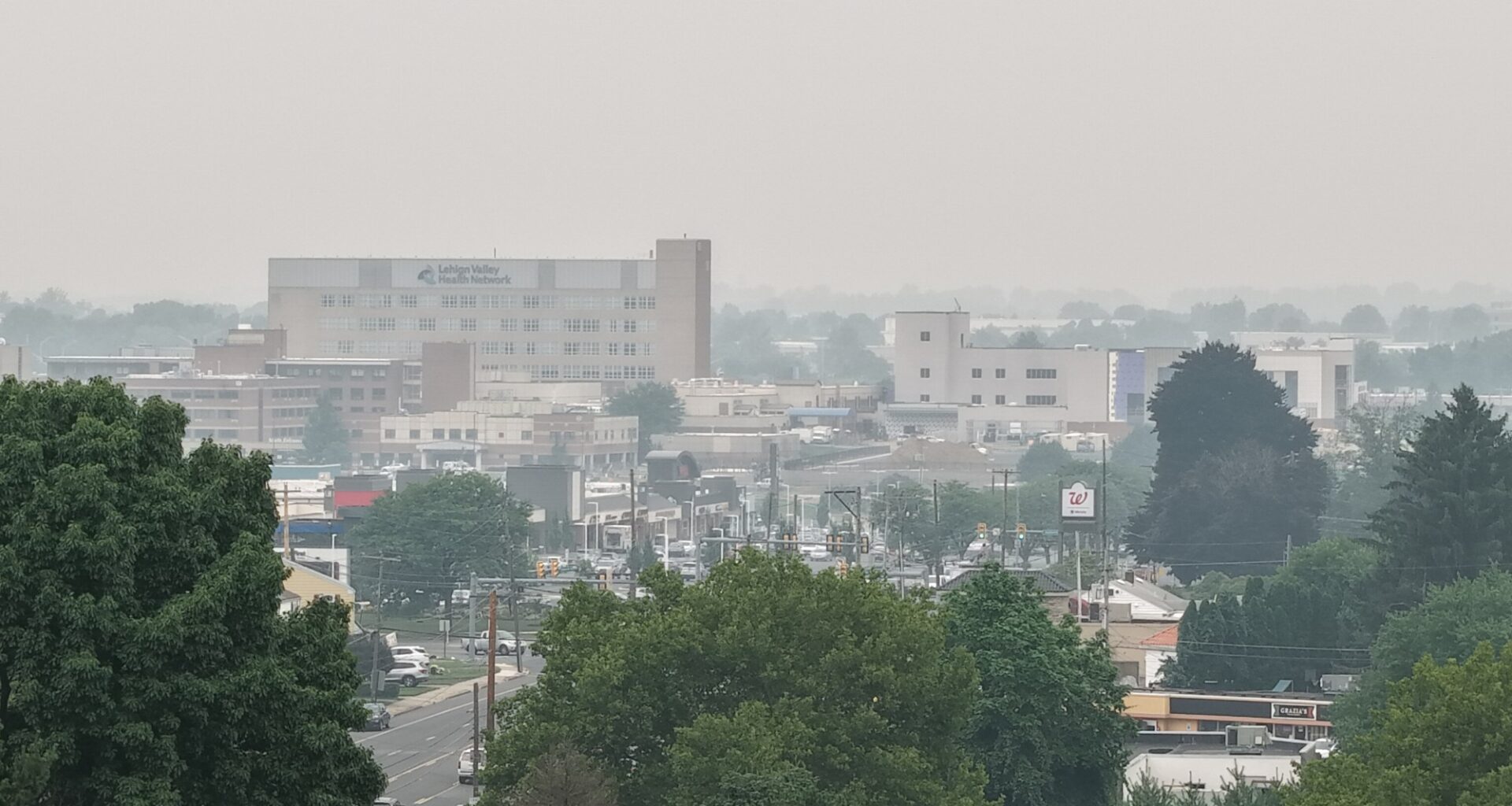
Allentown has once again been named the worst place to live in the country for those with asthma.
The Asthma and Allergy Foundation of America’s recently released 2026 Asthma Capitals report] shows that Allentown has high asthma prevalence and the highest rates of emergency department visits of all cities analyzed for the report. However, Allentown’s asthma-related death rate was average. The city was ninth for rate of asthma prevalence but first for asthma-related ER visits.
The 2026 report is part of a recurring trend: The Allentown metropolitan area was ranked third worst in 2022 and 2025, and worst in the nation in 2021, ’23 and ’24. It was also named as one of the most polluted metropolitan areas in the country by the American Lung Association.
Dr. Robert Zemble of Lehigh Valley Health Network said that roughly 8% of Americans have asthma.
Zemble said that asthma is more of an umbrella term for physical phenomena that involves airway hypersensitivity, baseline airway inflammation and reversible airflow obstruction. There are many potential causes and risk factors for asthma: family history, genetic disposition, whether the person was sensitized to certain allergens, smoke exposure before birth, the way someone was delivered, early childhood infections, or serious incidents like heavy smoke inhalation from a fire.
Air quality also plays a factor; Zemble said areas near highways have higher incidences of asthma.
Dr. Rehan Mujahid, immunologist and allergist with St. Luke’s University Health Network, said that because the Lehigh Valley can be a particularly bad area for allergies and allergy sufferers, the same is true for those with asthma.
Mujahid added that indoor air quality may actually be a bigger contributor than outdoor air quality, though. He said people who live in the city, especially lower quality housing where they are exposed to mice, cockroaches and mold, are at higher risk.
Zemple added that Puerto Ricans are at higher risk than the general population, and boys are more likely than girls to get asthma during childhood, though that reverses after high school.
For those who want to take charge of their asthma, there are many things they can do. Certain respiratory viruses become more common toward the beginning of the school year and can affect people with asthma in a more serious way. Hand washing, as well as getting the influenza vaccine, are good ways to protect against those infections, doctors said. Those with really bad allergies may want to consider getting a HEPA filter for rooms where they spend the majority of their time. People can also check airnow.gov to view the air quality of the region and determine risks.
Chrysan Cronin, director emeritus of public health at Muhlenberg College, said her advice to those with asthma is to do what they can to alter their environment and manage their condition.
“Those things aren’t changing and you know some of them can’t change. So we have to figure out how we’re going to manage these for ourselves. And you know if you go to the allergist and you can get desensitized through shots, that’s great, but a lot of people can’t do that,” she said.
Zemble said figuring out triggers and modifying lifestyle and environment, if possible, are among the simpler things people can do to take charge of their asthma
Having a safety plan in case an episode begins is also critical, he said. Part of the plan should include having a rescue inhaler handy as well as an adequate supply of maintenance inhalers, along with talking to a healthcare provider.
“So if you have anything more than rare symptoms, in general we like to treat that underlying inflammation to prevent the exacerbations from happening and I think that’s the key is being adherent with your asthma medications to prevent exacerbations, not just treating when you have symptoms,” Zemble said.