
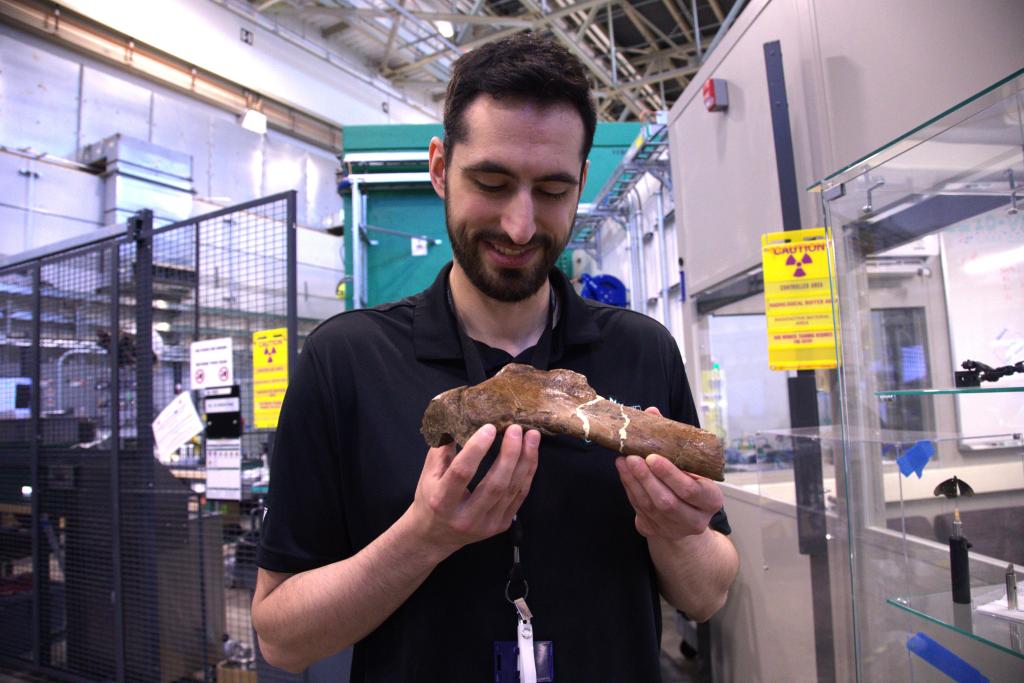
During imaging experiments, neutrons interact with all atoms – with particular sensitivity to hydrogen atoms – providing the data needed to create the images. Thanks to their unique properties, neutrons can uncover information that is difficult or impossible to obtain through other techniques.
“People often think of neutrons as tools for studying batteries or advanced materials, but they’re just as innovative for answering questions about ancient life,” said Hassina Bilheux, lead instrument scientist for VENUS.
The team plans to continue analyzing data collected at VENUS and MARS, expand studies to additional fossils, and compare healing patterns across species. Combining neutron imaging with X-ray techniques, they will also investigate pathologies in fossils and compare differences in modern species.
“There are more fossils than you think sitting in collections, hiding secrets from millions of years ago,” Mitchell said. “Putting them in a synchrotron or neutron source allows us to make new discoveries about ancient life like never before.”
HFIR and SNS are both DOE Office of Science user facilities.
UT-Battelle manages ORNL for DOE’s Office of Science, the single largest supporter of basic research in the physical sciences in the United States. The Office of Science is working to address some of the most pressing challenges of our time. For more information, visit energy.gov/science . – Sumner Brown Gibbs