
New legislation dictating how local councils, developers and businesses plan for climate change does not yet define who shoulders the burden of funding.
Speaking to Newsroom ahead of publishing Bell Gully’s Big Picture: Climate Change report, partner Natasha Garvan, a specialist in environmental and resource management law, says it’s clear cash-strapped local governments will have to stump up part of the cost.
“But whether there’s any broader assistance from the central government for some communities, if there was a situation such as a managed retreat; that’s still very much unanswered at this point.”
Climate adaptation is a policy hot button; in July the Government introduced the Climate Change Response Amendment Bill, which if enacted would establish a framework requiring territorial authorities to prepare plans for areas facing the highest climate-related natural hazard risks.
Garvan is the co-author of a chapter in Bell Gully’s report focusing on adaptation planning.
This looks at loose ends such as how ‘priority locations’ are identified in regional spatial plans, what adaptation pathways will be chosen and how the substantial costs of adaptation are funded.
Who is impacted?
Garvan says those most impacted by adaptation planning will be people living in those areas identified as priority locations – as this planning will force a conversation around what happens with their property – and developers that own or are eyeing at-risk land.
Another stakeholder category is insurers. The legislation and subsequent pool of data will provide better information about the risk of natural hazards, which will better inform insurers to service customers and calculate premiums.
“There are some strong indicators in what’s called the national policy statement for natural hazards. In that there’s a risk matrix, and we think that that’s likely to be used to identify the priority locations,” Garvan says.
“That risk matrix then helps you work out if it’s a ‘very high-risk’ or ‘high-risk’ area, and that will likely translate to the priority locations, provided there is good data to inform those decisions.”
What does ‘high risk’ look like?
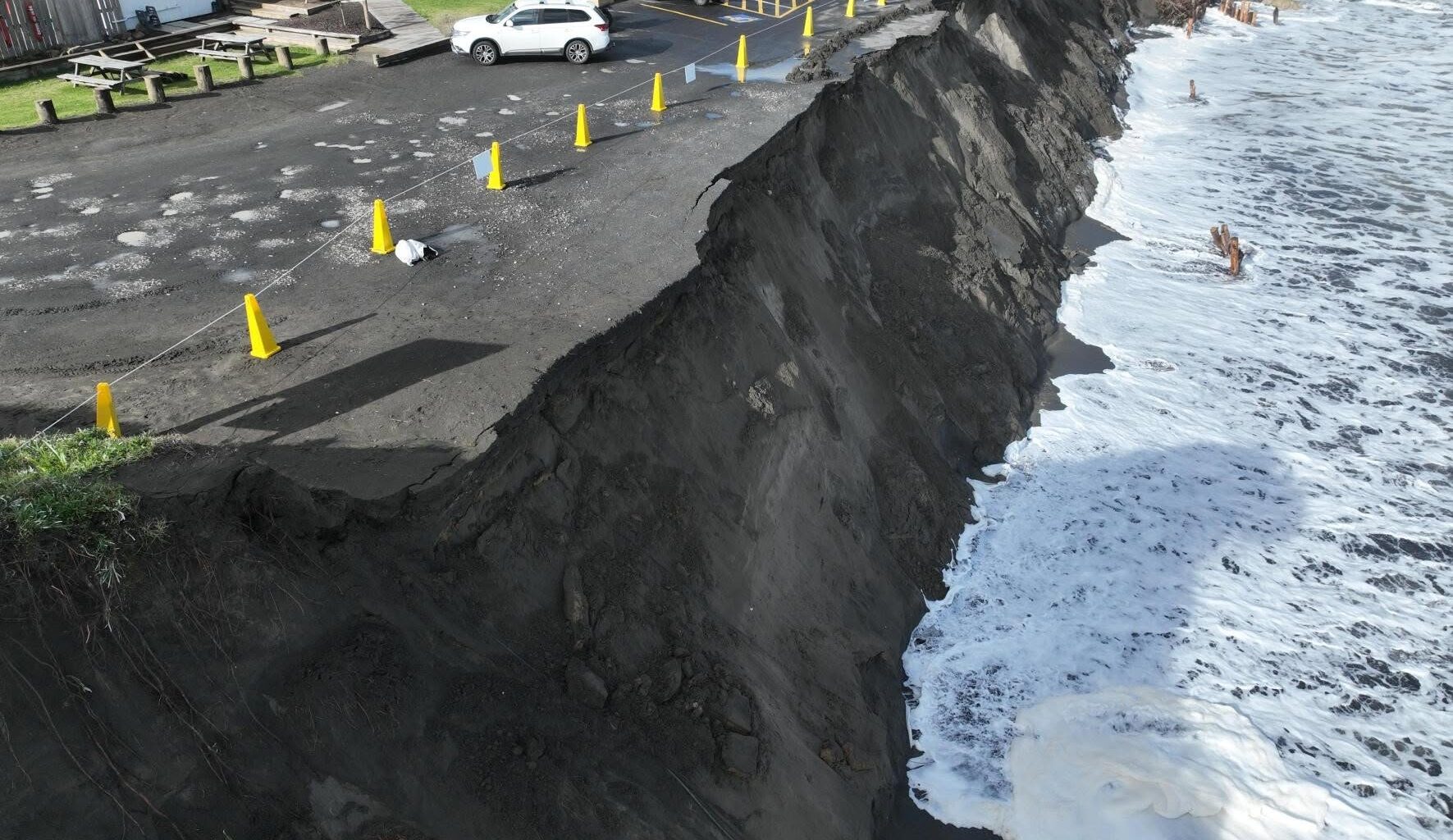
Sites that are most likely to be marked as priority locations include areas impacted by rising sea levels and coastal erosion.
Garvan says flood zones are another top contender: “If you’re in an area that repeatedly floods, that’s probably nature’s signal to you that you could be in a priority location.”
This will sometimes be obvious to people, while in other situations it might not.
Garvan says: “If you look at what happened in Auckland and during Cyclone Gabrielle, some homeowners would have felt that it was unexpected that they were suddenly red stickered and they couldn’t go back into their homes.”
Difficult decisions
Climate adaptation plans are likely to rely on four key response categories: avoid, protect, accommodate and retreat. While the first option will be the obvious choice for future development, managing existing risk will likely fall down to the latter three.
There’s no one-size-fits-all option – the decision will differ based on the level of risk and stakeholders’ appetite for risk, as well as the purpose of a site.
At Sunset Beach in Port Waikato, locals have refused to accept Waikato District Council’s recommendation to leave due to severe coastal erosion facing the region. Earlier this year, locals funded and erected a $400,000 seawall to hold the coastline in place.
Addressing decisions around protecting, accommodating and retreating, Garvan says there will be a lot of room for debate and discussion about what options should be taken.
“Hopefully those conversations occur alongside and with communities about what they want. Communities might come together and say: ‘Look, if we get these types of events over this period, or the sea level rises to a certain point’, or: ‘if we get two major flooding events within a five-year period, we accept that the solution needs to look different’.
“You can have that staggered approach for decision making. What this allows is a more proactive view around managing the risk and having the conversations up front.”
Garvan won’t be drawn on how conversations around rates capping would play into adaptation planning costs. What is clear, she says, is that under-pressure councils facing new responsibilities and functions will have to prioritise in terms of what they do with the funds available.
The amendment bill doesn’t establish any dedicated central government funding mechanism, cost-sharing arrangement between central and local government or compensation framework for impacted parties.
It does however suggest a shared responsibility model at a conceptual level – even if it doesn’t translate this into any binding obligation.
“I probably can’t speculate beyond that in terms of what the costs of this process will actually be and what that means for each council,” Garvan says. “I imagine it will be different depending on the council and how many priority locations they’ve got within their region.”