
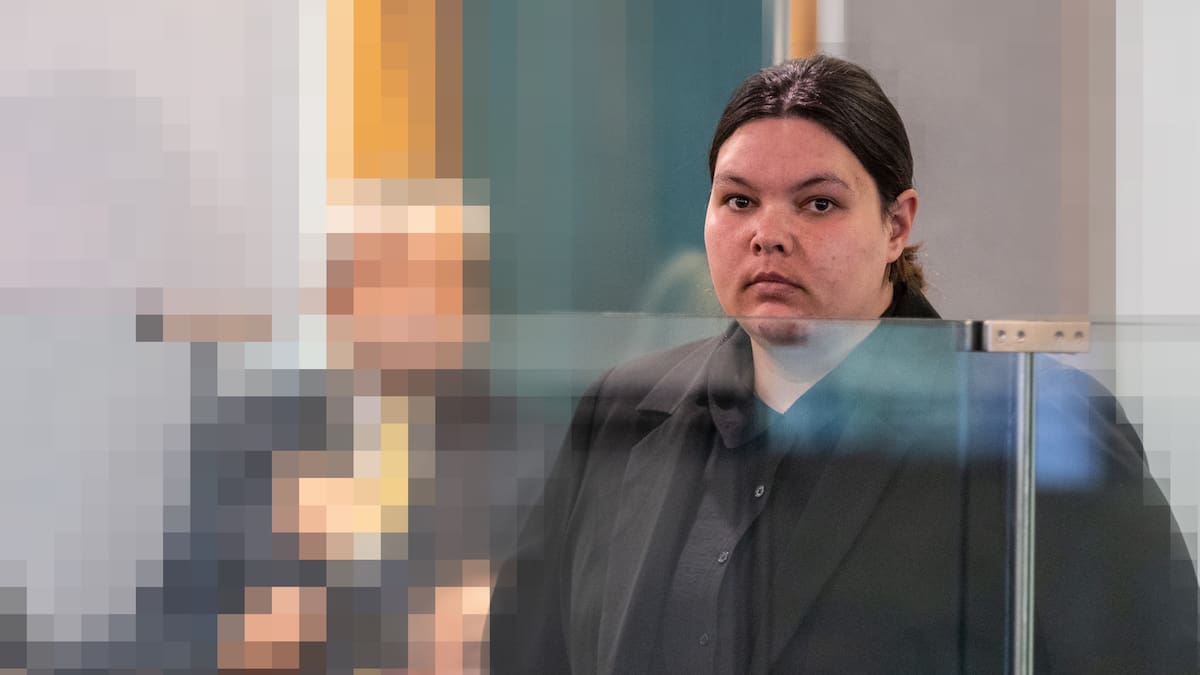
She and others of Rhind’s whānau read their victim impact statements at the sentencing of his killer, Toni-Ashley Crawford.
Crawford was earlier found guilty by a jury of murdering Rhind, whom she did not know.
In the early hours of October 17, 2024, Crawford drove past Rhind as he walked along a South Auckland road.
Audio from CCTV footage showed that as Crawford passed Rhind, a male voice could be heard yelling.
Seconds later, she did a U-turn and drove at him, running him down.
The Crown told the court that Crawford had used her car like a “lethal weapon” before driving away, leaving Rhind lying injured on the road for about 30 minutes before a pedestrian found him.
Crawford later told a probation officer that she was high on methamphetamine and convinced Rhind posed a threat to her daughter, who was not there and whom he did not know.
At sentencing, the court first heard from Darcel , who said the day her mother called her and said her brother wasn’t going to survive was the worst day of her life.
She said since his death, she had constantly asked herself if she had done enough as a sister to show her brother that she loved him.
Darcel hid her pain and put on a brave face, she said, seeing her parents less because she was afraid of saying the wrong thing and causing them further hurt.
“My pain is too heavy to carry.”
She said she hoped everything she had said had “sunk in” for Crawford, and she could understand the extent of the damage she had caused.
Then Rhind’s aunt, Janine Taituha, spoke, holding a photo of her nephew.
She said she spoke not only for herself but for their “entire whānau”.
Rhind wasn’t just another victim, Taituha said. He was their son, father, brother, nephew and friend.
“He was loved beyond words, and he is missed beyond measure.”
The circumstances of Rhind’s death made their grief even harder to carry, she said, leaving them with the knowledge that he was without the “immediate help” that might have given him a chance to survive.
She said that, in watching her sister, Rhind’s mother, experience the loss of her only son, she had seen the “heartbreak, anguish and loneliness” in her eyes.
Taituha said she used to watch her sister embrace Rhind while he was alive and nowshe watched her kneel on the ground to hug his headstone.
“No mother should ever have to love her child that way.”
Taituha said that after the sentencing, the whānau would continue to uphold Rhind’s memory.
“When everyone leaves this courtroom, we will still be living this nightmare,” she said.
“We will never stop loving him, we will never stop missing him. We will say his name.”
They would tell his 8-year-old son who his father was and share his stories, she said.
Victim was kind, with the ‘gift of the gab’
Rhind’s sister, Sarah Rhind, said in her statement that her brother was one of the kindest people she knew, with the “gift of the gab” who would talk to anyone.
“He lived and loved with all his heart.”
She said his death created a ripple of loss and heartbreak that would be felt across their family for generations.
Another of his sisters, Toni Rhind, said that when her brother’s son heard a person named “Toni” had murdered her brother, the boy was confused, thinking it was her.
“Do you know how heartbreaking this is?” she asked.
No sentence handed down could replace the life that was stolen, she said.
Janine Rhind, also the victim’s sister, said having to sit through the trial was mentally and emotionally exhausting.
But she did it to know what had happened to her brother, including how long he was left and whether he suffered, she said.
Crown prosecutor Aysser Al-Janabi prosecuted the case. Photo / Michael Craig
In the sentencing submissions, Crown prosecutor Aysser Al-Janabi pointed out that it was not in dispute that Crawford was driving on the wrong side of the road at excessive speed when she hit Rhind and drove away.
That “manner of her driving” was an aggravating factor, she said, as well as Rhind’s vulnerability at the time, as he was walking alone at night with his back to the car when he was struck.
The impact of the crash shattered Crawford’s windscreen, Al-Janabi said, and she must have been aware of what had happened, but she did not stop.
While not extensive or sophisticated, Al-Janabi argued, there was a significant degree of premeditation, as shown by CCTV footage of the crash.
She said the footage clearly showed Crawford drove past Rhind before turning around, driving back and striking him.
Crawford’s lawyer, Ethan Butler, disagreed, saying the U-turn showed some premeditation but not a significant amount.
“[It could be] better classified as a knee-jerk reaction rather than a premeditated act,” he argued.
He submitted that his client had a difficult upbringing, marked by violence and drug abuse.
Methamphetamine in her system
She had also suffered the death of her partner in 2018 which led to a relapse in her methamphetamine addiction.
She again relapsed in 2021, the court heard, taking the drug almost every day, including, Crawford told a probation officer before sentencing, 10 minutes before she left the house on the day she hit Rhind.
Two psychiatrists assessed Crawford before sentencing and Butler pointed out that one of them said Crawford was likely to have been unwell, or under a drug-induced psychosis at the time.
Al-Janabi and Butler agreed Crawford should be sentenced to life imprisonment, but they were at odds on what the minimum period of imprisonment (MPI) should be.
Al-Janabi said it should be in the range of 10 to 11 years, after allowing for a “limited” one-year reduction for Crawford’s personal circumstances.
Butler submitted that 10 years was more appropriate.
Justice Layne Harvey sentenced Toni-Ashley Crawford. Photo / Michael Craig
Justice Layne Harvey acknowledged both Rhind’s and Crawford’s families present in court.
He had read all of the victim impact statements, which he said described Rhind with adoration and as a man with a “wicked sense of humour”.
One statement that was not read out in court, the judge noted, was from the mother of Rhind’s son.
Justice Harvey said it mentioned the boy never got to say goodbye to his father.
“His father was his best friend and they shared a close bond.
“Every day he feels the loss of his dad.”
The woman said the boy had become quiet and withdrawn, struggling with grief and anxiety and missing school as he struggled to come to terms with the loss.
The Minimum Period of Imprisonment
Justice Harvey acknowledged Crawford’s difficult upbringing and battle with addiction.
He said there was no evidence that Crawford’s choice to turn around that morning was pre-planned, finding the act was impulsive.
Justice Harvey said that impulsive act spoke more to the “callousness” of her offending than to premeditation.
He also agreed that there was a connection between her personal circumstances and the offending.
Crawford was sentenced to life imprisonment with an MPI of 10 years.
Ella Scott-Fleming has been a journalist for three years and previously worked at the Otago Daily Times, Gore Ensign and Metro Magazine. She has an interest in court and general reporting. She’s currently based in Auckland covering justice-related stories.
Join the NZ Herald’s Open Justice team for Case by Case, a video and podcast series examining the disputes and decisions making headlines across New Zealand.