
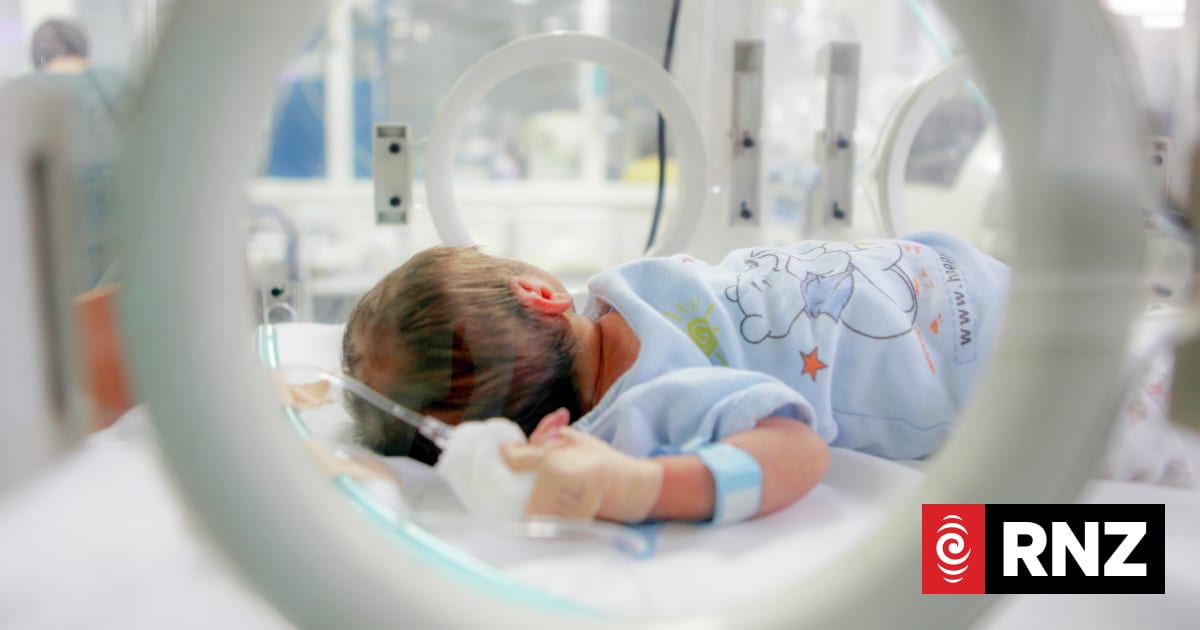
A study looking at the early brain development of babies born between 32 and 36 weeks gestation has found a third of participants showed abnormalities on their MRI.
Every year about 4500 babies are born prematurely in New Zealand and those rates have been rising.
Preterm babies – those born before the 37-week mark – can have life-long health challenges.
For 25 years the Liggins Institute at the University of Auckland has worked to improve the long-term health outcomes of these babies.
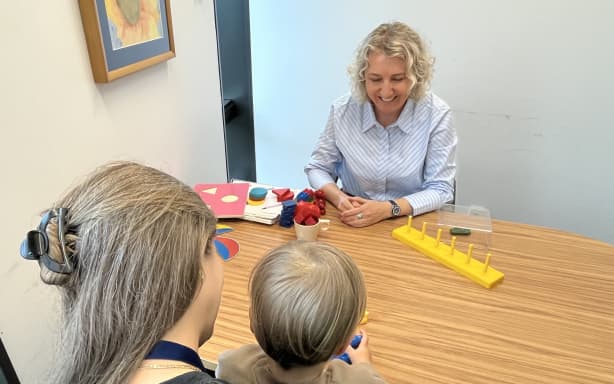
Liggins Research Doctor Olga Ivashkova takes a 2 year-old through a development assessment.
Liz Garton
The Moderate-to-Late Preterm Babies Early Brain Development (MOPeD) study is just one of many running through the Liggins.
Rachel Koenen, 35, and her 2-year-old son Oren are participants in the study, which involves an early MRI scan and developmental progess check-ins.
She said it was a no-brainer for her to want to take part.
“If we can contribute to the body of knowledge and it doesn’t harm people, you should,” she said. “You never know how big of an impact the results are going to be on changing people’s lives, particularly in the little one… and we need a clearer picture to inform future best practice on how we deal with premature babies.”
Study lead Distinguished Professor Dame Jane Harding says the tiny babies born before 32 weeks have the highest risk, being up to 10 times more likely to have developmental problems as they grow up.
But she says 80 percent of preterm babies are born in the 32-37 week range and they are still twice as likely to have developmental problems.
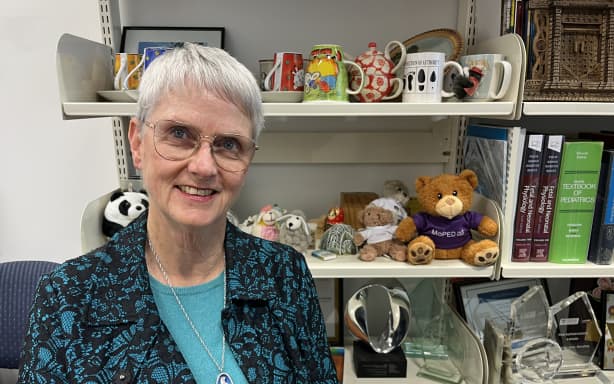
Distinguished Professor Dame Jane Harding.
Liz Garton
“We started this work because we were interested in how babies’ brains grow,” said Professor Harding. “We decided that we should look with MRI at how the babies’ brains were growing and discovered to our surprise that there were quite a lot of them that had abnormalities on their MRI that we didn’t expect.”
More than a third – 38 percent – had changes similar to ones seen in the very early preterm babies.
“In the very preterm babies, [the changes] are associated with later risk, but we don’t know what they mean in this group,” said Professor Harding.
The MoPED study involves using MRI and developmental assessments to track outcomes.
Koenen said it had been a very easy process and one that had benefited them as well.
“It’s all very clever the way they do it. Oren gets given a set of problems or a set of play exercises he has to work through and based on how he does they kind of gauge where he’s at developmentally and if there’s any concerns.
“They share back their results, which is awesome. I love seeing all the results.”
She said for Oren the news had been all good. “Super reassuring to know that he’s on track and he’s advanced verbally. Definitely a little chatterbox.”
MOPeD is just one of many studies currently running at the Liggins Institute.
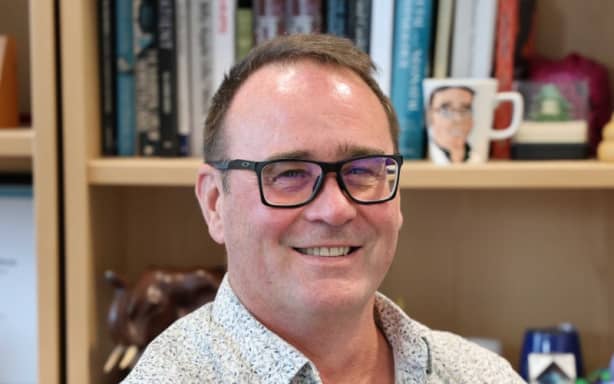
The Liggins Institute Director Professor Justin O’Sullivan
Supplied
Director Professor Justin O’Sullivan said discovering ways to improve long-term health outcomes was what the institute was known for
“The Liggans is named after Mont Liggans, who basically developed a really world-changing therapy, which meant that if you’re born pre-term effectively, you have a chance to live. And that’s a cornerstone for the institute.”
In the 25 years since it opened, many other studies have changed the way medicine is practiced, such as work on magnesium sulphate which helps prevent cerebral palsy in tiny babies, and studies on a dextrose gel for treating low blood sugars, which is now first-line treatment for those babies.
There was still a lot of work to be done about preterm birth rates, but Professor O’Sullivan said the work was about more than babies.
“We’re trying to personalize nutrition. We’re looking at live therapeutics, like gut bug stuff,” he says, “Then we’re talking about the sort of genetic programs and fast tracking therapies for people when we find a genetic mutation and I don’t mean by genetic engineering, but there are ways to treat them.”
He said there were a lot of different projects that were really trying to push things into the future, for example the probiotics people use today were chosen in 1905.
“Sometimes we take for granted that something works just because we’ve done it for a long time. Just because we did it for a long time doesn’t mean it’s right and maybe there’s a better way to do that and maybe you can have a better impact.”
Another piece of work involved new probiotics for conditions like anxiety
“It’s a huge problem in the population and what if it’s as simple as a single capsule, right?”
He said there were also new problems coming, that staff were trying to get ahead, of such as changing weather and temperatures.
“If you get really hot when you’re pregnant there can be impacts of the heat on the pregnancy through stress and various other things,” he said.
“There’s a lot of opportunities to do things that matter and help.”
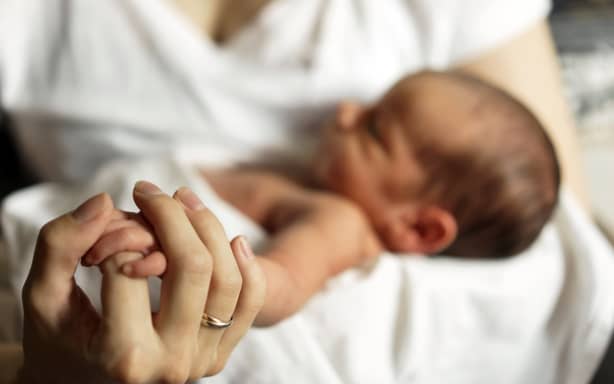
The changing climate could herald new challenges for newborn health
123RF
The Liggins Institute is currently running an appeal to raise funds for its work, but Professor O’Sullivan said donating money was not the only way people could help.
“Being a participant in the trials is an amazing thing,” he said. “You’re donating of yourself… to try and help others and it’s an incredible thing that people do, when they do that.”
Professor Harding said it was a privilege to be doing this sort of work
“You get involved with families at that critical time, the birth of a baby, and you get involved in how they grow and how you can make things better. That’s pretty exciting and pretty privileged place to be.”