
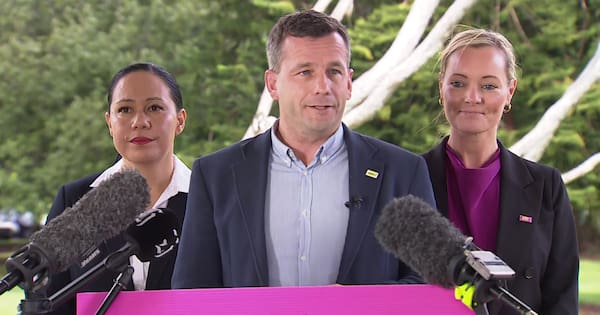
ACT is promising to strip the Waitangi Tribunal of its power to examine current government policies, if elected, and to shut it down altogether once it has finished hearing the last historical Treaty claims.
The coalition party’s proposed policy would confine the tribunal to historical claims lodged before the existing September 1, 2008 statutory cut-off, ending its role in urgent and kaupapa inquiries into contemporary conduct by the Crown.
Party leader David Seymour said nearly “two centuries since the signing of the Treaty, it is time to complete the historical settlements and move New Zealand forward”.
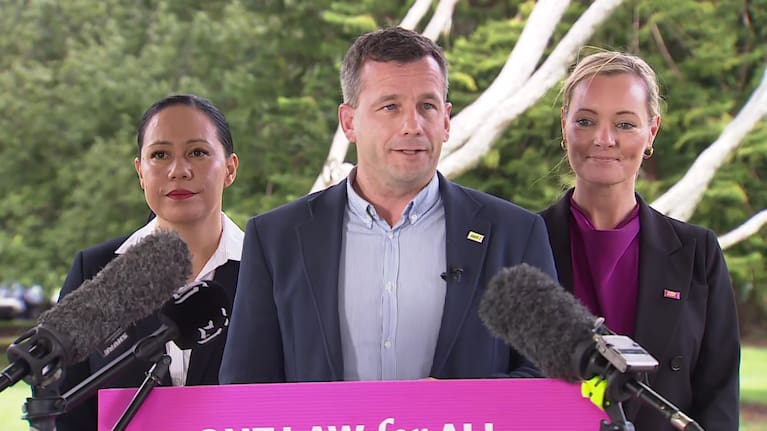
“ACT supports completing full and final historical Treaty settlements as a pragmatic way to resolve past injustices, ” he said.
“This includes where the Crown confiscated land or otherwise breached property rights. That work should be finished properly.”
ACT said existing historical claims would still be heard in full and it would not impose a deadline for the tribunal’s closure, with funding reducing as workload shrank.
The tribunal has a goal of finishing its remaining historical claims inquiries by 2030.
Speaking to media, Seymour said past wrongs the tribunal addressed were self-evident in a way that he said current grievances were not.
The Waitangi Tribunal is in its second and final day of an urgent hearing in Wellington. (Source: 1News)
“The historical claims were clearly wrong to anybody,” he said.
“The government of the day illegally used military power to take away people’s property. I’m opposed to that, but it’s not dealing with issues like that anymore.”
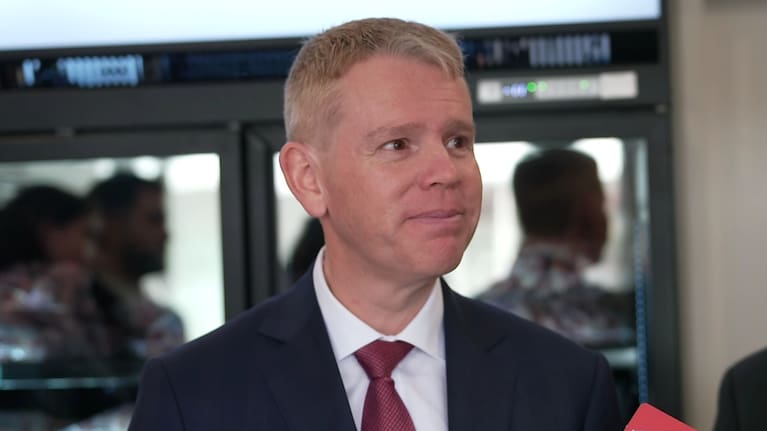
Meanwhile, Labour leader Chris Hipkins rejected ACT’s proposal, calling it “another reason we can’t afford three more years of this government”.
“They’ve taken race relations back about 40 years already. Now they want to take race relations back 200 years,” he told media.
Party wants contemporary inquiries scuppered
The tribunal’s findings, which are not binding on the Government in almost all cases, have been critical of several National-led government policies over the past three years.
Since 2023, it has held urgent inquiries into the repeal of section 7AA of the Oranga Tamariki Act, Māori council wards, and ACT’s failed Treaty Principles Bill.
In each case, it found the Crown had breached Treaty principles, but the coalition pressed ahead, as it remained legally entitled to do, and two of the three measures became law. The Treaty Principles Bill was voted down at second reading.
Every one of those inquiries would fall outside the tribunal’s jurisdiction under ACT’s proposal. The party’s policy document also singles out the tribunal’s criticism of the Regulatory Standards Act, which was Seymour’s own legislation.
The party proposed major constitutional reforms in a new election policy which excluded the Treaty Principles Bill and referendum. (Source: 1News)
The ACT leader said: “As 2040 approaches, we should complete the remaining historical settlements, protecting every New Zealander’s right under the same law and courts, and move forward under one law for all with one future together.”
Today’s announcement was ACT’s second Treaty-related policy in the campaign so far.
Last month, it proposed limits on tikanga in the courts, a Cabinet test for Treaty clauses in new bills and new principles in the Constitution Act.
Neither package mentions the Treaty Principles Bill, which was the centrepiece of ACT’s 2023 anti-co-governance campaign and was voted down 112 to 11 at its second reading in April 2025 after a hīkoi of tens of thousands marched on Parliament the year prior.
Asked at the August launch whether ACT’s constitutional policies were coalition bottom lines, Seymour said: “We haven’t announced bottom lines, and we don’t intend to do so.”
‘Not the tribunal’s role’ – Seymour
Established in 1975, the tribunal, as a permanent commission of inquiry, was originally only given the power to look at current Crown conduct from that year onwards.
Parliament only extended its reach back to Te Tiriti’s signing in 1840 in 1985, creating the basis for the settlement process that followed.
David Seymour’s bill has been defeated in its second reading after a contentious period of public debate over the legislation. (Source: 1News)
The tribunal hears claims by Māori that the Crown has breached the Treaty of Waitangi, and reports its findings and recommendations to the Government.
Seymour said the tribunal had “made an important contribution, particularly in helping address historical grievances”, but “no institution should exist just because it always has”.
“Through urgent and kaupapa inquiries, the tribunal now passes judgement on day-to-day government policy. It proposes alternative policy settings and seeks to steer decisions that properly belong to elected governments and Parliament,” he said.
“This is not the tribunal’s role and never was.”
Pressed by media on why the tribunal should be wound back when it only offered recommendations, historical accounts and legal opinion, Seymour suggested it had gone further than advice in recent years.
“To have a Waitangi Tribunal that openly says, ‘Well, actually, we don’t think that the government is acting legitimately’ – that goes beyond simply being an adviser.”
NZ First and National Party coalition agreement includes a commitment to refocus the scope of the tribunal set up in 1974. (Source: 1News)
ACT suggested in its policy that the tribunal’s “contemporary inquiries have become increasingly ideological and expansive” and that “urgent and kaupapa inquiries increasingly resemble alternative policy processes”.
Seymour gave an example, citing the tribunal’s ruling on geothermal strategy.
“The Waitangi Tribunal has been incredibly inventive in saying that Treaty breaches are still occurring. For example, it said that exploration of geothermal energy should somehow be overseen by Māori with kaitiaki,” he said.
“There is absolutely no Treaty breach there whatsoever.”
Asked who would monitor future Treaty breaches, Seymour told media: “The people of New Zealand and the Parliament. We live in a democratic society.”
The National-NZ First deal after the last election committed the Government to a review to refocus the scope, purpose, and nature of the inquiries back to its “original intent”.
Government ministers were still considering how to respond to the unreleased review as of last month, RNZ reported.
Labour’s Hipkins said his party would keep the tribunal in place if elected and disputed the idea that it had strayed beyond its purpose.
“The people who claim that don’t know the history of the Waitangi Tribunal,” he said.
“Resolving historic claims has actually been a diversion from its original core job.”
He said the tribunal had “an opportunity to return back to what it was set up to do in the first place”.
National leader Christopher Luxon distanced himself from the details of ACT’s plan when asked by media today, noting the tribunal’s future was already under review.
“On either side of that debate, there is a question as we get through treaty settlements as to what the future of the Waitangi Tribunal is,” he said.
“That’s a review has been undertaken that’s sitting with [minister] Tama Potaka, and so we’ll have more to say about that in due course.”
Pressed on how much value he placed on the tribunal, the Prime Minister said the Government listened to it and had “very strong treaty obligations”.
“The best way we can deliver our Treaty obligation is improving outcomes for Māori.”