
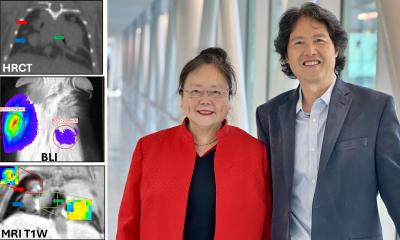
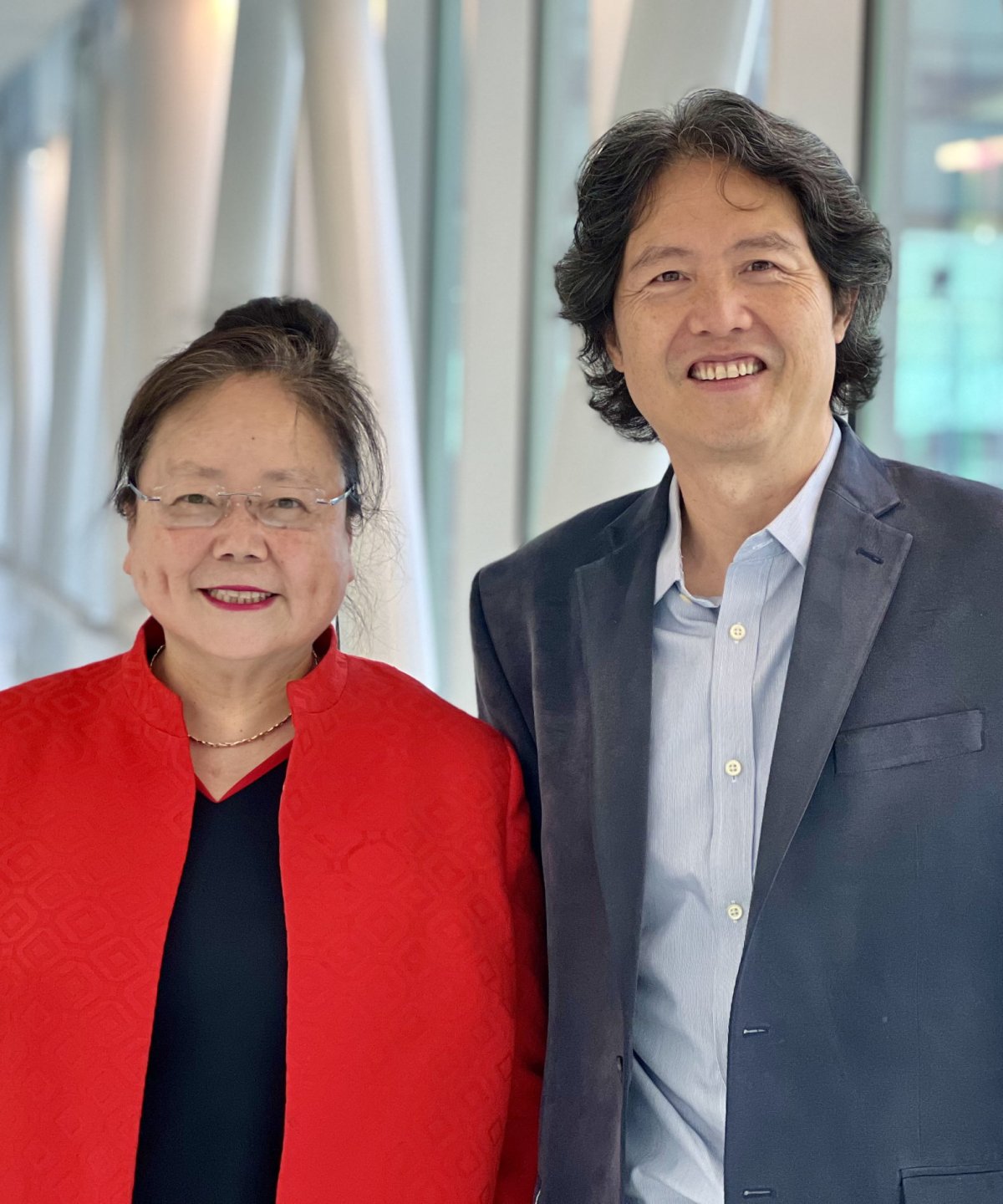
Georgia State University Regents’ Professor Emerita of Biochemistry and Biophysical Chemistry Jenny J. Yang with Wei Zhou of the Winship Cancer Institute of Emory University.
Image ourtesy: Emory University/Winship Cancer Institute
Researchers at Emory University, including co-corresponding author Wei Zhou of the Winship Cancer Institute, contributed cancer models and expertise in cancer biology and translational research, while collaborators at UAB provided imaging physics expertise and additional imaging analysis. The study was jointly led by Yang and Zhou. “This breakthrough was made possible through a close collaboration between Georgia State University and Emory University, bringing together complementary expertise in advanced imaging and cancer biology,” Zhou said.
By combining innovative imaging technology with sophisticated models of cancer metastasis, the researchers were able to visualize invasive lung cancer and its spread to other organs at much earlier stages than previously possible.
Beyond diagnosis, the findings may have important implications for personalized cancer treatment. By enabling physicians to visualize collagen remodeling throughout primary and metastatic tumors, the technology may eventually help identify high-risk patients, guide treatment selection and monitor response to therapy over time. “This is a game changer for cancer diagnosis and precision medicine,” Yang said. “For the first time, we’ve shown that precision MRI can detect tiny tumors and whole body metastases without using harmful radiation while also providing important clues about how aggressively a cancer may behave.”
Helping advance the technology toward clinical use is InLighta Biosciences, a biotechnology company founded by Yang that has licensed related intellectual property from Georgia State. Supported in part through NIH, SBIR and STTR funding, the company is working to move next-generation protein-based diagnosis and therapeutic agents toward clinical development. Researchers are now also working toward an investigational new drug (IND) application with the U.S. Food and Drug Administration to begin clinical testing of the technology.
Source: Georgia State University