
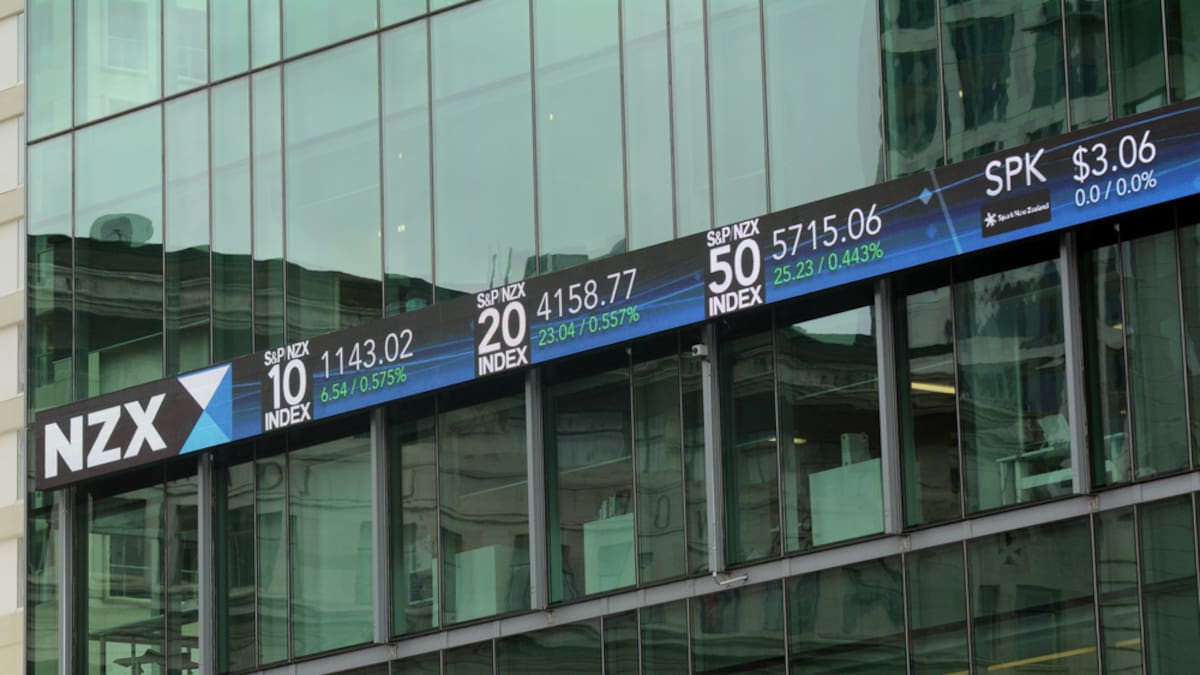
Greg Smith, investment specialist with Generate, said September was not a good month for the market.
“The US 10 Year Treasury Note yield (at 4.959%) is the highest for three years, and the 30 Year (5.365%) is the highest for 24 years. Oil prices are approaching US$110 (NZ$188.61) a barrel, and the Middle East conflict is kicking off again.
“The oil and bond yield spikes have collided, which is negative for equities. In saying that, global markets are not that far off record highs and corporate earnings in the US, driven by the tech sector, have offset the headwinds and provided resilience,” Smith said.
“In the latest quarterly results, 87% of the S&P 500 companies have reported year-on-year earnings growth of 28.5%. The tech stocks had earnings growth of around 40%.
“It was the third straight quarter for growth of more than 25%.”
Brent Crude oil was trading at US$105.7 a barrel although it slipped from an intraday high of US$109.5, it is still at a near four-month high. Oil reached US$111.28 on May 19.
Wall Street had its fourth consecutive losing day, with the Dow Jones Industrial Average down 0.6% to 52,064.1 points; S&P 500 decreasing 0.58% to 7591.7; and Nasdaq Composite declining 0.65% to 26,081.72.
Investors watched for the August Consumer Price Index overnight. “The bases are loaded and if there’s a strong print, then an interest rate hike by the Federal Reserve next week is locked in,” said Smith.
The European Central Bank increased its cash rate by 25 basis points to 2.5% as policymakers saw risk of higher inflation and weaker growth for an extended period. Eurozone inflation hit 3.3% in August, with energy inflation spiking to 14.3%.
Local stocks
At home, the BNZ-BusinessNZ Performance of Manufacturing Index continued its year-long expansion in August, though at a slower rate than the previous month.
The index fell 1.2 points to 53.1 from 54.3 in July but remained above the survey’s long-term average of 52.5.
BusinessNZ said, “Employment is the area we’re watching most closely, sitting right on the breakeven mark at 50.0. Respondents continue to point to cost-of-living pressures and the ongoing conflict in the Middle East as reasons for holding back.
“But new orders and finished stocks remaining comfortably in expansion suggests there’s still genuine underlying demand.”
Market leader Fisher & Paykel Healthcare fell 80c to $43.15; Infratil fell 18c to $14.51; Auckland International Airport fell 11c to $8.32; and a2 Milk shed 12c to $8.17.
Spark was down 5c or 2.40% to $2.03; Freightways shed 20c to $12.55; Gentrack declined 9c or 2.26% to $3.90; Vulcan Steel fell 25c or 3.97% to $6.05; and Port of Tauranga eased 9c to $8.
Other decliners were Oceania Healthcare down 2c or 2.63% to 74c; Turners Automotive decreasing 15c or 1.96% to $7.50; PGG Wrightson shedding 5c or 2.27% to $2.15; and Taiko Critical Minerals falling 3c or 10.71% to 25c.
In the retail sector, Briscoe increased 14c or 3.29% to $4.40; Hallenstein Glasson was up 15c to $12.21; and Michael Hill gained 1c or 2.38% to 43c.
In the energy sector, Mercury was up 9c to $6.69, and Meridian was down 6c to $5.20.
ANZ Bank added $1.01 or 2.25% to $45.90; Bremworth was up 4c or 6.25% to 76c, and Radius Residential Care increased 1c or 3.53% to 44c.
Winton Land gained 3.5c or 3.07% to $1.17 after founder and former chief executive Chris Meehan resigned as a director, effective Monday. Meehan holds a 55% majority shareholding in Winton.
New Winton chairman Michael Stiassny said Meehan’s decision to step down from the board “allows us to focus on business without distraction”.
Stay ahead with the latest market moves, corporate updates, and economic insights by subscribing to our Business newsletter – your essential weekly round-up of all the business news you need.