
The first Japanese encephalitis (JE) case of the year was confirmed in a woman in her 60s; the patient is currently hospitalized with symptoms including fever, chills, and vomiting.
She visited a medical institution (Aug. 15) with symptoms such as fever (39.1°C), chills, and vomiting; she is currently receiving inpatient treatment and has underlying conditions, including chronic renal failure.
 Image/KDCA
The case was confirmed on September 9 after confirmatory diagnostic testing by the Korea Disease Control and Prevention Agency (KDCA) showed a more than fourfold increase in antibody titers in convalescent-phase serum compared to the acute phase.
An epidemiological investigation confirmed a history of mosquito bites and established that the patient had no history of Japanese encephalitis vaccination.
In Korea, most Japanese encephalitis cases occur between August and November, with 80% of cases concentrated in September and October, primarily affecting individuals aged 50 and older (65.9%).
Infection with the Japanese encephalitis virus typically causes mild symptoms such as fever and headache; however, in rare cases, it progresses to encephalitis, leading to severe symptoms—including high fever, seizures, neck stiffness, confusion, convulsions, and paralysis—with a mortality rate of 20–30%.
Prompt diagnosis and treatment are crucial, as 30–50% of patients who develop encephalitis may suffer from various neurological complications depending on the area of brain damage.
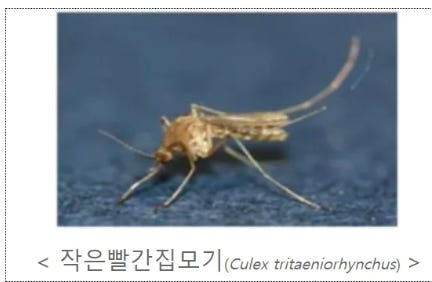
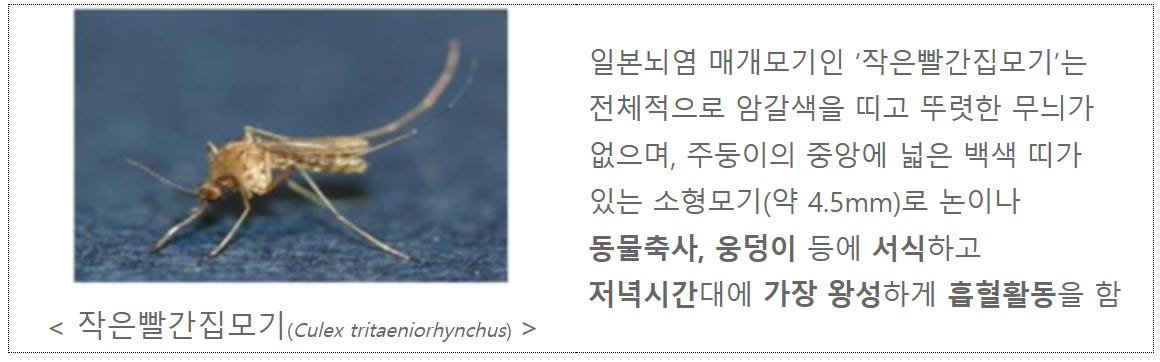
The *Culex tritaeniorhynchus* mosquito, the vector for Japanese encephalitis, is a small, dark-brown mosquito that primarily feeds at night; it is active throughout Korea from April to October. Surveillance data from early September (Week 36) shows a sustained average mosquito count of 121, indicating continued activity. Therefore, individuals should take precautions against mosquito bites and seek immediate medical attention for diagnosis and treatment if symptoms appear.
Additionally, as an effective vaccine for Japanese encephalitis exists, vaccination is recommended for children aged 12 and under (born on or after January 1, 2013) who are eligible for the National Immunization Program, in accordance with the standard vaccination schedule.
If you like the reporting on Outbreak News Today, please consider a paid subscription for $5/month or $30 a year. Help support the cause of this niche journalism. It is appreciated.
Vaccination (at the individual’s expense) is also recommended for adults aged 18 and older with no prior history of Japanese encephalitis vaccination who fall into the following categories: ➊ those residing in high-risk areas (near rice paddies or pig farms) or planning activities in such areas during the transmission season; ➋ foreign nationals moving from non-endemic regions for long-term residence in Korea; and ➌ travelers visiting countries where Japanese encephalitis is endemic. * Australia, Bangladesh, Bhutan, Brunei, Myanmar, Cambodia, China, India, Indonesia, Japan, Laos, Malaysia, Nepal, North Korea, Pakistan, Papua New Guinea, Philippines, Russia, Singapore, South Korea, Sri Lanka, Taiwan, Thailand, Timor-Leste, Vietnam
Lim Seung-gwan, Commissioner of the Korea Disease Control and Prevention Agency (KDCA), urged the public to take precautions against mosquito bites during outdoor activities—noting the recent rise in vector mosquitoes and the fact that September marks the peak period for Japanese encephalitis cases—and advised those eligible for vaccination to get vaccinated according to the schedule.