
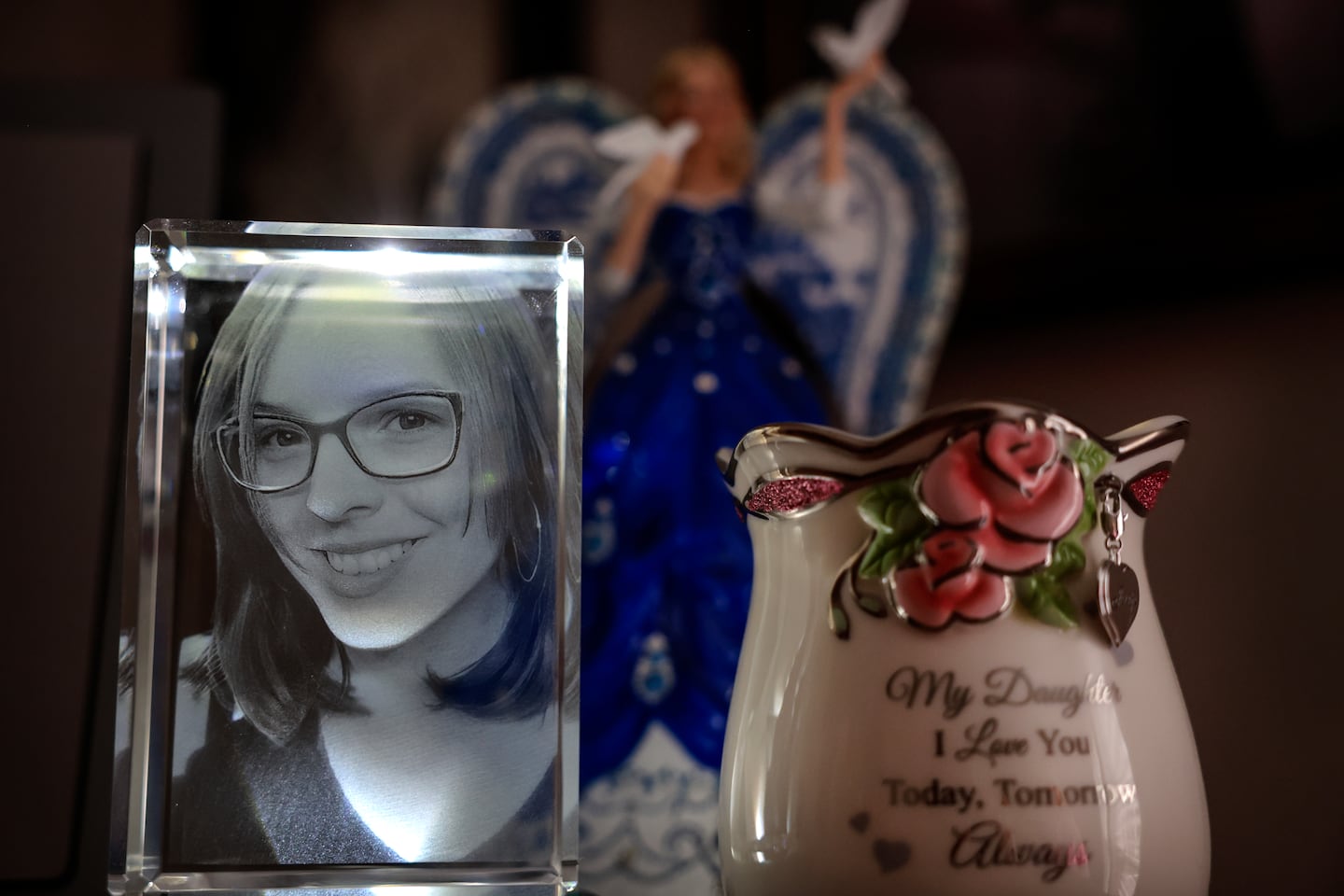
Now, three years later, a wrongful death lawsuit filed against Zachos and an emergency department physician offers fresh details about the incident. They are the only named defendants in a suit that underscores how relentless cost-cutting and severe understaffing at Good Samaritan’s corporate owner — the once-high-flying, now defunct Steward Health Care system — put patient lives at risk.
According to the lawsuit, Knight had grown so acutely ill while driving down Route 24 that she pulled off the highway and then sought help at Good Samaritan.
When Knight arrived at the hospital, she approached Zachos, the triage nurse in Good Samaritan’s emergency department, and reported that she was having acute chest pain and shortness of breath, according to the suit. But Zachos sent her back to the registration line without checking her vital signs or otherwise evaluating her, according to a federal health investigation two weeks after her death. Zachos later said she believed Knight was suffering from anxiety and “we talked [her] down,” according to the federal investigation report.
About 20 minutes later, Knight fell face-first into a wall and collapsed. She was found without a pulse and struggling with a life-threatening heart rhythm, known as ventricular fibrillation arrest. Medical workers attempted to revive her for more than 30 minutes, but she was pronounced dead at 6:29 p.m. on Sept. 13, 2023, according to the federal investigation report.
The complaint alleges that the heart attack could have been detected through proper triage and an electrocardiogram, or EKG, which national health guidelines say patients presenting with chest pain should receive within 10 minutes. An evaluation would also have led staff to place her on an electronic heart monitor, allowing doctors to detect her deteriorating condition in real time and theoretically intervene to save her life, the lawsuit alleges.
Knight’s father, Joe Knight, who represents her estate, accuses Zachos and Dr. Andrew Milsten, the attending emergency department physician on duty that evening, of negligence and gross negligence. The lawsuit alleges that Milsten failed to properly train and supervise triage staff, maintain adequate nurse staffing in the emergency department, and follow standard procedures for patients to receive prompt medical screenings.
“As a direct and proximate result of the negligence of [Zachos and Milsten], Ms. Knight did not receive emergency medical care for her acute cardiac event, her condition was permitted to deteriorate unmonitored in the waiting room until she collapsed and suffered a cardiac arrest, and she died on September 13, 2023,” the lawsuit states.
Zachos did not respond to requests for comment. Milsten declined to comment by email, citing the pending lawsuit.
It is unclear why Knight’s estate sued only the two medical workers and not Steward Health Care, which had severely underfunded and mismanaged its hospitals. The family’s attorney declined to comment. Steward’s bankruptcy may have played a role: The company had effectively run out of cash and lawsuits against it were put on hold, while individual clinicians could still be sued and likely have malpractice insurance.
Two weeks after Knight’s death, state health inspectors arrived at Good Samaritan to investigate. During their review of patient records, they found an overwhelmed emergency department with recurring staffing problems that at times seemed to be in meltdown.
Severely ill patients had no assigned nurses, including one patient who was previously found unresponsive in a hallway. In another instance, an overworked nurse who was “extremely busy and was behind, trying to catch up” left a patient who had been vomiting in the waiting room for more than 10 hours, investigators found. The safety lapses were so profound that federal regulators placed the hospital in “immediate jeopardy,” a level of danger so serious it means patients have died, been injured, or put at grave risk.
Health investigators concluded that the hospital’s failure to evaluate Knight and check her vital signs violated basic standards of care. It also found that the hospital’s own “root-cause analysis” of the incident called for staff re-education, but investigators found no evidence that the training ever occurred.
Two days after Knight’s death, Zachos filed an “unsafe staffing form” with the hospital that noted the emergency department that night was at more than double its capacity. There were 90 patients, with waits so long that many patients left without being diagnosed. Twenty-three nurses should have been on duty, her report said. There were only eight.
“This RN [Zachos] worked 16 hours in triage with no assigned meal break coverage or any break throughout shift,” she wrote in that report.
On Sept. 23, 2023, Zachos was fired from her position at Good Samaritan, after the hospital’s internal investigation found she had “failed to follow nursing standard of care,” including guidelines for evaluating patients presenting with complaints of chest pain.
Soon afterward, the state’s highest health official, then-Secretary of Health and Human Services Kate Walsh, intervened on Zachos’s behalf. She called Steward founder and chief executive officer Ralph de la Torre with a request and asked that Zachos be rehired. At the time, Steward was seeking millions in bailout money from Healey’s administration. Zachos is married to George Zachos, executive director of the state Board of Registration in Medicine, a key public agency tasked with overseeing patient safety that licenses and disciplines physicians.
Governor Healey’s office later acknowledged intervening in the matter, saying officials believed Zachos’s firing was unjust. She placed blame for the hospital chain’s subpar performance and financial collapse on de la Torre, who had resigned and was the focus of a federal corruption investigation.
A September 2024 Spotlight report revealed a pattern of corporate neglect at Steward’s hospitals nationwide, leaving them short of nurses, medical supplies, and even beds in emergency departments. Hundreds of patients were injured or put at risk because hospitals lacked enough staff or adequate medical equipment. Knight’s case was one of at least 15 instances identified by the Globe in which a Steward patient died after failing to receive professionally accepted standards of care.
The Globe also found that, for more than a decade, elected officials and state regulators had repeatedly failed to discipline Steward, and in some cases even showed favoritism to the company, softening reports critical of Steward and ignoring signs of growing financial distress.
Good Samaritan was one of eight Massachusetts community hospitals — and 31 nationwide — operated by Steward Health Care, once the nation’s largest private, for-profit hospital chain. Since filing for bankruptcy in May 2024, the company has sold, transferred, or closed all its hospitals. As part of the bankruptcy restructuring, Boston Medical Center Health System purchased Good Samaritan in the fall of 2024 and has since renamed it Boston Medical Center – South.
At the time of her death, Knight was the office manager at Alloy Wheel Repair Specialists in Randolph. More than 200 people attended her funeral.
In a 2024 interview, Knight’s parents said Good Samaritan never informed them of the events surrounding her death. Until reached by a Globe reporter, the Knights also didn’t know about Zachos’s firing — or her rehiring. Nor were they told that state and federal regulators had faulted the hospital and the nurse.
Liz Kowalczyk of the Globe staff contributed to this report.
Chris Serres can be reached at chris.serres@globe.com. Follow him @ChrisSerres.