
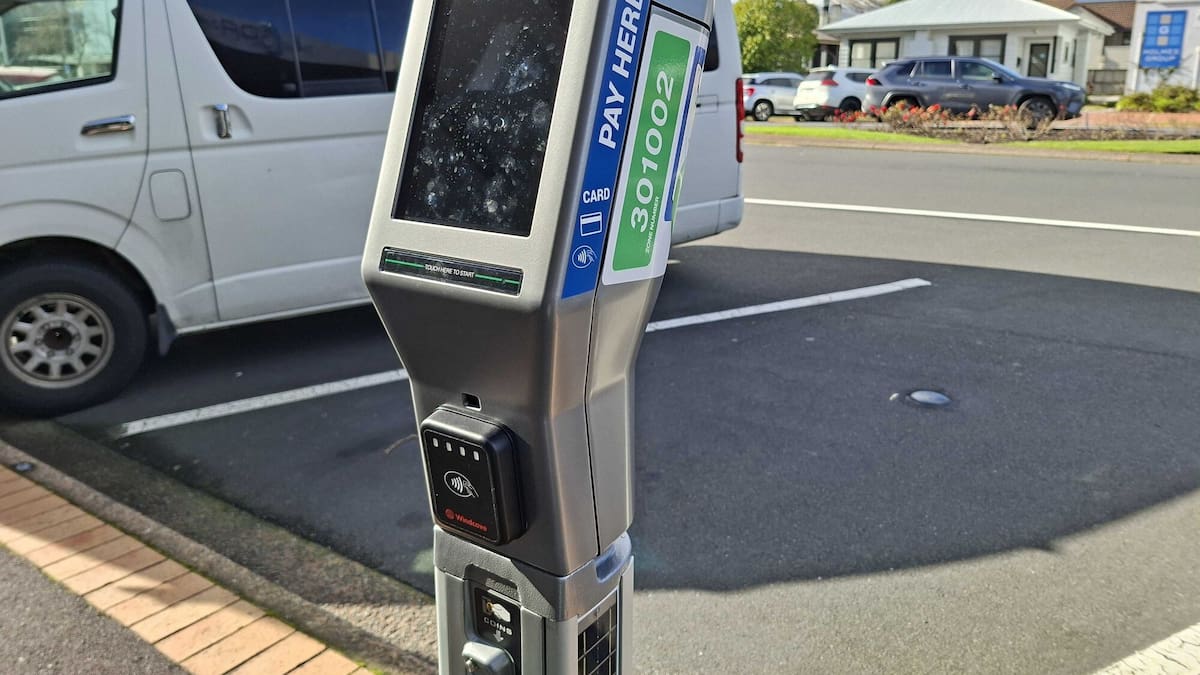
For former Hinemoa St business owner Crystal McPhee, the impact of the new system was felt almost immediately.
McPhee recently relocated her The Mum Collections shop to Lake Rd, on the fringes of the city centre, after what she described as a dramatic drop in trade after the introduction of the new regime.
“I just feel like there wasn’t enough conversation happening around what the parking was and what was going to go down for the Rotorua community,” she said.
McPhee said her business went from making over $1000 a day ”to literally nothing”. Some days she made money, perhaps $200 or $300, “but we just went dead for weeks”.
McPhee stopped short of blaming the parking system alone, but said she believed the way the changes were introduced left many people frustrated and reluctant to visit the city centre.
“I feel like it did have a big impact on the businesses,” she said.
The Mum Collections shop on Hinemoa St in Rotorua before it moved after city centre parking changes.
“It’s become a ghost town again; the town is dead.”
Another Hinemoa St retailer, Rahul Sethi, said he was ready to follow McPhee out of the inner-city.
“The minute I get a chance, I will just move from here,” he said.
Sethi said trade across his two businesses had dropped by 30-35% since the parking changes came into effect and other businesses in the area were “definitely losing money” too.
Sethi said customers regularly told him they avoided the city centre during the day, while some elderly shoppers found the system confusing.
He recalled one who left rather than navigate the registration process.
Sethi said he understood the need to manage parking demand, but believed the system was discouraging people from visiting central Rotorua.
“I don’t blame the council when it says every customer deserves a park, of course, I believe that,” he said.
Rotorua business owner Rahul Sethi is not happy with the new city parking system. Photo / Mathew Nash
“But charging for something that was free before, and asking for you to register within 10 minutes for free parking, it’s too much.
“That’s not a solution; it is a punishment.”
The parking overhaul followed a review of the city’s parking policy, bylaw and inner-city parking management arrangements last year.
Korean Mart owner James Kim said he had also experienced slower trading.
“Our sales have maybe dropped about 20%,” he said.
Kim said broader economic conditions could also be playing a role.
“I can’t really blame parking for everything, but I’m pretty sure that it plays some role in this.”
Korean Mart owner James Kim. Photo / Mathew Nash
The council’s parking survey closes on September 20 and will feed into a six-month review of the new system.
Council destination development manager Jean-Paul Gaston said feedback on the new parking system had been “mixed”.
Some had “shared positive experiences” and others were “taking time to understand and adapt”, he said.
Gaston said survey feedback would help find what is working well and what “adjustments might be needed”, as it will provide a baseline for the full review.
“We’ve always said that this is a starting point and once there had been enough time for the community to get familiar with the new system we would be open to considering appropriate improvements,” he said.
He said the parking changes were “widely promoted” before July, with more than 1000 booklets delivered to businesses, social media posts viewed more than 120,000 times and more than 900 people signing up early for permits.
He said the council had not heard from any specific business about parking changes leading to a decision to close, but it recognised “the pressures many businesses and whānau” face in the current economic climate.
“We are listening carefully to feedback from residents, businesses and the wider community,” he said.
Rotorua Business Chamber chief executive Mel Short encouraged businesses and residents to take part in the survey.
Rotorua Business Chamber chief executive Melanie Short. Photo / NZME
“The six-month review is very important and, at that time, we will take and use feedback from our business community and make an appropriate submission.”
Short said it was important people shared their experiences so the council could consider whether changes were needed after the system had time to bed in.
Mathew Nash is a Local Democracy Reporting journalist based at the Rotorua Daily Post. He has previously written for SunLive, been a regular contributor to RNZ and was a football reporter in the UK for eight years.
– LDR is local body journalism co-funded by RNZ and NZ On Air.