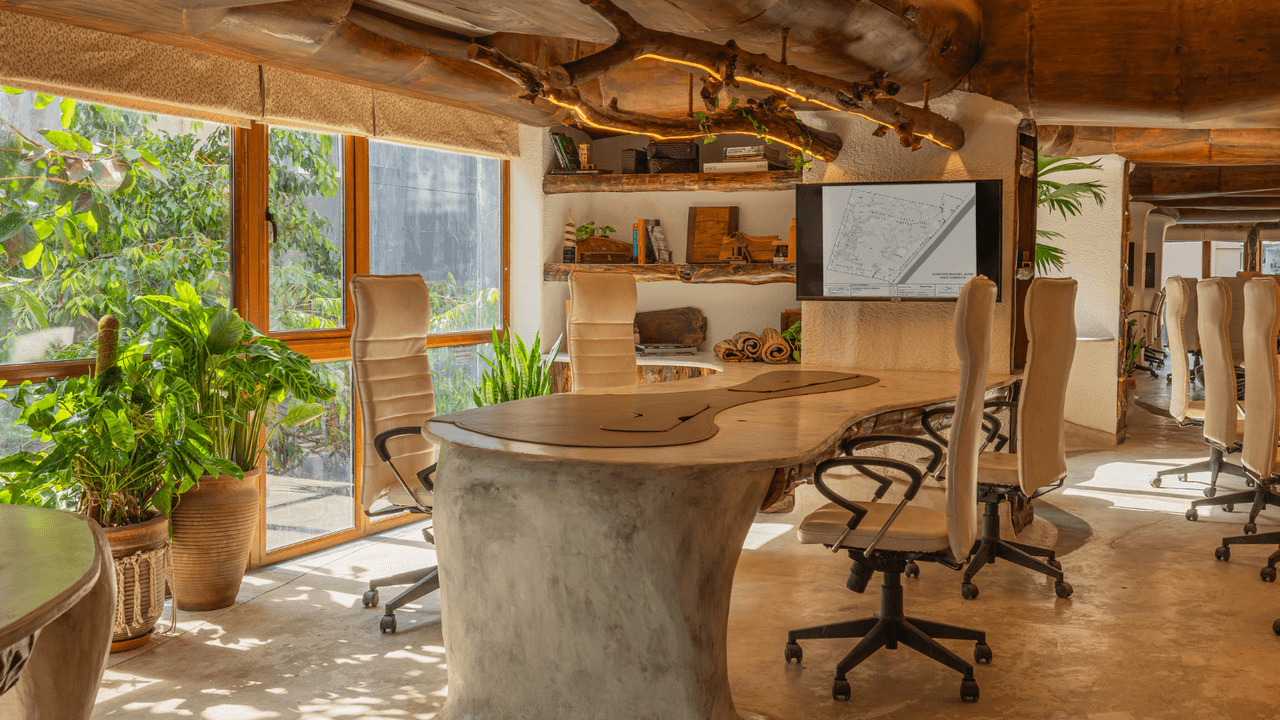
To say that Doshi highlighted the outdoors is like saying the sun rises in the east—an understatement of cosmic proportions. He didn’t just invite nature indoors; he allowed it to thrive, as if it had never left its natural habitat. There were no liminal spaces, no thresholds to cross—just a seamless dialogue between inside and out. Floors were composed of gravel, pathways paved in warm terracotta-toned brick. Walls, crafted from locally sourced basalt stone, held the structure together while cleverly regulating heat, keeping the coolness in and the summer heat at bay. As for the sun, Doshi drew it deep into the heart of the space through expansive glass skylights, while sloping roofs, anchored by exposed steel structures, added a contemporary flair. Every detail was intentional—earthy tones, natural materials, thoughtful textures. His ethos was simple yet profound: everything within should feel as though it had always belonged, effortlessly complementing the lush world just beyond the walls.
Original text by Vaishnavi Nayel Talawadekar
An All-Glass Office In Surat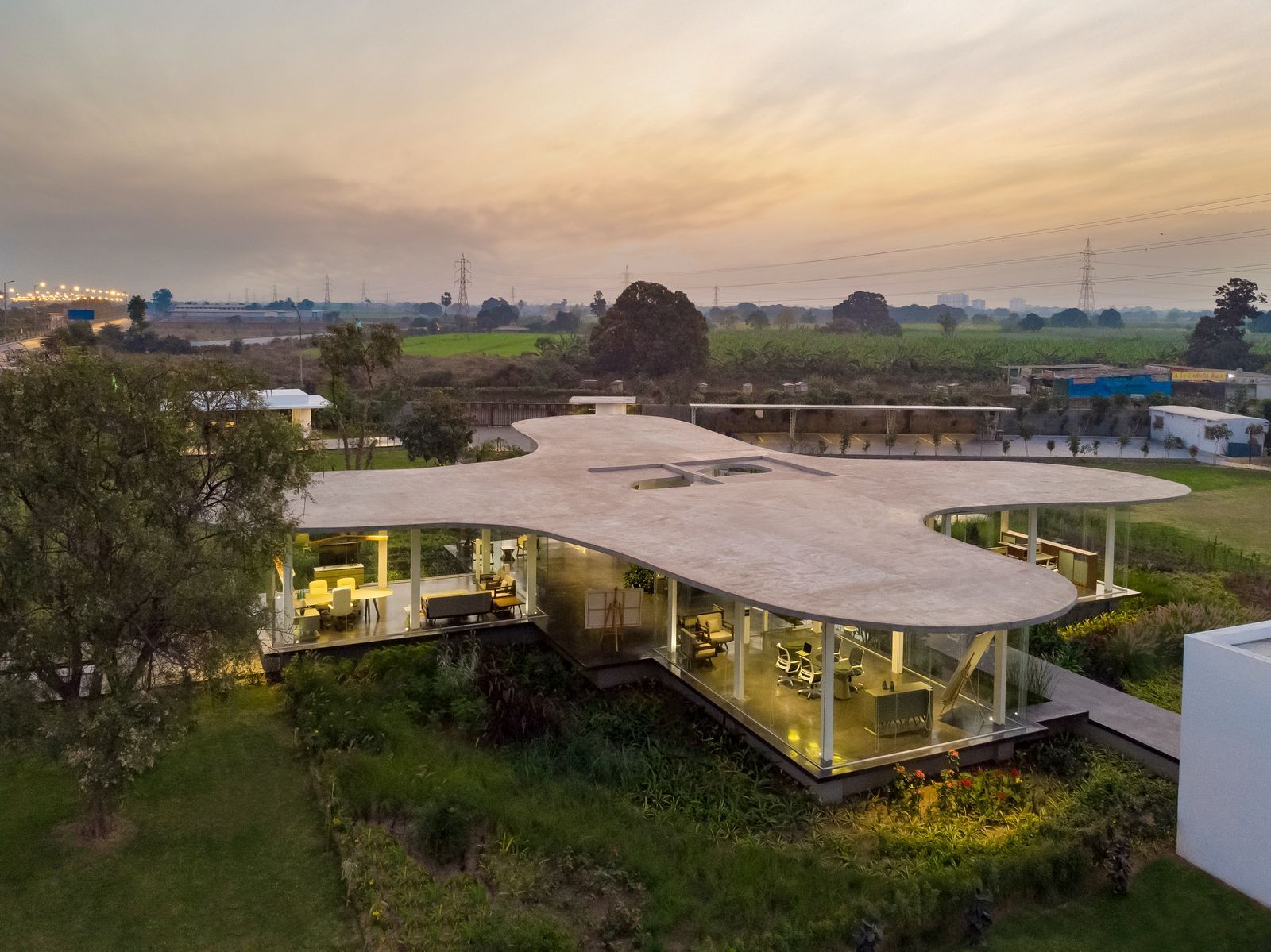
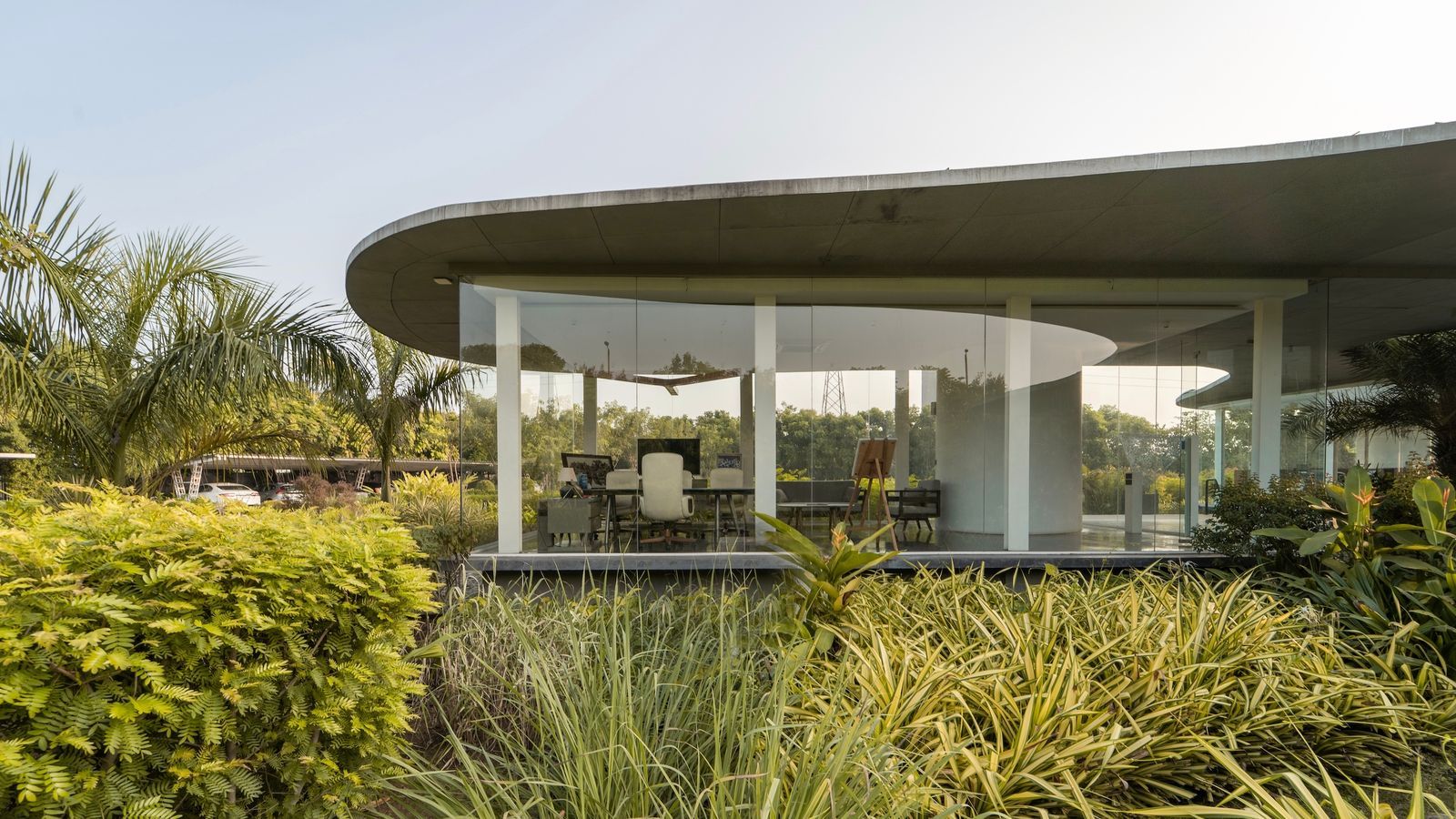
Glass boxes—if the first thing you are reminded of is Mies Van der Rohe’s Farnsworth House, Hiren Patel of Hiren Patel Architects will not be quick to agree with the likeness. “A home in a glass box is not psychologically comfortable. People are likely to install curtains and never open most of them,” he says. “In my project, the concept works because the space is an office.” Maybe a more likely source of inspiration for Patel would be the home of Philip Johnson.
All the boxes are certainly ticked—a walk through greenery from the main gate to the built structure, the extensive exercise in transparency, the display of art and sculpture, a washroom with curved walls and the “wallpaper” of landscaping, as Johnson himself termed it. Whether “Amoeba” carries shades of Mies or Johnson, Patel is certainly in good company here. If Mies is famously credited with the “less is more” epiphany of modern architecture, Johnson cemented his credentials with architecture’s Oscar—The Pritzker. “Set on a plot of 10,000-square-metres, the built structure in Surat has a footprint of only 15% of the site. It’s not very often that we are able to work with this ratio,” says Patel of one more similarity to the other “glass” structures which are famously surrounded by extensive greenery.