
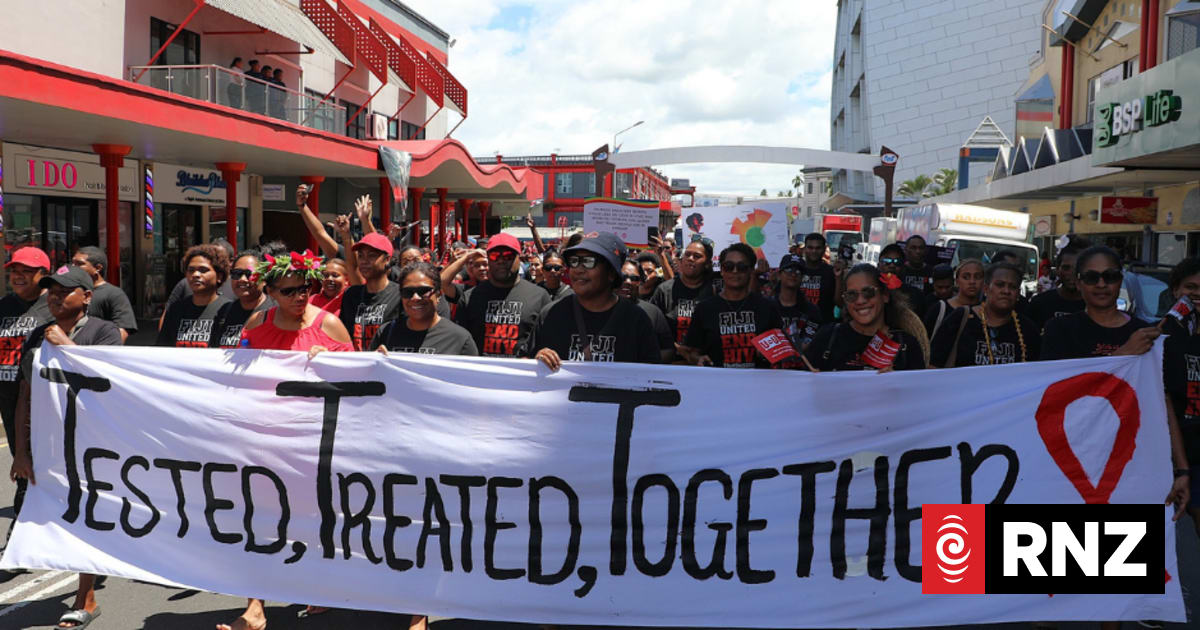
A health lecturer says gaps in sexual health knowledge have contributed to Fiji’s HIV crisis.
Dr Jalal Mohommed from the University of Canterbury said Fiji was facing a once-in-a-generation health crisis.
He told Morning Report there were a number of factors contributing to it, including underfunding in the health sector and Fiji’s position on the “drug highway”.
“There’s been multiple natural disasters, health worker migration, Covid-19 and its impacts. But there’s also been, importantly, gaps in sexual health knowledge,” he said.
“It is quite a taboo subject in Fiji, so not enough has been done. So if you’ve taken those public health workers out of the public health system and put them into the curative health system, there isn’t that public health education going on.”
Mohammed said traditionally Fiji had spent quite a low portion of its GDP on health – below the World Health Organization’s (WHO) recommendation.
“WHO recommends that a country spends about 5 percent. Fiji’s traditionally been spending about 3 percent of its GDP, and so there’s been significant underinvestment in the health sector.
“What’s really now needed is about 6 to 7 percent, so we’ve got an ailing health infrastructure, a very fragile health system. There has been a focus on clinical services over public health services in Fiji, just because it’s so short-funded.”
Mohammed said 1.6 percent of Fiji’s population between the ages of 15 and 49 have been diagnosed with HIV, but there’s also a segment of the population that hasn’t been diagnosed.