
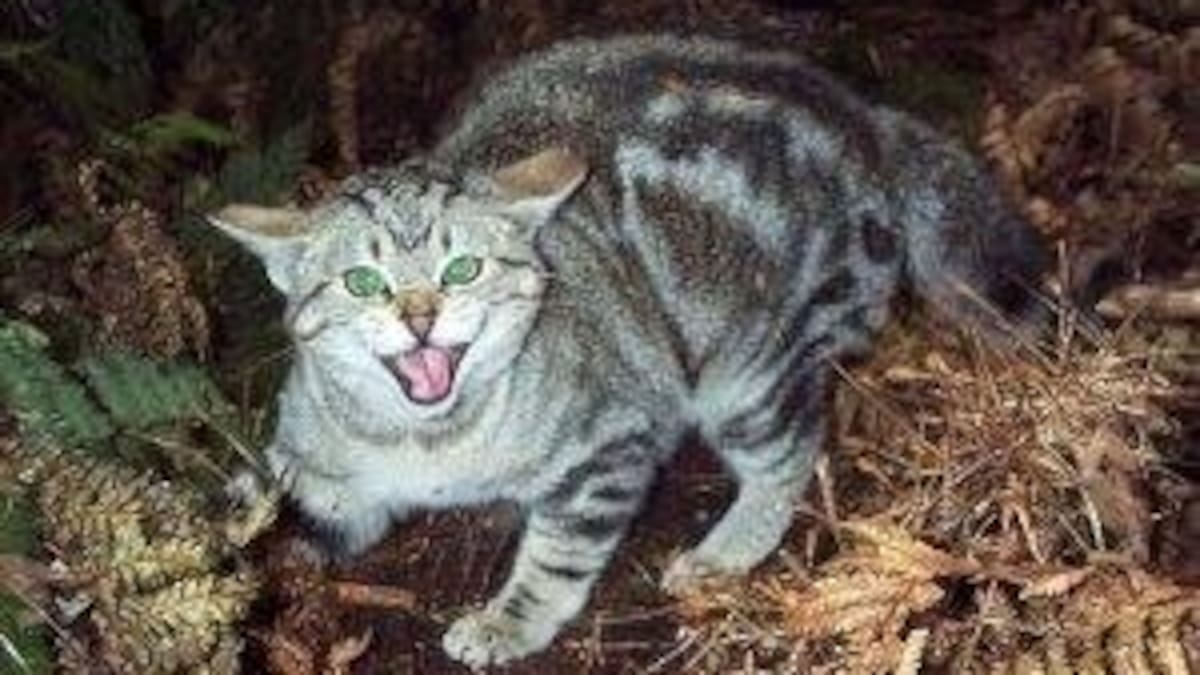
Founder and chair Anne Batley Burton said the charity believed companion, stray and displaced cats were being killed alongside feral animals.
“Cats now effectively have a bounty on their heads,” she said.
“We have seen people steal companion cats from their own homes and properties to enter them into these competitions. This isn’t pest control.”
The foundation said missing-cat numbers increased around hunting events and challenged DoC identification guidance, arguing characteristics used to identify feral cats could also apply to companion animals.
It wants feral cat control restricted to licensed or certified pest-control professionals and greater support for humane alternatives including Trap-Neuter-Return programmes.
The North Canterbury Hunting Competition always attracts a big crowd. Photo / File
DoC acting Predator Free manager Andrea Goodman acknowledged there was “no single characteristic” that could reliably distinguish a feral cat from a companion cat in every circumstance.
“While there is a small risk of misidentification whenever free-roaming cats are encountered, DoC takes a precautionary approach and requires operational decisions to be informed by multiple sources of information.”
Goodman said staff and contractors were expected to consider factors including a cat’s behaviour, location, condition and context, rather than relying on a single indicator.
She said DoC did not want companion cats harmed and its predator-control guidance included measures to minimise the risk, including appropriate trap selection and placement and considering the proximity of homes and settlements.
DoC regularly reviewed that guidance, Goodman said, while emerging technology, including traps with microchip readers could further reduce the risk to companion cats.
MPI Director of Compliance and Response, Glen Burrell said feral cat management on conservation land is done by DoC.
“The Ministry for Primary Industries’ responsibility in cat management focuses on their welfare, as covered under the Animal Welfare Act 1999,” he said.
“The Act requires any killing of animals to be carried out humanely. If we became aware of any breaches of animal welfare rules, we would take appropriate action.
“Regional councils throughout New Zealand manage feral cats generally through their pest-control plans.”
The latest push comes as another Canterbury hunting competition featuring a feral cat category launches this weekend.
The Great Mid Canterbury Critter Competition runs from Friday to Sunday and is open to children aged 16 and under, with adult supervision required.
Competitors can hunt across Canterbury with landowner permission, with feral cats, possums, rabbits, hares, rats, mustelids and hedgehogs among eligible animals.
The rules offer prizes for the biggest feral cat in three age groups.
Event spokeswoman Deborah Gilkison said pest control was already part of everyday life for rural families.
“It’s already happening on farms and properties across Canterbury,” she said.
“Feral cats are also a genuine biodiversity issue. DoC identifies them as predators of native birds, bats, lizards, wētā and other wildlife.
“This competition is about doing something rural families already do, but using it as an opportunity to get kids outdoors and talking about pests, biodiversity and looking after our environment.”
Gilkison said organisers had dedicated a section of the rules to feral cats.
“Our message around cats couldn’t be clearer: if you’re not certain it’s feral, leave it alone,” she said.
The event will raise funds for Mayfield Community Pool heating project.
“At the end of the day, it’s rural people coming together, doing something they already enjoy, removing pests and raising money for their community.”
Rafaella Melo is a multimedia journalist with more than 10 years’ experience in Brazil. She joined the NZ Herald’s Christchurch team in 2026.