
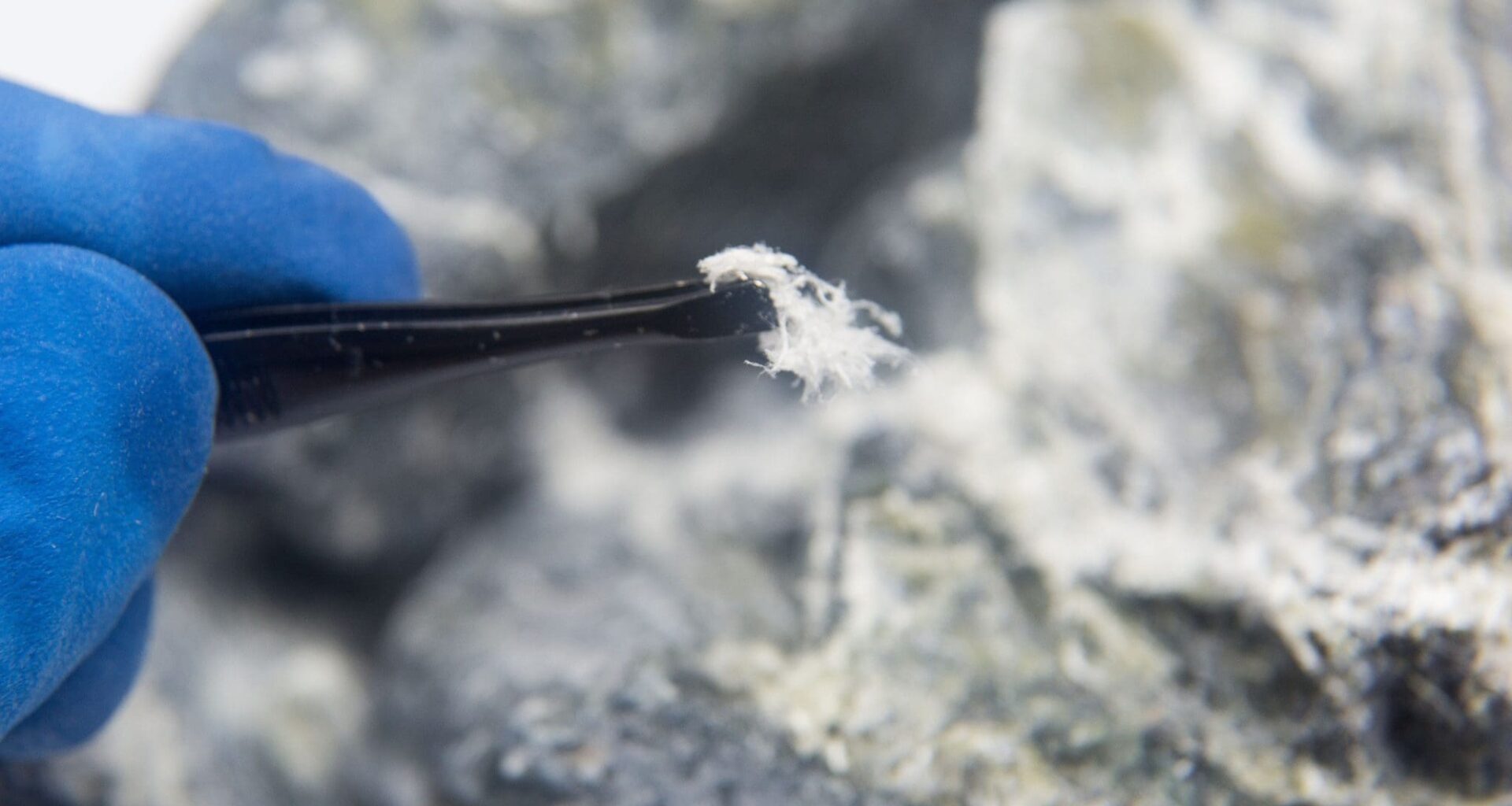
Asbestos contamination across public spaces in Austria and Hungary has raised concerns about how hazardous materials can spread undetected. Here, the Center for Asbestos Related Disease discusses how asbestos research and education can help prevent similar incidents
Communities in Austria and Hungary were blindsided early in 2026 by news that streets, highways, playgrounds, parking lots and other public places might contain significant amounts of asbestos. (1)
Testing confirmed either amphibole or chrysotile asbestos in at least 300 sites and air sampling reportedly found high levels of asbestos fibers in many areas of eastern Austria and northwestern Hungary.
The contamination was traced to four recently-closed rock and gravel quarries, but the extent of its distribution is only beginning to be unraveled. (2) How can this happen? The answer lies in misunderstandings, and the solution lies in research and education.
Asbestos regulations
This European public health crisis is linked to a regulatory loophole. Current asbestos bans in many countries prevent asbestos mining, but mining and trading rock and gravel containing asbestos is legal.
Because asbestos occurs naturally in many rock formations, quarrying for rock, gravel, vermiculite, talc and other minerals can release asbestos as a natural contaminant. (3)
Because these activities have commercial value and are essential to development, businesses dependent on digging into bedrock are fighting increased regulations. This dynamic is neither new nor isolated. (4)
Asbestos case studies
In Libby, Montana, USA, the mining of vermiculite led to extensive exposures and many deaths from amphibole asbestos co-existing with the vermiculite. (5, 24) Like towns in Eastern Austria, the product was used throughout the town, including playgrounds and ball fields and remains at high levels throughout the mine area and surrounding lands. (3, 6)
The health effects of Libby’s amphibole asbestos (LAA) have been extensively studied and are consistent with other known asbestos-related diseases (ARD), including lung cancer, mesothelioma, pleural disease, systemic autoimmune diseases, and other cancers. (3, 6, 24)
In southern Nevada, researchers from the University of Nevada, Las Vegas, (UNLV), discovered amphibole asbestos similar to LAA in rocks and soils. (7) Exposing mice to this material led to health issues related to autoimmune disease, pleural disease, and lung fibrosis. (8)
The extension of Interstate Highway 11 as a bypass around Boulder City, NV, ran through a part of the desert containing high levels of asbestos. Heavy dust mitigation was required during construction of the bypass. (9) However, construction of a large data center is currently proposed on land with likely asbestos contamination owned by the Bureau of Land Management just south of the I-11 bypass. (7, 10, 22)
Despite controversy regarding several aspects of the project, to our knowledge, asbestos has not yet been mentioned in the decision-making process.
Biancavilla (Sicily, Italy), is struggling with ARD from exposure to a non-regulated amphibole fiber, fluoroedenite, which was an accessory mineral of quarried rock used widely in home and road construction for decades. (11) While mitigation has improved exposures, the legacy material remains a public health concern. (12)
Role of asbestos research and education
These events continue to occur because of misunderstandings about asbestos, and inertia facilitated by industries that would be affected by increased regulation for public health purposes.
The decision that every country and community must make is how to prioritize public health versus commercial profit. This is not a simple endeavor when all factors are considered, but the process is easier when there is adequate research and widespread education about the benefits and risks of asbestos.
Better understanding will improve both exposure monitoring and health screening, allowing novel approaches to both prevention and treatment.
Prevention
Prevention means avoidance of exposure, but exposures must be detected first. Measuring occupational exposures is relatively simple, but extremely difficult for environmental exposures that are affected by natural and anthropogenic disturbances of soils and rock. (13)
While very short thin fibers contribute to disease, most current regulatory standards use obsolete detection and counting methods that ignore them. (14, 23) Novel exposures like fluoroedenite and other “naturally occurring asbestos” require new risk assessments.
While asbestos bans can reduce occupational exposure, they cannot reduce exposures to environmental and legacy asbestos (15) without significant changes in policy and procedures requiring innovation and collaboration.
The argument for prevention through reduced exposures is beautifully stated by Dr. Raja Flores, Thoracic Surgeon, Mt Sinai Health System. (16)
Treatment
There remain large gaps in our ability to detect ARD, especially development of early markers of disease. Radiologic detection of pleural disease is so challenging that it is often missed. (17, 18) However, developing AI-driven technologies for reading CT scans could make early detection easier.
While systemic autoimmune disease is well documented as an outcome of exposure to LAA, (4) research is needed to develop serum biomarkers for other exposures.
Currently, there are few treatments for ARD. Research has shown that the deadly, progressive pleural disease in Libby has an autoimmune component, with exposure driving production of unique pathogenic autoantibodies. (19)
This opens possibilities for several treatment approaches, including novel anti-inflammatory and fibrinolytic medicines.
Closing remarks
Scientific research is teams of people seeking knowledge, often for the purpose of making the world better for its residents. It works best when its discoveries are shared with all stakeholders, scrutinized, and then applied where appropriate.
In Libby, such collaboration included the research itself, plus Research and Education Rallies for the community. (20) We share our experience, hoping that it helps other communities that are struggling with asbestos exposure. Our efforts in Libby over the last 25 years have made great strides, (21) but there is much more to do.
Funding: This work was supported by CDC/ATSDR 1 NU61TS000355
References
https://vsquare.org/hungarys-asbestos-scandal-austrian-quarries-exploited-an-eu-loophole/
https://www.euronews.com/my-europe/2026/05/15/hundreds-of-hungarian-roads-may-be-contaminated-with-asbestos
Pfau, J., et al. 2024. https://doi.org/10.1016/j.autrev.2024.103603
Morrissette, L., 2026. https://doi.org/10.56367/OAG-051-12364
Healing a Community, Libby MT: https://www.youtube.com/watch?v=Rq251uYvqDs
Pfau & Keil, 2026: https://doi.org/10.1080/10937404.2026.2671074
Buck, B., et al. 2016: https://www.unlv.edu/sites/default/files/page_files/27/Sciences-NaturallyOccurringAsbestos-FinalReport.pdf
Pfau, J., et al. 2017. https://doi.org/10/1016/j.taap.2017.08.022
https://www.reviewjournal.com/news/asbestos-delays-work-on-boulder-city-bypass/
https://nevadacurrent.com/briefs/developer-withdraws-boulder-city-data-center-signals-move-to-federal-land/
Ledda, C., et al. 2018. https://doi.org//10.1080/1547691X.2017.1415398
https://www.mdpi.com/2079-6439/14/1/11
Noonan, C., 2017. http://dx.doi.org/10.21037/atm.2017.03.74
Serve, K., Pfau, J, 2024. https://doi.org/10.56367/OAG-044-11274
Spear, T. 2021. https://esmed.org/MRA/mra/article/view/2517/193545908
Flores, R., 2025. https://www.youtube.com/watch?v=15q6s_TsgbA
Szeinuk, J., 2026. https://www.openaccessgovernment.org/ebook/lamellar-pleural-thickening-the-diagnostic-challenge-of-libby-asbestos-disease/205286/
Szeinuk, J., 2025. https://www.youtube.com/watch?v=FZeDIZW1PD0&t=84s
Pfau, J., 2023. https://doi.org/10.33548/SCIENTIA921
Libby Science Workshop, 2025. https://www.youtube.com/watch?v=c1_FfB_Nnjc
Pfau, J., 2025. https://doi.org/10.56367/OAG-048-11796
U.S. Bureau of Land Management, 2026. https://www.blm.gov/announcement/approved-decision-townsite-data-center
OSHA. https://www.osha.gov/laws-regs/regulations/standardnumber/1910/1910.1001AppA
EPA, 2014. https://assessments.epa.gov/risk/document/%26deid%3D292394