
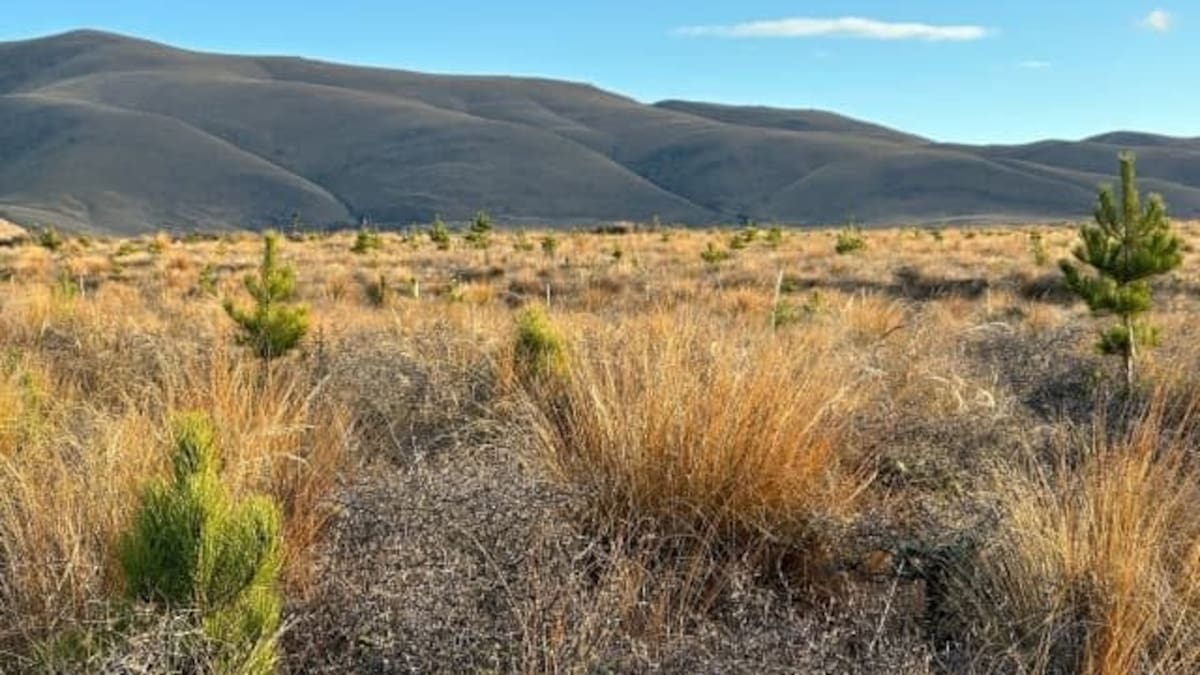
The Central Otago Wilding Pines Group supported landowners to co-ordinate wilding controls across its one-million-hectare catchment, largely targeting seed sources.
Programme director Pete Oswald said the “goodwill” approach of relying on foresters to control pines spreading beyond their boundaries was not strong enough.
“Where I see there’s not much exposure to the issue, where it’s hidden, the problem is horrendous and just leading to run rampant in some cases,” he said.
“We’ve got this legacy forest we’re stuck with, causing huge problems and costing the taxpayer millions.
“The cost shouldn’t fall to the person who didn’t make the mess, which is currently what’s happening.”
Oswald said varying degrees of people took responsibility for seed spread, and forest owners usually responded once they were “called out”, but he said a mechanism to force good operation around prevention was needed.
“Honestly, I think there’s been a lot of complacency in the national wilding conifer cause, that it needed to be collaborative and bringing everybody along the journey, but honestly, it just needs big changes.
“We just need a bit of a shake-up, and people making a mess need to take full responsibility.
“What we’ve learned is, if there isn’t any repercussions there – legally or regulatory – then there’s always going to be good and bad players.”
Forest owners spent $4 million on wilding controls last year, largely for Pinus contorta, according to a recent Forest Owners Association survey.
An association spokesperson said the forestry sector spent $13m over the past five years on controls.
Forest Stewardship Council-certified forests also required owners to manage wilding spread, provided they could access neighbouring properties.
The Ministry for Primary Industries (MPI) was now consulting on its draft 20-year wilding pines strategy, which would also inform the development of a National Pest Management Plan for wilding conifers, the Government announced in May.
It said control work could not rely solely on government funding, that shared accountability with the forestry sector should be strengthened, and it explored how sites would be monitored and maintained following controls.
Over the next three years, the Government invested $109m in the National Wilding Conifer Control programme, led by the MPI.
Over the years, the Government tightened rules for commercial forestry’s environmental standards, including restrictions on planting what MPI considered the most vigorously spreading species, Pinus contorta.
Another extreme spreader, Douglas fir, was allowed in the Emissions Trading Scheme for farming carbon, but with new restrictions that forest owners said “almost entirely prevent” planting it for carbon farming.
The Government announced changes to the National Environmental Standards for Commercial Forestry in June.
Commercial foresters were now required to assess their wilding spread risk with a newly updated government calculator and notify their councils.
High-risk applications would instead require a resource consent.
The Forest Owners Association said wilding spread from carbon forests had been regulated since 2023.
“Any new planting of Douglas fir, whether for harvesting or carbon forestry, requires submission of the wilding tree risk calculation to council, a wilding score below 12 or a resource consent,” they said.
“The wilding spread risk calculator almost entirely prevents the planting of Douglas fir.”
Oswald said the system needed further shake-up.
“Even that new calculator doesn’t really do enough to stop those forests going into the right places.
“It does a pretty good job, but what we’re stuck with now is forests that were allowed through under different measures and, even back in the early 2000s, where there were no measures, it was just a permitted activity.”
In its draft strategy, MPI said identifying and managing major seed sources was fundamental to successful wilding management.
“Because the risk of spread differs between sources, management actions should be risk-based and targeted,” it read.
“Failure to address ongoing seed production can undermine control efforts, leading to persistent re-infestation and escalating costs.”
MPI’s strategy said that, if left unmanaged, wilding conifer infestations could affect up to 25% of the country within 30 years, imposing at least $4.6 billion in economic losses over 50 years.
MPI’s consultation on the draft wilding pines strategy closes on October 9.