
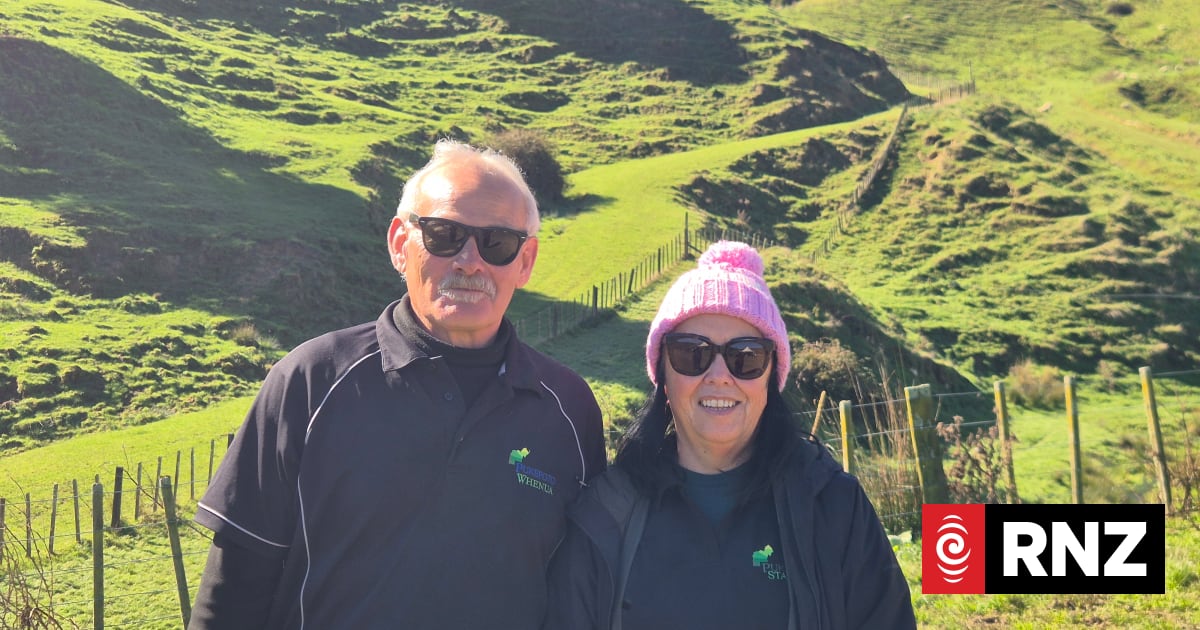
In the past 16 years, the Pukepoto Farm Trust near Taumaranui has never not made a profit for its more than a thousand shareholders, descendants of Ngāti Maniapoto.
It’s something the trust prides itself on, as it allows them to give back to the community.
“We can’t do a lot on 1000 effective hectares, but we can certainly do a little bit,” Trustee Weo Maag told Country Life.
Now it’s sharing the secrets to its success with other neighbouring farmers as part of Beef and Lamb’s Hub Farm Programme.
‘Looking for an edge’: Data driven decisions on a Māori owned farm
Follow Country Life on Apple Podcasts, Spotify, iHeart or wherever you get your podcasts.
Meaning ‘little hill’, Pukepoto was established by the Māori Land Court in 1978.
Trustee Weo Maag inherited his shares from whakapapa on his mother’s side.
“I’ve always maintained that the land should provide to our people.”
He said the trust initially started by paying dividends to shareholders, then moved to providing education grants and most recently, kaumātua grants.
Returning a profit to the shareholders comes from careful planning, he added.
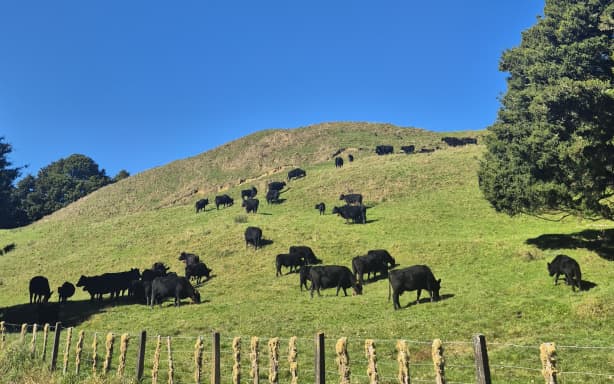
Key focus areas for the farm include integrating technology like the new eShepherd virtual fencing collars from Gallagher.
RNZ / Gianina Schwanecke
“We draw up plans production-wise and expectations based on one season from the other, and then we look to what is it we’re going to produce, what then can we sell.
“We can’t control what the prices are – we’re at the mercy of the processors, but we can control what we produce.”
Another important part was having a “yardstick to measure our success”.
For Maag this meant “benchmarking” to help when explaining farm operations and results to the shareholders.
“It’s about managing expectations,” Maag said.
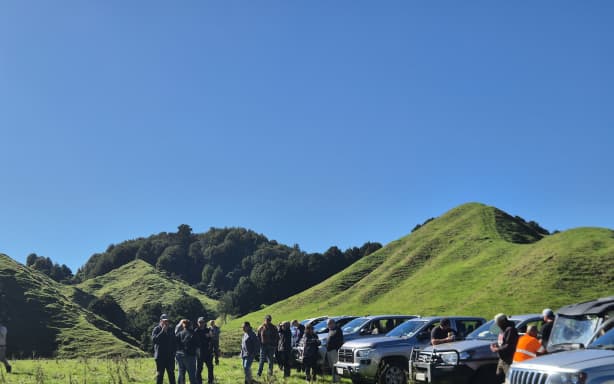
Dozens of utes have packed into a paddock next to the wool shed with farmers eager to hear about the key to success at Pukepoto.
RNZ / Gianina Schwanecke
“I can go, ‘hey, how come we didn’t produce that many [lambs]? What happened? What went wrong? Did you miss a paddock with the ram or something?’ You know, whatever it might be. But if you don’t have anything in writing, then you’re just flying by the seat of your pants.”
The Pukepoto Trust farm joined Beef and Lamb’s Hub Farm Programme in October 2025. The programme follows a farm business over several years to help farmers see what change looks like over time in a real system.
Maag said he hoped the programme would help with providing more detailed data as part of the trust’s own benchmarking processes.
“With the hub farm, we’re going to be able to get accurate measurements around grass growth,” he said.
“We’ve got an idea historically because [of] our irrometer (a tool used to measure soil moisture) and knowing how many sheep we’ve had, ‘oh yeah, we’ll be right’. We know the rainfall.
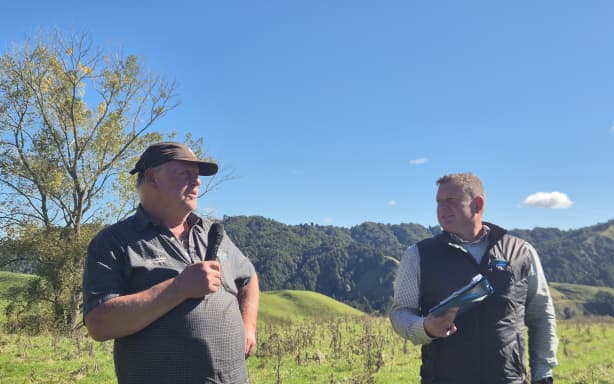
Pukepoto Farm Trust farm manager Terry Head speaking with Darren McNae from AgFirst.
RNZ / Gianina Schwanecke
“But this is going to provide real live data that we can then go… yeah, we were pretty accurate.”
It’s also about providing tested data and information for future generations, he said.
“At some point, someone’s going to replace us. I see the hub farm and the learning from the hub farmers, essentially going to be able to provide information [to] the new trustees who come along, who may not have a greater knowledge in farming, but have a lot of understanding in governance and finance.”
On the bright autumn day Country Life visited, about 80 farmers, trustees and other rural professionals turned out for the field day where early results were shared.
“It feels really great to be up there amongst top performing farms in the district.”
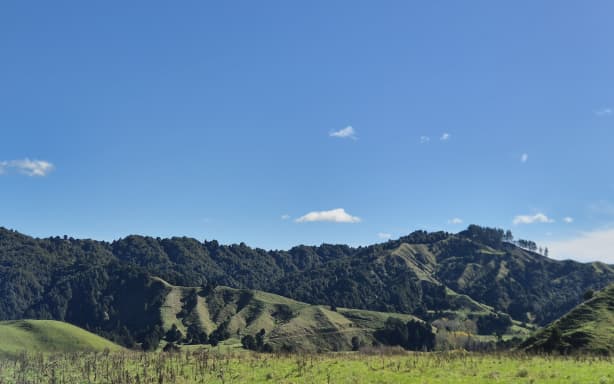
Meaning ‘little hill’, Pukepoto hides the true nature of this rugged hill country farm.
RNZ / Gianina Schwanecke
Trust chairperson Aloma Shearer said there were wider benefits to being part of the programme too.
“It’s about bringing other people, sharing knowledge that you have with other farmers about performance and what we do here, what can help others, that sort of thing.
“I’m just hoping that what we’ve got to share with farmers here today, with the industry, is going to be helpful for what their plans are for the future.”
The field day highlighted how the trust was lifting performance through genetics, making better land use decisions, and integrating technology like the new eShepherd virtual fencing collars from Gallagher.
“We’re always looking for an edge just to get ahead, to make more money, grow more grass,” she said.