
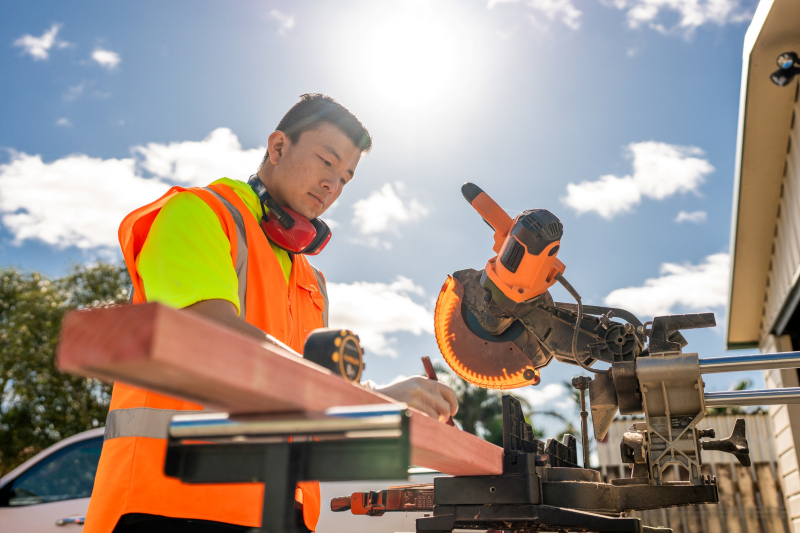
With over 20 trade-specific suppliers, n3 TRADE members can save tens of thousands of dollars on procurement.
Kiwi tradies struggling to turn a profit amid challenging construction industry headwinds have been offered a piece of advice: be better at buying materials.
“It is tricky out there right now trying to maintain margins and profits,” says Darcy Pye, head of sales for n3 TRADE.
“Margins remain under pressure, but smart operators are responding by managing costs, improving procurement and protecting profitability.”
Navigating recovery with smart business decisions
Battered by global instability, price and supply chain pressures – and uncertainty over the outcome of the general election in November – the New Zealand building industry has been experiencing some of its lowest activity levels in a decade.
Residential building value dropped 5% in the year to March – its weakest result since 2016 – while QV Costbuilder reports building costs rose 2.4% per sq m in the year to May.
Cost escalation driven by global events has now become “one of the most challenging delivery issues to manage” in the construction sector, an article by New Zealand law firm MinterEllisonRuddWatts found.
The 2026 BDO New Zealand Construction Sector Report revealed that in the last year, nearly two-thirds of the 180 construction businesses it surveyed had incurred losses of up to $100,000. Just 52% of industry leaders were positive about their overall business performance, down from 60% last year.
On the positive side, building consents are up – nationwide these rose 21% in the year to July 2026 – and BDO report says more than three-quarters of construction businesses have sufficient confirmed work for at least the next six months, with “signs of resilience emerging”.
However, Pye says the market is still under pressure, and it will take time for work to flow through the construction pipeline.
“The industry has lived with uncertainty for long enough that many businesses are no longer waiting for perfect conditions,” he says.
“They’re accepting that volatility may be the new normal and are making decisions to move forward and build profitable businesses regardless of what the next economic or political event might be.”
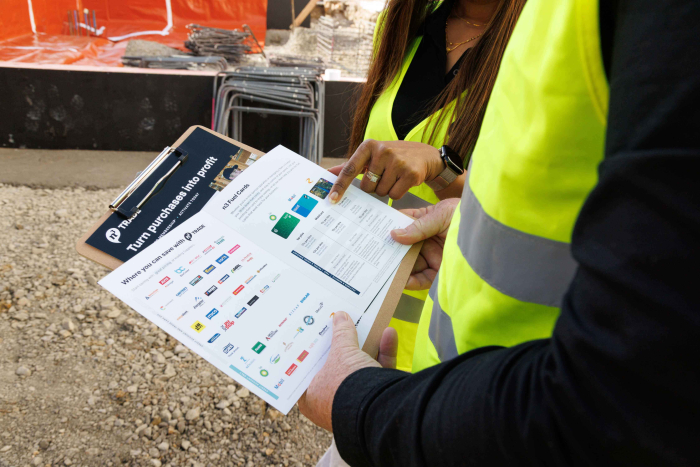
Helping tradies leverage buying power
This is where n3 TRADE comes in. With over 16,000 members – most of whom are small-to-medium enterprises (SMEs) – the group is able to negotiate preferential pricing with suppliers on behalf of its members.
“In the face of what are challenging and uncertain trading conditions, good procurement – and a strong purchasing strategy – is now more important than ever,” says Pye.
“We look to create a win-win by securing preferential prices for our members and, at the same time, building strong relationships with suppliers.”
That means even smaller operators can leverage buying power the same way larger companies do.
“The most profitable trade businesses don’t just build better, they buy better too. At n3 TRADE we do the heavy lifting for them by seeking better pricing on materials.”
With over 20 trade-specific suppliers and a wider network of over 45 suppliers to call on, savings for n3 TRADE members are significant.
Pye says it typically translates to an average annual saving of $11,411* for a company with 1- 10 employees, $33,621* for a medium-sized company (11-99 employees) and $54,681* for a business with 100-plus employees.
A new path to profitability
Helping businesses develop a strong purchasing strategy is also key to an n3 TRADE membership.
“Many companies, especially SMEs, are not as well-structured in their purchasing as a larger company, but it is super important because procuring well helps protect profits.
“It’s all very well winning business, but if costing is not correct and margins are not protected, it just becomes an exercise in keeping yourself busy.”
Pye says he recommends its members – especially smaller builders – review their procurement spend every 3-6 months for core supplies and every 12 months for indirect costs by using n3 TRADE as a pricing benchmark tool.
As part of this, n3 TRADE helps sift through a company’s supplier invoices to compare prices.
While Pye says he wouldn’t expect a smaller business to be able to compete with the buying power offered through n3 TRADE, its offering is flexible.
Any members who can get a better price on materials themselves are free to do so.
“They are not locked into the contracts we negotiate with suppliers – most of our contracts aren’t dependent on individual business volumes, and sometimes our members do have sharper pencils, which is fantastic,” he says.
For more information, visit n3 TRADE | Reduce Business Spend.
*Data represents 2025 calendar year. Sample based on members who use three or more n3 Suppliers on-account.