
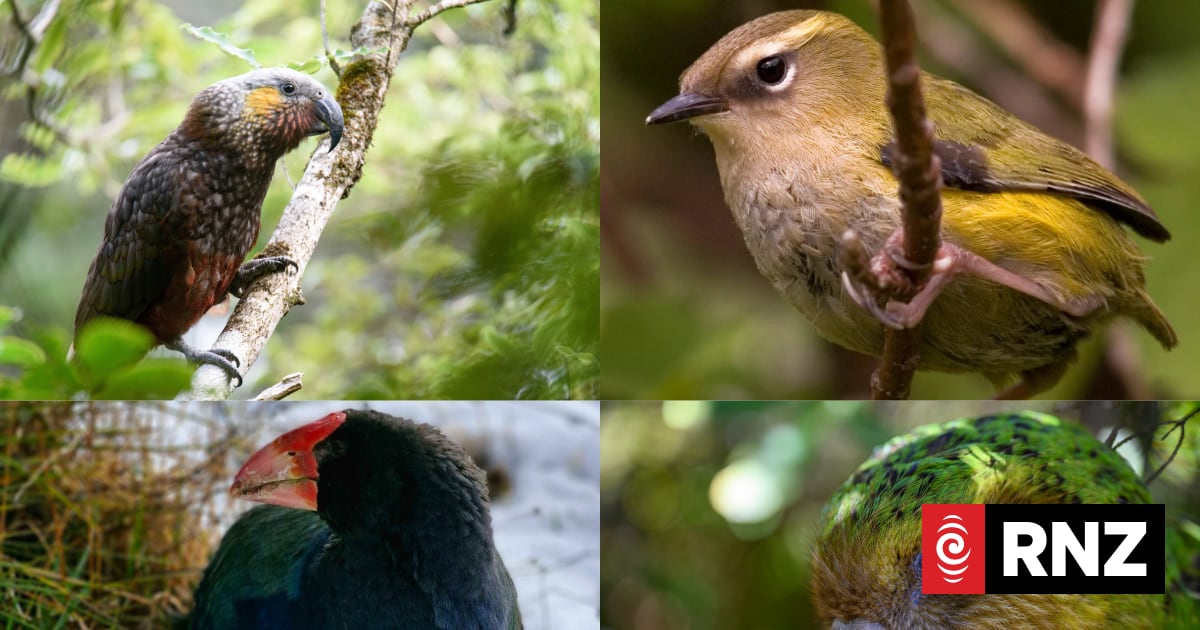
A record number of votes have been cast in this year’s Bird of the Year competition.
Voting to choose the nation’s favourite native bird closed at 5pm on Sunday. The winner will be announced on Monday.
“We have over 90,000 validated votes, and even more impressively 88 percent of those have been cast here by people in Aotearoa New Zealand,” Forest and Bird’s Rebecca Hatch said.
“This makes it the biggest homegrown Bird of the Year ever.”
It was also the closest competition yet, she said, with more than 70 birds campaigning for votes across seven parties.
“There are five birds in the top 10 who have never won Bird of the Year before. Your vote could mean a brand-new winner.”
The winner of this year’s contest will have a waiata composed for it by Moana Maniapoto.
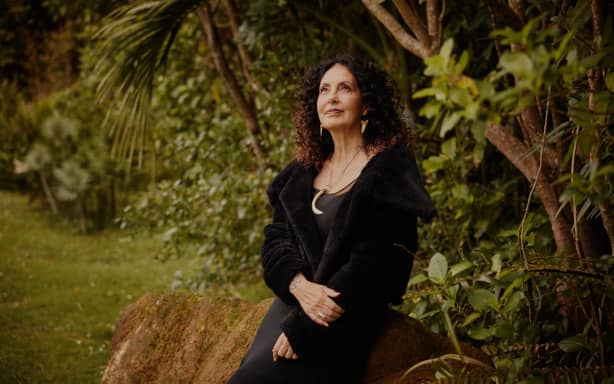
Singer-songwriter Moana Maniapoto
Stephen Tilley
According to Hatch, producer Delaney Davidson came up with the idea for Waiata Manu last year, with the first – for the kārearea – being written by Troy Kingi.
The song will shine a spotlight on the winning species, helping people fall in love with the birds, understand the challenges they face, and take action to protect them, Hatch said.
Singer-songwriter Moana Maniapoto will write the waiata for this year’s winner.
“I’ve got Scotty Morrison and Paddy Free joining us and I’m very, very excited. It’s such a nice feeling to do something very positive,” Maniapoto said.
Davidson conceived the series to carry on the tradition of Māori composer Hirini Melbourne, and the many waiata he wrote about the manu (birds) of Aotearoa.
“I would love these songs to be something we all learn to sing. We teach them in schools,” Davidson said.
“We honour the whenua and we honour the manu. We transform ourselves into manu by singing. And I see us building on Hirini’s tradition by creating a vast treasury of songs, like a forest, full of magic.”
Bird of the Year has been running since 2005.
Last year, it drew more than 75,000 voters from across 123 countries.
In 2023 Bird of the Century had more than 350,000 votes – nearly 300,000 alone for the Pūteketeke after John Oliver’s campaign.