
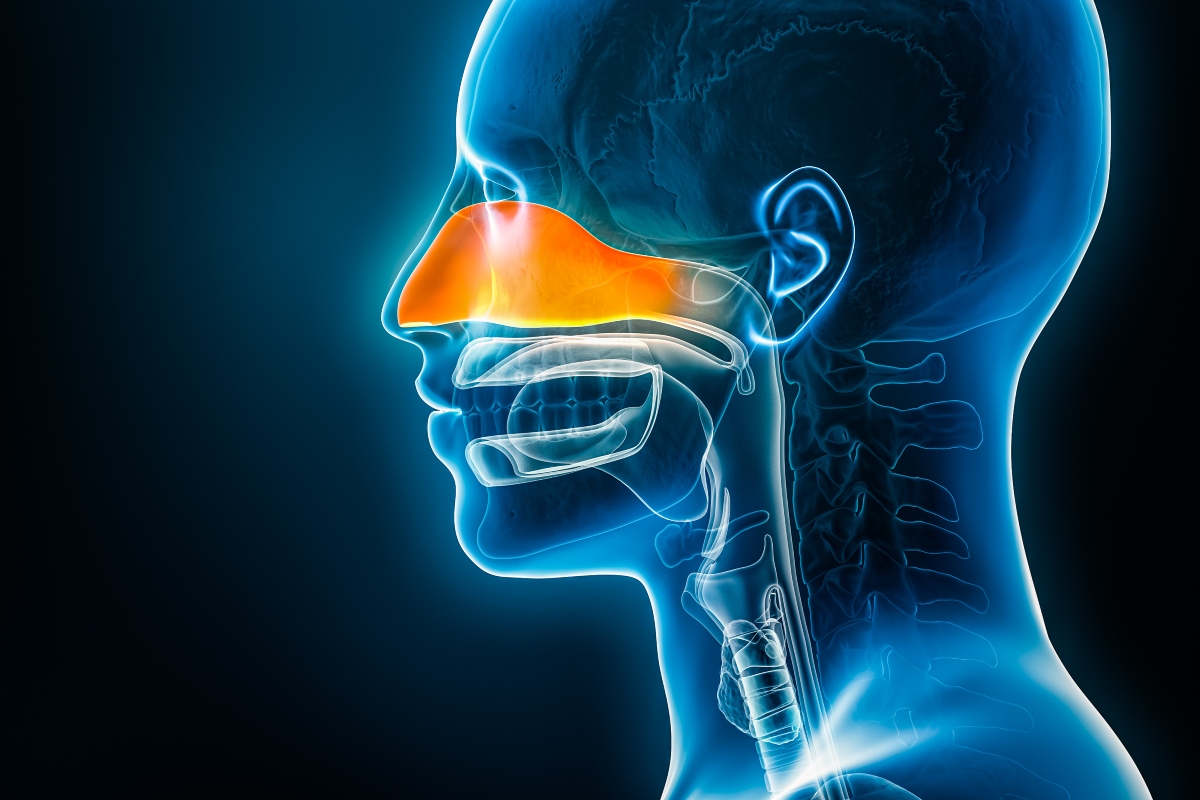
Chronic rhinosinusitis with nasal polyps is independently associated with markers of type 2 inflammation in people with bronchiectasis, although this relationship differs according to the underlying aetiology, a large European registry analysis has found.
Chronic rhinosinusitis is reported in 32–75% of people with bronchiectasis, compared with an estimated 5–10% prevalence in the general population.
Previous studies have linked coexisting chronic rhinosinusitis with elevated blood eosinophils and immunoglobulin E (IgE), but whether this type 2 inflammatory profile extends across different bronchiectasis aetiologies has been unclear.
Published in ERJ Open Research, this recent study analysed 16,640 adults enrolled in the prospective European Multicentre Bronchiectasis Audit and Research Collaboration registry.
Participants were categorised as having no chronic rhinosinusitis (n=12,714), chronic rhinosinusitis with nasal polyps (n=2,703) or chronic rhinosinusitis without nasal polyps (n=1,223). They were then assessed for symptoms, exacerbations, hospitalisations, mortality and markers of type 2 inflammation, including elevated blood eosinophils and IgE.
The prevalence of sinonasal disease varied substantially according to bronchiectasis aetiology and was particularly high in primary ciliary dyskinesia, asthma, immunodeficiency and allergic bronchopulmonary aspergillosis (ABPA).
Chronic rhinosinusitis symptoms and hospitalisations
Both chronic rhinosinusitis groups had greater sputum production and purulence, and chronic bacterial infection was more prevalent than in those without chronic rhinosinusitis. They also had worse respiratory symptom scores after adjustment for clinical confounders.
More frequent exacerbations were observed in patients with chronic rhinosinusitis in baseline comparisons, but this association did not persist after multivariable adjustment.
In contrast, chronic rhinosinusitis, with or without nasal polyps, was independently associated with a lower risk of bronchiectasis-related hospitalisations. Mortality was also lower among those without nasal polyps after full adjustment.
For chronic rhinosinusitis with nasal polyps, the point estimate similarly favoured lower mortality, but the 95% confidence interval included no difference.
Type 2 inflammation and bronchiectasis aetiology
Among patients with idiopathic and post-infectious bronchiectasis, chronic rhinosinusitis with or without nasal polyps was associated with a greater prevalence of elevated blood eosinophils. This pattern was not observed in bronchiectasis associated with primary ciliary dyskinesia or immune deficiency.
When multiple clinical and aetiological factors were considered together, chronic rhinosinusitis with nasal polyps remained independently associated with elevated type 2 biomarkers, alongside asthma, chronic obstructive pulmonary disease and ABPA. An independent association was not retained without nasal polyps.
The authors noted that while the study was based on a large, international and prospective registry with long-term follow-up, important limitations included reliance on investigator-recorded diagnoses of chronic rhinosinusitis and nasal polyps rather than validation against established diagnostic criteria.
Blood eosinophil and total IgE measurements were also unavailable for a proportion of the study cohort, and other type 2 inflammatory biomarkers were not collected.
The authors said the findings indicate that the relationship between chronic rhinosinusitis and type 2 inflammation in bronchiectasis depends on the underlying aetiology.
They concluded that clinical features may help to identify selected patients in whom type 2 inflammation warrants further investigation, including in future studies of type 2-directed treatments.
Reference
Shteinberg M et al. The association between chronic rhinosinusitis, bronchiectasis and type 2 inflammation: an EMBARC registry analysis. ERJ Open Res 2026;12(4):01397-2025.