
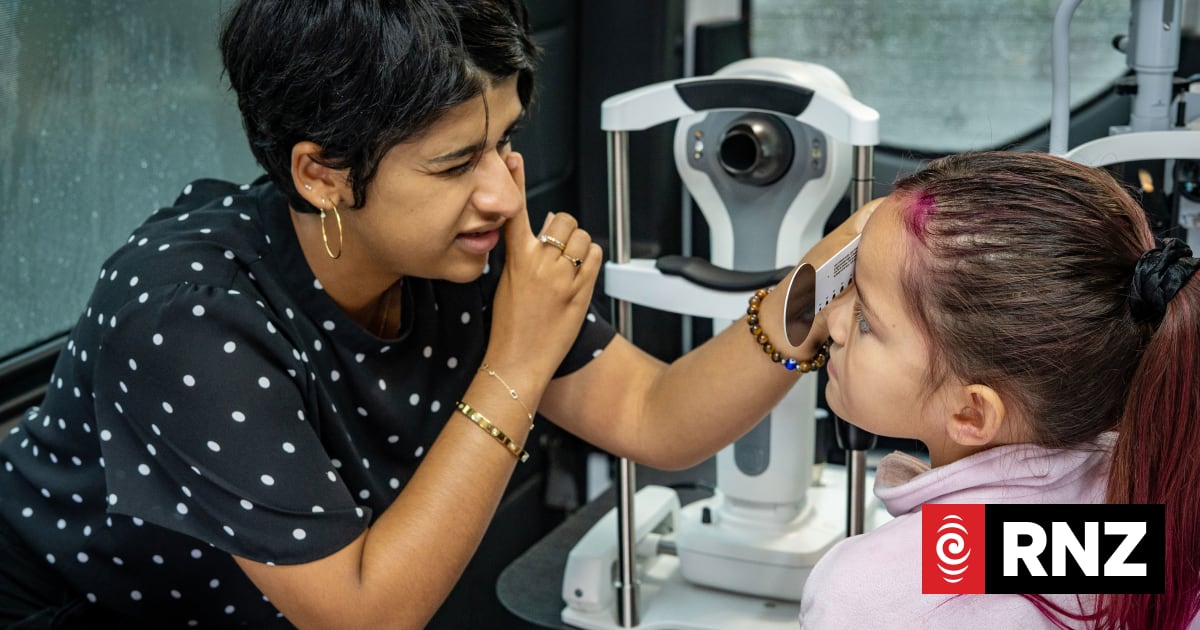
Not-for-profits are saying eye care is inaccessible as more than two-thirds of adults delay vision tests.
A recent survey by YouGov commissioned by optometrist Specsavers found that 70 percent of adults aged between 40 and 59 delayed getting their eyes checked by more than a month despite struggling with their vision.
Longer delays weren’t uncommon with almost half waiting for more than six months to get help, and one in five stalling for more than two years.
Maggie was a learner and teacher at WELLfed, a registered community and education charity in Porirua, when not-for-profit Painga Project visited to offer free eye tests and glasses.
“It’s changed my whole life,” she said.
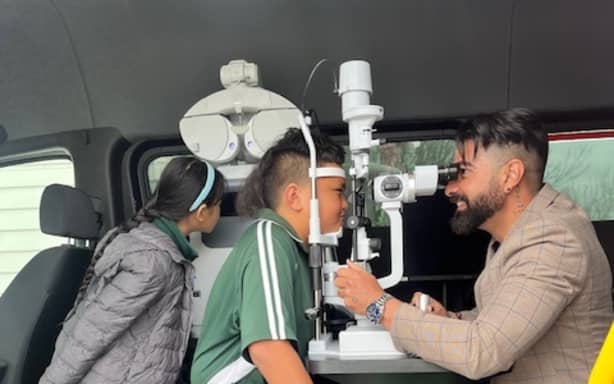
Supplied
Maggie had suffered from debilitating migraines her GP couldn’t explain and now, they were gone.
She’d never had her vision tested as she thought she would struggle to get an appointment and didn’t see the need. She’d also been put off by the cost and the difficulty in finding an optometrist.
“I remember growing up, my dad had to replace his frames – that cost him $600. And that was a big, big dent in our way of living back then. So it scared me.”
She said she only agreed to attend Painga’s drop-in visits because the service was free.
Maggie said she was surprised to learn she needed to wear glasses all the time. At first, she said she didn’t want to wear glasses, but now she felt she was “on top of the world”.
“My vision is like high definition. My driving is so much better. I can drive at night time now.”
Out of the 60 attendees on that day at WELLfed in Porirua, 40 needed follow-up tests.
Why had so many people not been checked?

Supplied
The barriers
Chair of the optometrists and dispensing opticians board Sophie Woodburn said some people struggled to find a provider.
“We have the right number of optometrists for the population in New Zealand, but they’re not equitably distributed.”
She said most practices were in cities – and funding was an issue.
Woodburn estimated an eye exam could cost anywhere between $30 and $150 depending on health insurance and providers.
“There’s almost no public funding available for routine eye exams and eye care. There are some programmes available for children through Enable, but if you’re a working adult, then it can be really challenging to access,” she said.
For the current acting Wellington City Missioner Pip Rea, the biggest barrier was cost.
“For a lot of manuhiri or people that City Mission support, being able to get their eyes tested is just out of reach. It’s not in the realms of financial possibility for them.”
Painga Project also visited the City Mission earlier this year.
“So the opportunity to have that service? Yeah, people were lined up and literally, they had a queue all day. We didn’t take any convincing at all and people saw it as an amazing opportunity.”
She said screening and glasses were treated as “luxury” whānau couldn’t afford amid cost-of-living pressures.
And she said this wasn’t the case just for their manuhiri, which were generally part of the capital’s most vulnerable communities, often without shelter or struggling with complex mental health challenges.
“We had some of our staff go and get their eyes tested, and we’re a living wage employer,” Rea said.
“I wear glasses myself and my last pair of glasses cost me $500 and I got the cheapest frames that I could find.”
The price of glasses eroded Wellingtonian Steve Bell’s trust in optometrists.
After an ACC injury, his wife was examined by an optometrist who said she needed prescription glasses which would cost $500.
“ACC was sent a document to say that [her] eyes were perfect. No, injuries to her eyes from the accident.
“So I felt from the moment we went in that there was an opportunity to sell us something. They really just wanted us to buy something. So that just annoyed me a little bit.”
He said he wouldn’t go to an optometrist as long as he could get by with ready readers – off-the-shelf, ready-to-wear magnifying glasses that retail for several dollars.
Woodburn said ready-readers could give relief in the short-term, but weren’t substitutes for prescription lenses.
She said she didn’t think upselling was a widespread practice.
“Optometrists, as part of being a registered healthcare professionals, they do have to follow an ethical code of conduct as well as a clinical code of conduct. And part of that involves being honest, working with integrity.”
She explained that many eye conditions were asymptomatic, going unnoticed until they’d progressed.
As a result, she advised getting regular eye exams, for which optometrists could be the first port of call.