
Searching sand dunes for lizards
Follow Our Changing World on Apple, Spotify, iHeartRadio or wherever you listen to your podcasts
On a chilly evening in May, torchlights flash through the kānuka of Te Ākau/Bream Bay’s sand dunes. One light lands on a Northland green gecko, a new record for this location.
“It was very lucky!” says Laura Shaft, Northland Regional Council biodiversity manager,
“I was looking at some mānuka and then I thought, ‘Wait a minute!’ It wasn’t much more than an arm’s length away from me.”
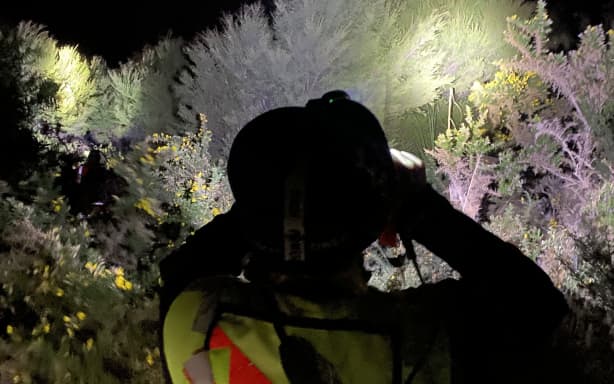
Katrina Hansen from Northland Regional Council spotlighting for gecko in back dunes.
RNZ / Ayana Piper-Healion
Since 2021, Patuharakeke Te Pou Taiao and Northland Regional Council have been monitoring fauna in the dunes, but this is their first time using spotlighting as a technique to monitor geckos. The find highlights how much remains unknown about the species living in Bream Bay’s dunes, even after several years of monitoring.
Steve Johnson from Patuharakeke Te Pou Taiao says it means a lot to find geckos here.
“Gecko are a special taonga for Patuharakeke. It would be really cool to see them, then do some work around protecting them” says Johnson. As tangata whenua, Patuharakeke hapū play a vital role in decision making, management, and kaitiaki over Bream Bay.

Checking artificial lizard shelter in Bream Bay sand dunes
RNZ / Ayana Piper-Healion
This location doesn’t currently have any predator control, but the hope is that proof of these “At-risk, Declining” species, could result in more funding for conservation work in the dunes.
The monitoring programme surveys key indicator species such as mokomoko, katipō spiders, coastal bird species, and pest mammals. The monitoring helps build a long-term picture of dune health and informs decisions about dune protection and restoration.
Across Aotearoa, 80.5 percent of coastal dune ecosystems have been lost and those remaining face pressures from invasive species, vehicle use and human activity. As well as habitat, sand dunes buffer inland areas from erosion, storm surges and rising sea levels.
In the sand dunes, the monitoring team stand poised a few metres from a couple squares of roofing material.
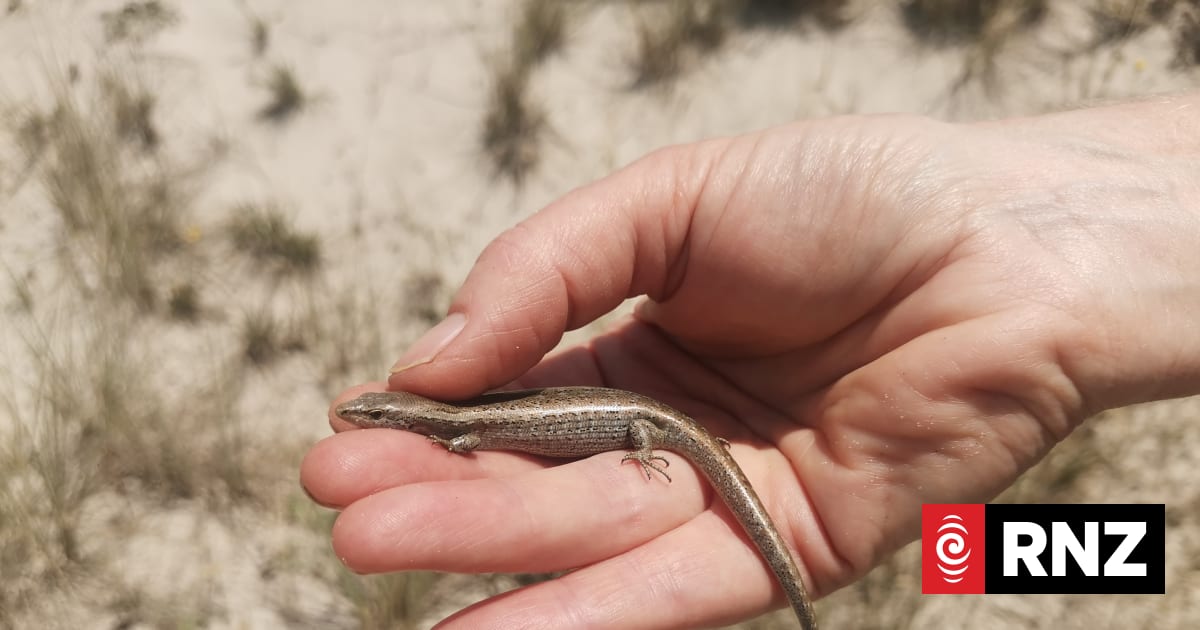
“Three, two, one!” someone calls into the wind. On cue, the team rushes to the artificial lizard shelter, pushes a circular plastic shield into the sand around it, and lifts the top sheet. A skink bolts for cover, but Johnson is faster. Wriggling in his hand is a shore skink, an endemic species classified as ‘At-Risk, Declining’.
“Their range is really limited and that’s what makes them important,” says Johnson.
The species is largely restricted to coastal environments, making it one of several native species that depend on healthy dune ecosystems.
Sand dunes are dynamic ecosystems that erode and build up again in cycles. From the beach inland, dunes are typically divided into foredune, mid-dune and back-dune zones, each supporting different plant communities and playing a role in dune formation and regeneration.
Some people might not even realise when they’re in a back dune as it’s the most frequently developed zone and is naturally covered in trees like pōhutukawa, kānuka and kāro. The mid-dune consists of ground covers like harakeke, sand coprosma and pohuehue. The foredune has grasses and sand binders like pingao and spinifex.
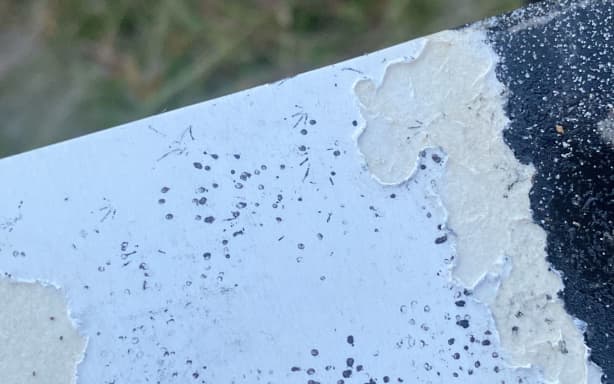
Lizard ink tracking pad
RNZ / Ayana Piper-Healion
Understanding what lives in the dunes is one way to track the health of the wider ecosystem. Alongside lizard surveys, the programme includes katipō monitoring, pest tracking tunnels and bird counts.
The lizard monitoring uses baited tracking tubes with ink cards that capture alien-like footprints, as well as artificial shelters that warm in the sun and provide mokomoko with warm, sheltered refuges.
“It’s getting tricky for them [lizards] to find habitats, so we’re finding we have to help them out a lot more nowadays,” says Ari Carrington, resource co-ordinator for Patuharakeke Te Pou Taiao.
Different methods have proved useful for different species. Tracking tubes have detected copper skinks that rarely appear in shelters, while artificial shelters have proven particularly effective for shore skinks. Unexpectedly, they have also become a useful tool for detecting katipō spiders.
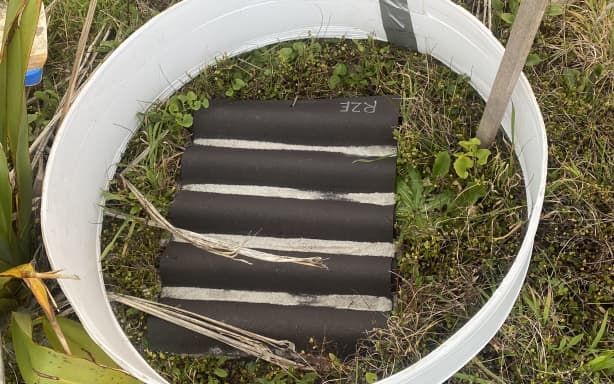
Artificial lizard shelter, Bream Bay
RNZ / Ayana Piper-Healion
In the 2023-24 monitoring season, eight katipō were found in five artificial lizard shelters, while 21 shore skinks were recorded across the four monitoring sites.
The discovery of the Northland green gecko comes as the future of the dunes faces increasing scrutiny. Auckland company McCallum Brothers has applied for Fast-Track Approvals to mine up to 8.45 million cubic metres of sand from the seabed five kilometres offshore over 35 years. The proposal has prompted debate over the potential effects on coastal processes.
Some experts think this is far enough offshore that effects on beaches and dunes should be low. Others argue coastal systems are complex and that too little is known about long-term sediment movement.
For Patuharakeke and Northland Regional Council, monitoring species like geckos, skinks, spiders and birds is helping build a long-term picture of what’s living in the dunes now and how those ecosystems may change in the future.
Sign up to the Our Changing World monthly newsletter for episode backstories, science analysis and more.