

ACT and New Zealand First have all but confirmed a decision on whether the government should underwrite a new liquefied natural gas terminal has been put off until after the election.
The government had been intending to sign a contract for the LNG terminal before the election, so it could be up and running by mid-2028.
The intent is so the country has back-up to mitigate dry-year risk, but the government has had to back down on introducing levy to pay for the terminal.
The energy minister, Simeon Brown, has previously said the a contract could still be signed during the election campaign.
A Cabinet committee had met on Wednesday morning to discuss the plans.
On Wednesday afternoon, New Zealand First leader Winston Peters said no decision had been made.
“The Cabinet position was not to make a decision today, and that’s where the matter sits at this point in time, and that’s precisely and totally what the decision was. So any other variations and translations are false.”
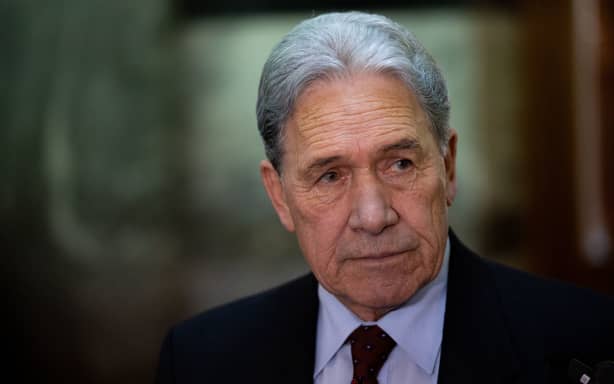
RNZ / Baz Macdonald
Peters confirmed that was the collective decision of all three parties at the sub-committee, and that there had been no pushback.
He would not say what his preference was, but it was a “possibility” he would express a view on the campaign trail.
ACT leader and deputy prime minister David Seymour said ACT’s position was that the government got the best possible deal, and it would be responsible to keep its options open.
“I don’t know that a deal is possible before the election,” he said.
It did not mean ACT opposed work continuing on the terminal, however.
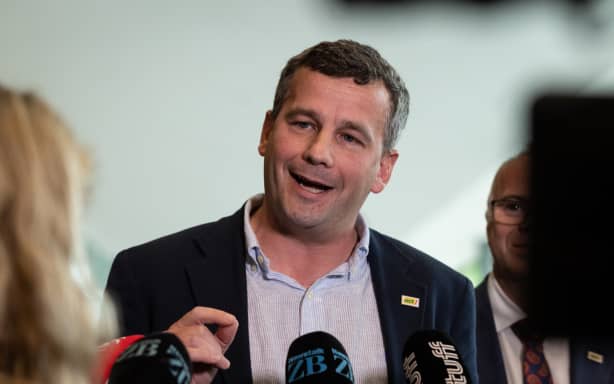
RNZ / Nathan McKinnon
“There can be progress. I mean, the government is carrying out a tender, and that can continue. But it doesn’t mean that you make your decision before the election,” Seymour said.
He said signing a contract before the election would be “irresponsible.”
Brown would not talk about what was discussed in Cabinet or Cabinet committees, and said he would have more to say when decisions were made.
“Ultimately the process will, to some extent, dictate the timing,” he said.
Methanex, which was at times using close to half the country’s natural gas supply, is closing its Taranaki plant next year.
Genesis Energy has since announced it has picked up major gas contracts that run from March next year to December 2029.
Brown said that may “provide some relief,” but the government would continue to work through the LNG process.
“There’s multiple steps that need to be taken before a final contract can be signed, regardless. But there are steps that need to be taken. That process, as I have said, is underway.”