
Stay up to speed with stories written by drivers, for drivers.
Get automotive news, DIY tips, market trends, in-depth car profiles, and more right in your email inbox.
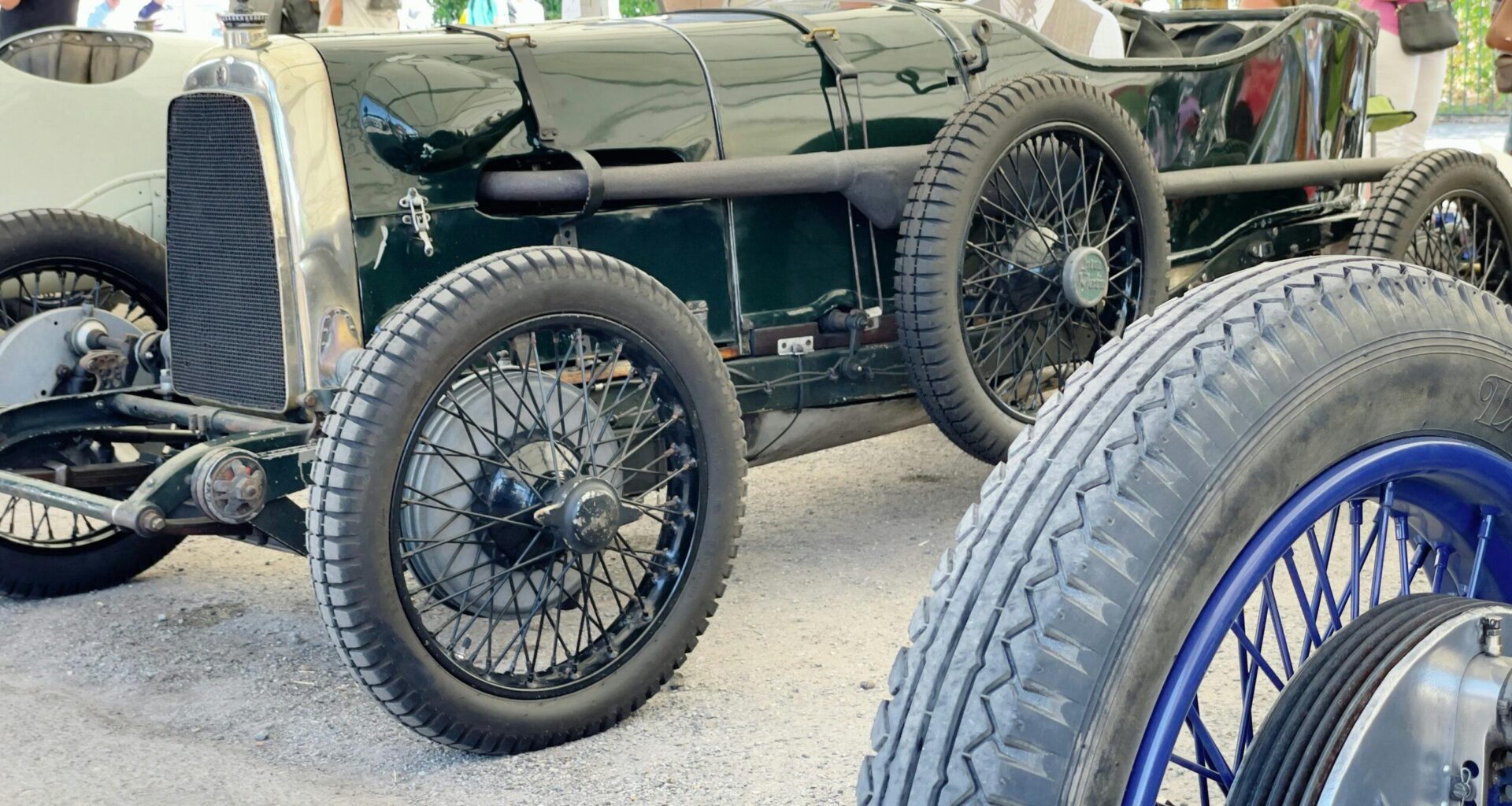
Propped up at a jaunty angle in the driving seat of Rob Murray’s 1922 Aston Martin Grand Prix is a life-size cardboard cutout of Count Louis Zborowski. It’s an immediate indication of how Murray enjoys this priceless piece of British automotive history, and doesn’t just revere it.
“My father bought it in 1958 for £145 plus five pounds delivery charge,” he says, as a small crowd gathers around it in the paddock at Brooklands to celebrate the centenary of the first ever British Grand Prix.
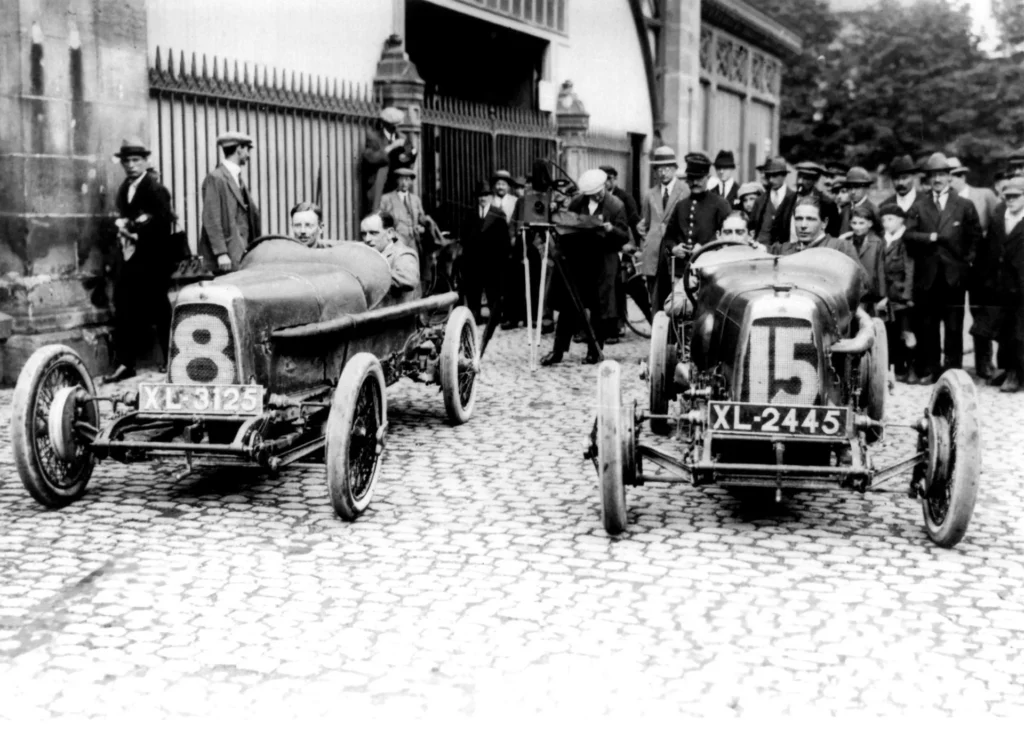
The Aston is even older, having been commissioned by Zborowski—the Anglo-American racer, best known for Chitty Chitty Bang Bang—as one of a pair of cars to race in the Isle of Man Tourist Trophy. Zborowski invested the sizable sum of £10,000 (over a million dollars in today’s money), but the cars weren’t ready until the French Grand Prix at Strasbourg in July 1922. The Count drove TT1—also known as Green Pea—and Clive Gallop took the wheel of TT2. Both cars unfortunately suffered failures of their 1.5-liter 16-valve engines, with Zborowski retiring on lap 19, and Gallop joining him on lap 30 out of 60.
 Aston Martin
Green Pea also failed to finish in Barcelona that year, but when Aston Martin founders Lionel Martin and Robert Banford sold the car to Marion Agnew in 1923, it had better luck. Bobby Morgan drove it to a second-place finish at the Grand Prix de Boulogne; it won the gold medal in the MCC London/Land’s End Trial, and Agnew took victory in the 1924 JCC Ladies Race at Brooklands. The car rejoined the podium in France in 1925, too.
In more recent years, Green Pea has appeared at Pebble Beach and was driven by four-time Formula 1 World Champion Sebastian Vettel in a centenary parade for Aston Martin at the 2022 French Grand Prix. “Green Pea holds a very special place in Aston Martin’s heritage, and you can almost feel that century of history beneath your fingertips when at the wheel,” said Vettel afterwards.
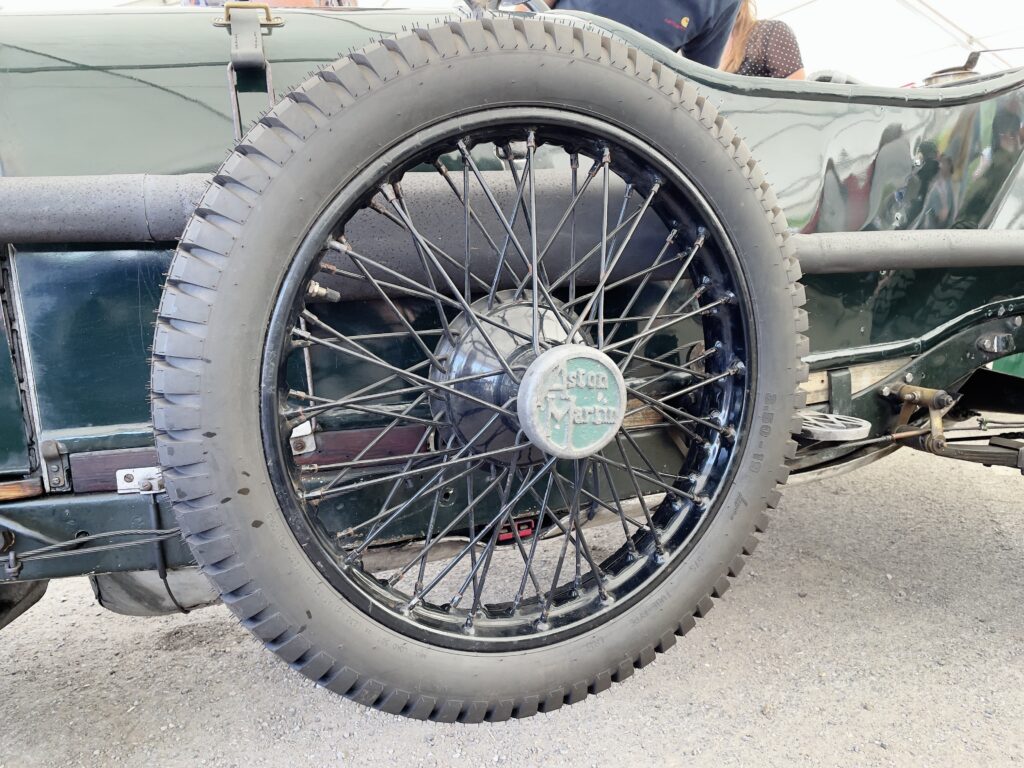
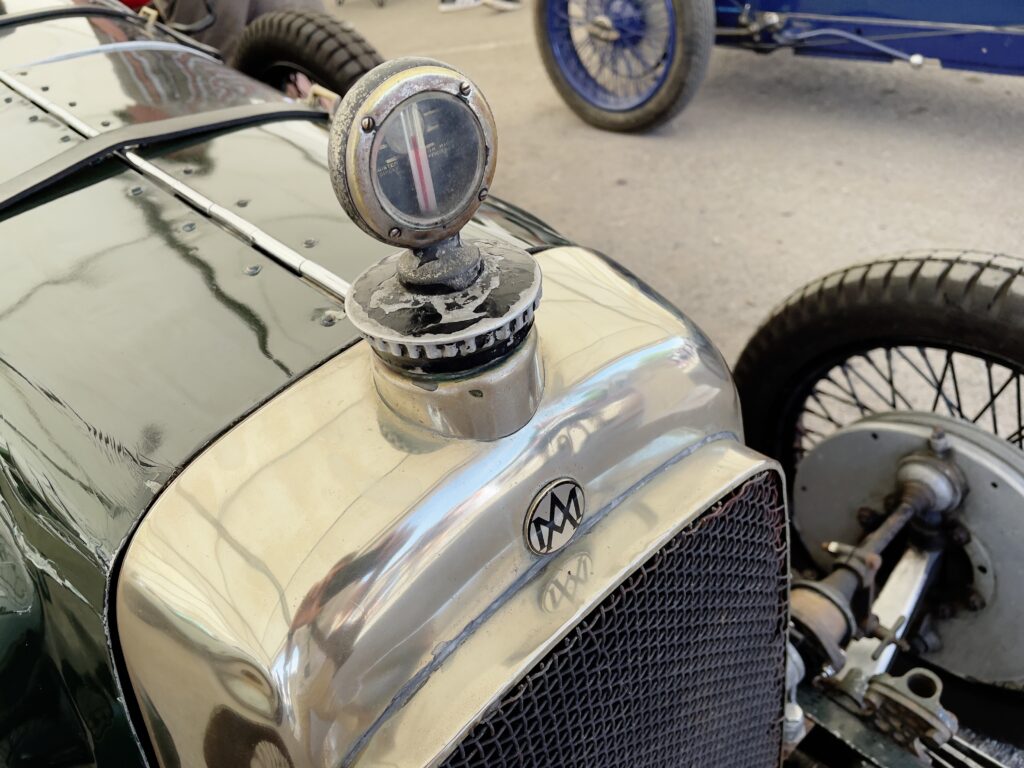
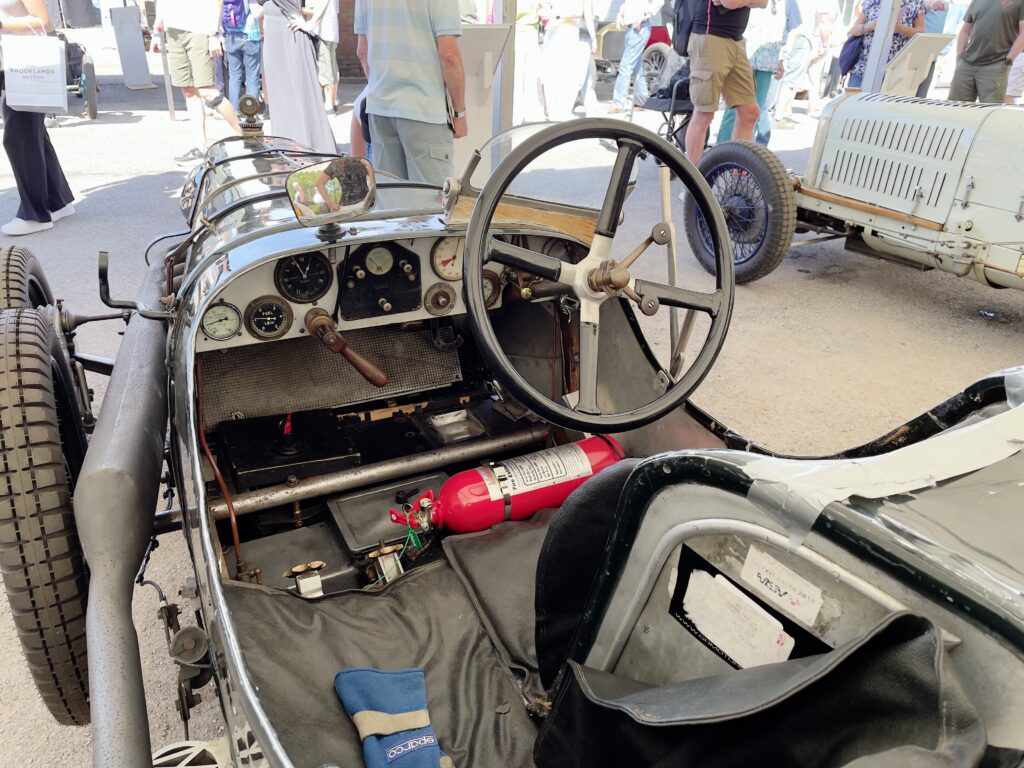
All this, and more, is detailed in Murray’s lengthy history file, and while he’s not exactly blasé about the Aston, having grown up with it as part of the family, he certainly doesn’t see it as an investment to sit and accrue value. Never restored to concours condition, Green Pea is patinated, showing a century of racing in paint nicks and scratches.
“It was the first car I ever drove,” he explains. “I inherited it from my father, and my son Jake will inherit it from me.” Jake’s first competitive drive in the car didn’t quite go to plan, however, when his inaugural hill climb ended right at the start, with the rear axle collapsing. Replacing it wasn’t exactly straightforward.
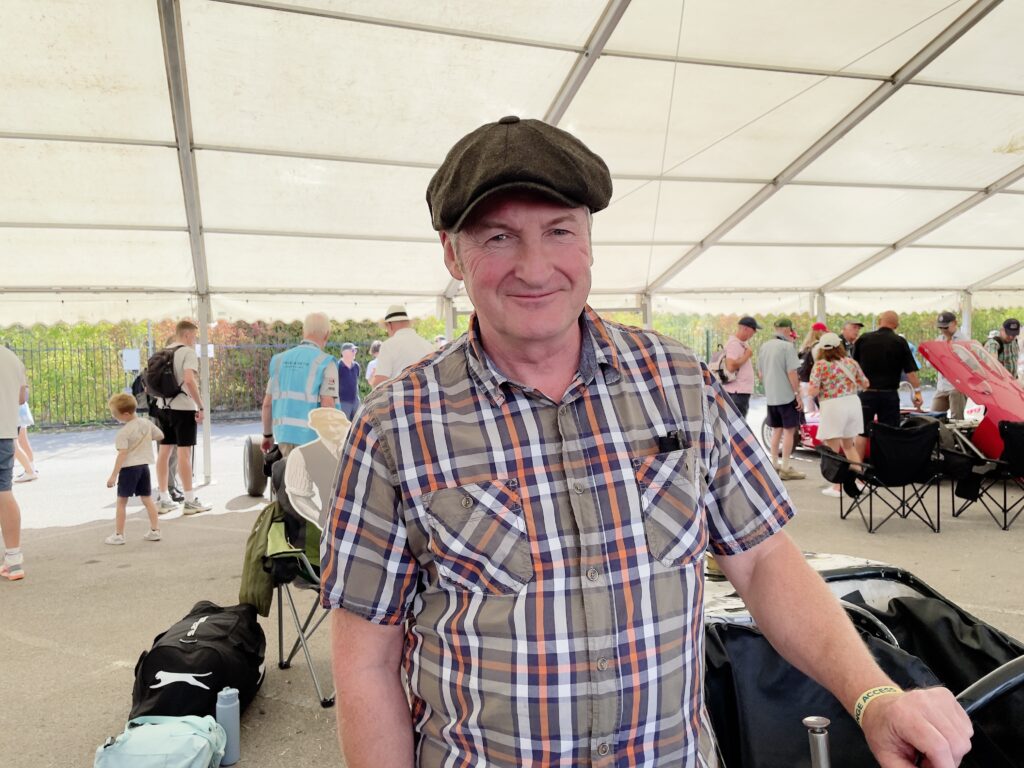
“You have to get everything made,” says Murray. “The only thing you don’t get made is wheels and tires. We’re very lucky in that we’ve got a lot of the drawings of the chassis and stuff, so we can get bits made. But the rest of it is working out how to do it.”
“It dropped a valve back in 2012 and damaged the valve carrier. Fortunately, it wasn’t masses of damage. It’s got these bucket shims that follow the valve and are pushed down by the cap, and it just turned out that Fiat 126 bucket shims were like half a mil bigger, and that was enough to clean it up. The other advantage is that these bucket shims had the shim underneath. You have to build it all up, take it all apart, putting the shim in. The Fiat one is in the top, so you build it up, measure it, just whip out the shim, and then put a new one in. So, it’s stuff like that, finding something that fits.”
Murray says that over the last eight years, “we’ve been using it sporadically because we’ve had the engine go, then we had the clutch go, and the clutch is quite unique. Although there’s lots of the type, there aren’t many of this size. I had to get all the plates made, and I had to get bits made to get the plates made. So, it all took ages, and then the back axle went in 2022.”
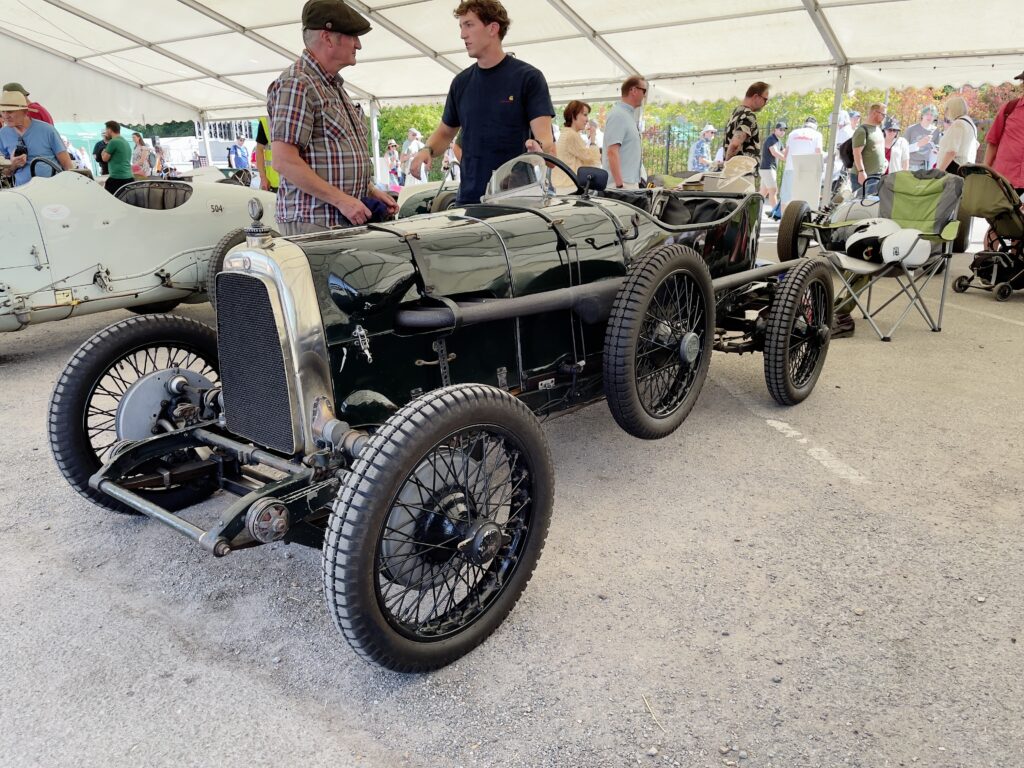
Now in full working order once again, Jake will do the competitive driving at sprints and hill climb events, while these days Rob prefers to drive Green Pea on the road, despite its indelible place in Aston Martin’s lore.
“I actually drive it on the road quite a lot. I like driving it on the road now, although I didn’t used to.
“I’ve lived with it all my life. This was in the family in ’58, and I arrived in ’66. So I don’t think about [the value]. It’s there. It’s a car, isn’t it? It’s there to be used, and the more you use them, the better they are.”