
Kiwifruit exports to Australia are the only exception.
The apple and dairy industries had similar systems, but they were deregulated in 2001.
Kiwifruit is now the only primary industry in New Zealand that has a single-desk export system, and has become the most valuable fruit or vegetable export.
However, Bostock believes it is time to break up the sector.
Bostock has dabbled in kiwifruit, but says former crops were impacted by PSA.
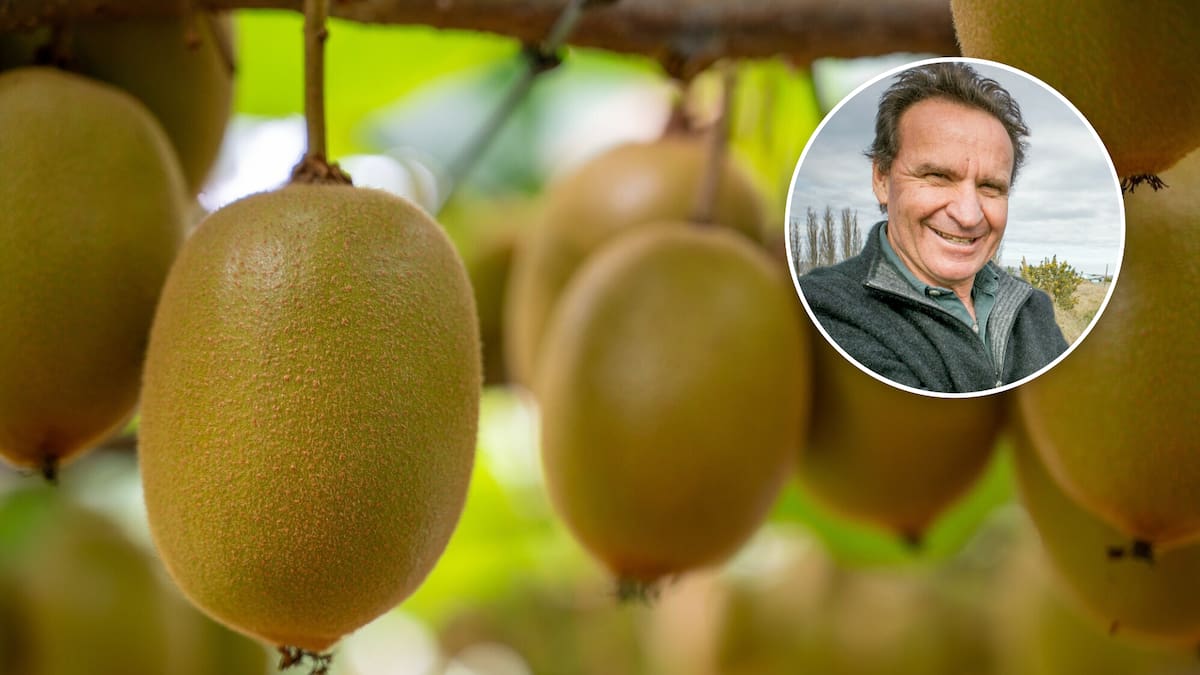
He is expanding into kiwifruit again, purchasing commercial rights to a PSA tolerant kiwifruit variety called Haegeum.
He wants to grow Haegeum in Hawke’s Bay and export it.
Bostock has extensive global networks and exports apples to 42 countries.
However, he can’t export his own kiwifruit under “restrictive and archaic laws”.
“I have my own export business. I have my own customers around the world. I have my own overseas companies.
“I should be able to export my own [kiwifruit] under my own rights.”
He said he was not interested in exporting through “fat and lazy” Zespri, through a collaborative marketing arrangement.
He said he could do a much better job.
“They tie you up in knots with collaborative marketing and all sorts of games.
“I just want the commercial freedom; I don’t want to have to answer to a state-sponsored monopoly,” he said.
“It’s time they were broken open.”
He claimed Zespri set planting rights at “ridiculous levels”.
A Zespri kiwifruit growing licence is released annually through an auction system, with prospective growers bidding for that licence and paying per hectare.
For its main variety, SunGold, the most recent auction price per hectare for a licence was $684,000.
Bostock said that was “madness” and he would let growers grow his variety for “way cheaper”.
“Zespri, like all monopolies, have become very fat, very lazy, very inefficient, very bureaucratic, and it’s time we deregulated them.”
Bostock is planning to grow Haegeum kiwifruit in Chile, South Africa and Australia to bypass regulations, but would much prefer to grow in New Zealand.
Zespri is owned by growers and represents about 2800 growers in New Zealand.
It defended its structure and value – including the single-desk export system – pointing to record global sales over the past year of $5.9 billion.
That included $4.1 billion in sales for Zespri kiwifruit exported out of New Zealand (as Zespri also grows kiwifruit in the Northern Hemisphere).
The $4.1 billion in exports was by far the most of any fruit or vegetable export, with apples and pears sitting at about $1.2 billion for the same period, according to a recent Government report.
As for licensing fees, a Zespri spokesman said they were set through an auction process, for new kiwifruit hectares.
A “clearing price” is set per hectare, then the final price is set through bidding. Only a set number of hectares are released annually.
“Licence values therefore reflect grower expectations about future returns and the value of access to proprietary varieties at a particular point in time,” he said.
What MPI and candidates say
The Ministry of Primary Industries confirmed there was no single-desk review underway or planned.
It said kiwifruit growers could seek a “collaborative marketing arrangement” with Zespri to export their own kiwifruit brands, if that kiwifruit was approved by Kiwifruit NZ.
Hawke’s Bay Today asked leading political candidates in Tukituki, which covers much of the region’s growing land, if they thought the single-desk export system needed to change.
Tukituki NZ First candidate Taine Randell said, generally, New Zealand did not do branding very well, but Zespri had an “incredible brand overseas”.
“They have certainly done a lot better than the apple board did previously,” he said.
“I think, ultimately, Zespri is owned by a whole lot of farmer-growers, and if you were to put it to a vote they would say they would still keep the single desk.
“You have to go with the will of the majority.”
He had no doubt Bostock would do very well if he were able to export kiwifruit himself.
Tukituki Labour candidate Dan Scott responded with a comment from Labour’s Jo Luxton, a former Minister of Customs.
“We are not planning to change any laws that allow growers to organise themselves under a structure like Zespri that has proved to be incredibly successful,” Luxton said.
Tukituki National MP Catherine Wedd did not respond.
Bay of Plenty grows the bulk of New Zealand’s kiwifruit, about 80%, although Hawke’s Bay also has a sizeable kiwifruit footprint.